
High above the idyllic village of Mammern in the Swiss canton of Thurgau, an impressive ruin has stood for centuries – Neuburg Castle. This stately structure, built in the mid-13th century, tells the story of a fascinating past full of shifts in power, monastic influences and, ultimately, the decline of what was once a significant hilltop castle. In this article, we take you on a journey through time, exploring the history of Neuburg, shedding light on the legends and historical background, and taking a look at the archaeological remains that are still visible today.
Origins in the Middle Ages: Baron Ulrich III of Altenklingen as the builder – The construction of Neuburg can be traced back to the efforts of Baron Ulrich III of Altenklingen. Around the year 1250, he commissioned the building of this strategically perfectly situated hilltop castle. The castle served not only as a residence but, above all, as a centre of power from which control was exercised over who had access to Lake Constance and the surrounding trade routes. The choice of location testifies to a sophisticated military and economic strategy: perched high above the lakeshore, Neuburg offered an excellent view and control over the surrounding area. The Altenklingen family, an ancient Thurgauian line of knights, used the castle as a symbol of their power and as protection against rival families and emerging urban powers. Historical sources suggest that the complex consisted of a main castle with a keep, a large curtain wall and various outbuildings. The architecture followed the classical principles of medieval castle design, with the keep serving as the final place of refuge.
The Change in Ownership: From the Barons to the Abbey of St. Gallen – In 1319, Neuburg passed into the possession of the Abbey of St. Gallen. The Abbey, one of the most powerful ecclesiastical centres in Switzerland, henceforth used the castle as a fief granted to various noblemen. These successive owners were often vassals of the Abbey, whose task was to defend the castle and represent the Abbey’s interests. This change of ownership illustrates the close link between secular power and ecclesiastical authority in the Middle Ages. The Abbey of St Gallen itself owned extensive landholdings in Thurgau and around Lake Constance. The acquisition of Neuburg helped to strengthen its regional position. The abbey’s archives contain contracts and deeds that attest to the castle’s status as a fief. Furthermore, they illustrate how, in the late Middle Ages, castles were often placed at the service of ecclesiastical institutions, a practice that both guaranteed political stability and facilitated the administration of the estates.
Rheinau Abbey takes over Neuburg – In 1690, Rheinau Abbey acquired Neuburg. The former imperial abbey, situated in what is now the canton of Zurich, was also a significant ecclesiastical institution. The acquisition of the castle illustrates how the interrelationships between abbeys in southern Germany and Switzerland functioned. These institutions often exchanged or sold their estates in order to raise funds or secure strategic positions. By this time, the castle was no longer the military fortress it had been in earlier centuries. Rather, it had taken on a more ceremonial character. Yet despite its long history and changing ownership, Neuburg Castle was finally demolished in 1745. There were many reasons for this: military changes, high maintenance costs and the increasing shift in the region’s centres of power certainly played a part.
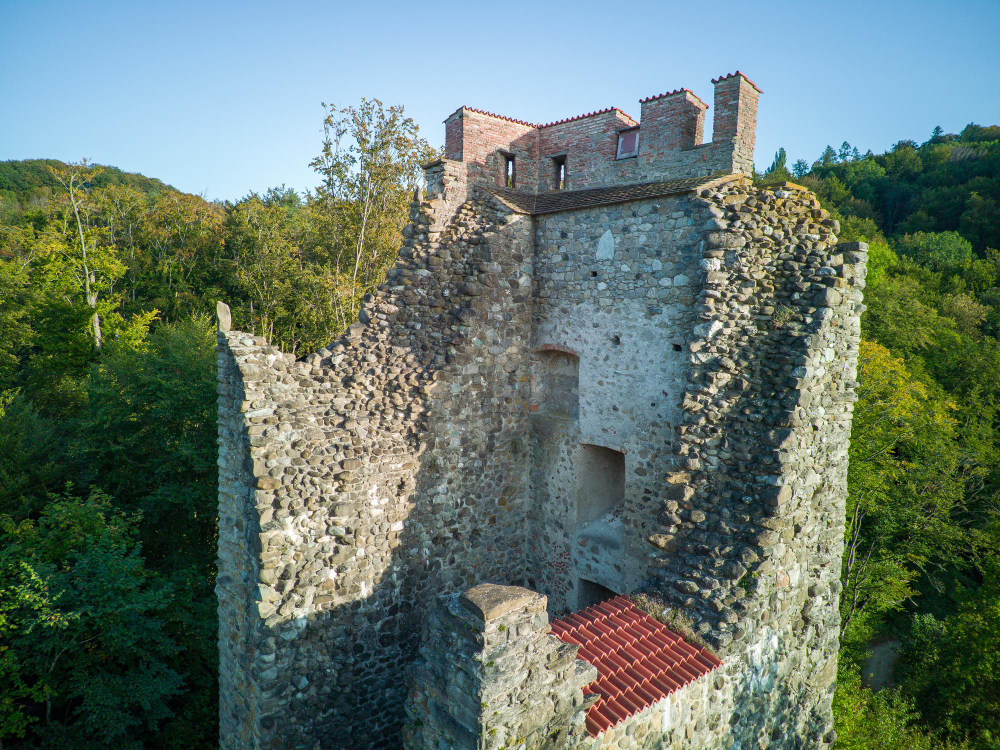
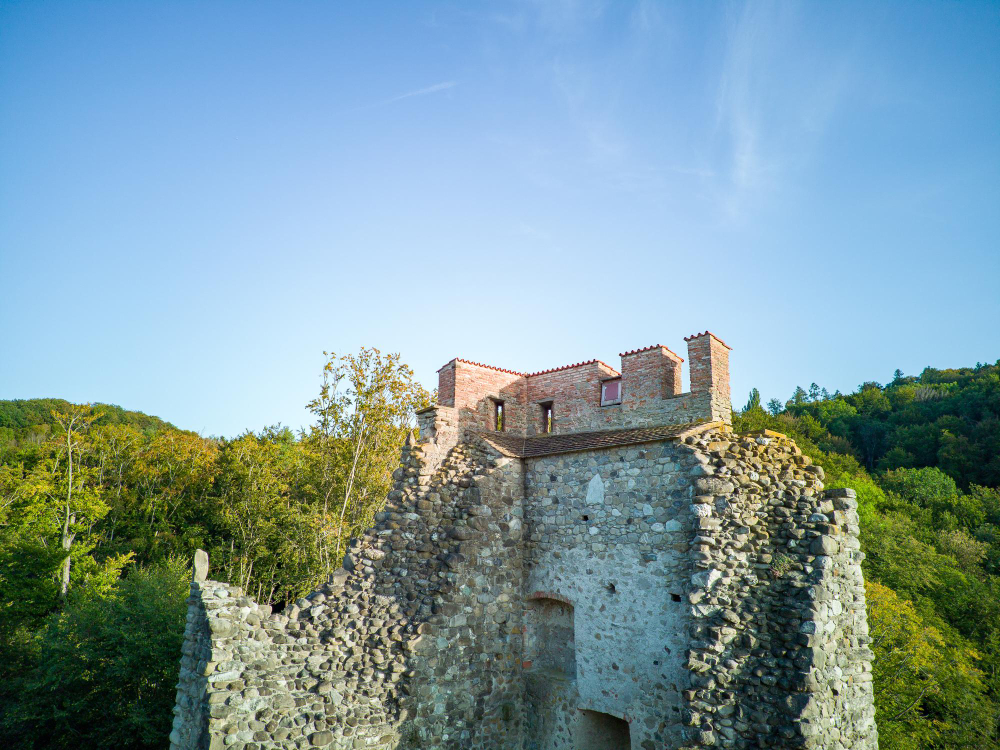
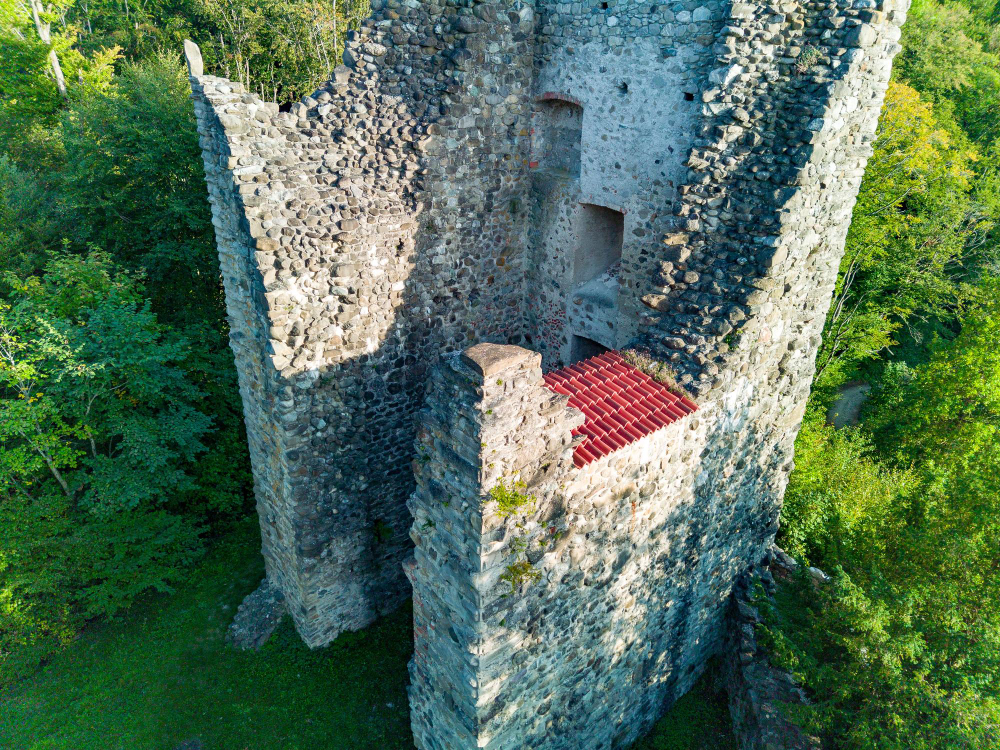
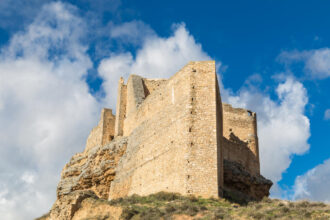
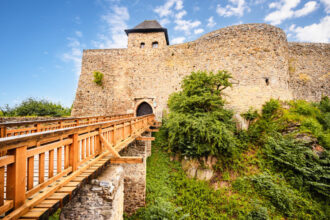
The Fall of the Castle: From Demolition to Ruins – The demolition of Neuburg Castle in the 18th century was part of a widespread phenomenon: many medieval castles were abandoned or even destroyed over the centuries as they lost their original function. Modern fortification techniques, changing political circumstances and economic pressures rendered many of these old defensive structures obsolete. Today, the main features of Neuburg Castle that remain are the extensive ruins of the curtain wall. Despite their state of disrepair, the massive walls still give a sense of the castle’s former grandeur. The remains of the main tower, known as the keep, are visible as foundations. For archaeologists and history enthusiasts, this offers valuable insights into medieval construction methods and defensive strategies. Numerous studies and site surveys have documented the condition of the complex. These reveal that Neuburg originally possessed a sophisticated defensive structure, featuring massive walls and well-designed access points. Its location high above the lake and the surrounding countryside makes the ruin a unique cultural and natural monument in the region.
Legends and myths surrounding Neuburg – Like many historic sites, Neuburg is shrouded in legend. Tales speak of secret passages, hidden treasures and mysterious events said to have taken place within its walls. Whilst concrete evidence is usually lacking, such stories bear witness to the special fascination that such historic sites hold. A well-known legend has it that a valuable treasure was once buried near the castle, which a former lord of the castle had hidden from his enemies. To this day, treasure hunters search for clues, but so far every expedition has proved unsuccessful. Such stories illustrate the myth of Neuburg as a place full of secrets and adventure.
Neuburg today: heritage conservation and a tourist attraction – The ruins of Neuburg are now an important heritage site in the canton of Thurgau. They are listed and maintained by local authorities. The historic site also attracts tourists, walkers and history enthusiasts. The circular walk to the castle offers impressive views of Lake Constance and the Alps. Museums and local historical societies provide information on the eventful history of Neuburg, making a visit an educational experience. The combination of nature, history and legends creates a special atmosphere that allows visitors to immerse themselves in times gone by.
Neuburg – A stone witness to history – Neuburg Castle, situated above Mammern, is far more than just an old ruin. It represents a significant chapter in Swiss and European medieval history. From its construction by Baron Ulrich III of Altenklingen, through its time as a fief of the Abbey of St Gallen, to its ownership by the Abbey of Rheinau, it tells the story of the political and social upheavals spanning several centuries. The fact that it has been preserved as a ruin allows us today to experience this history at first hand and to understand the strategic importance of such hilltop castles. The combination of a solid foundation of historical facts, fascinating legends and the impressive natural backdrop makes Neuburg a cultural gem of the canton of Thurgau and a worthwhile destination for anyone with a passion for history and medieval architecture.