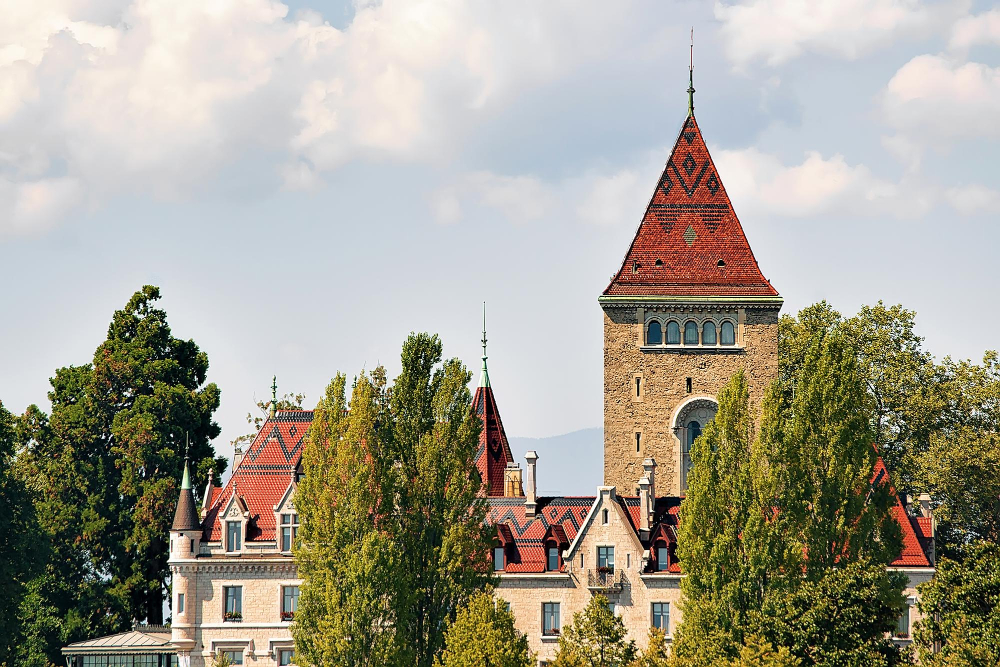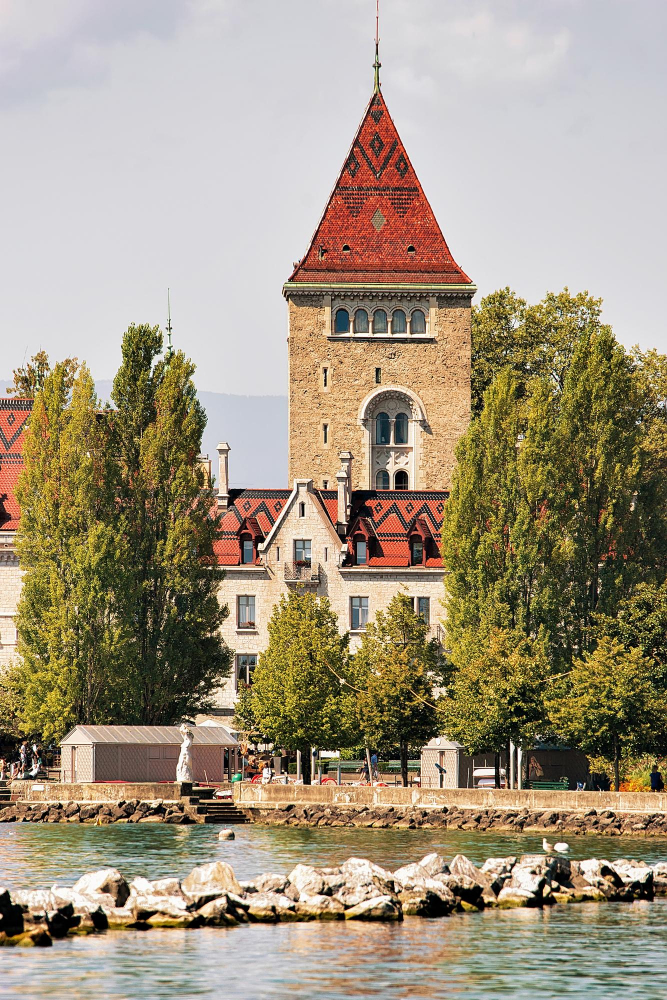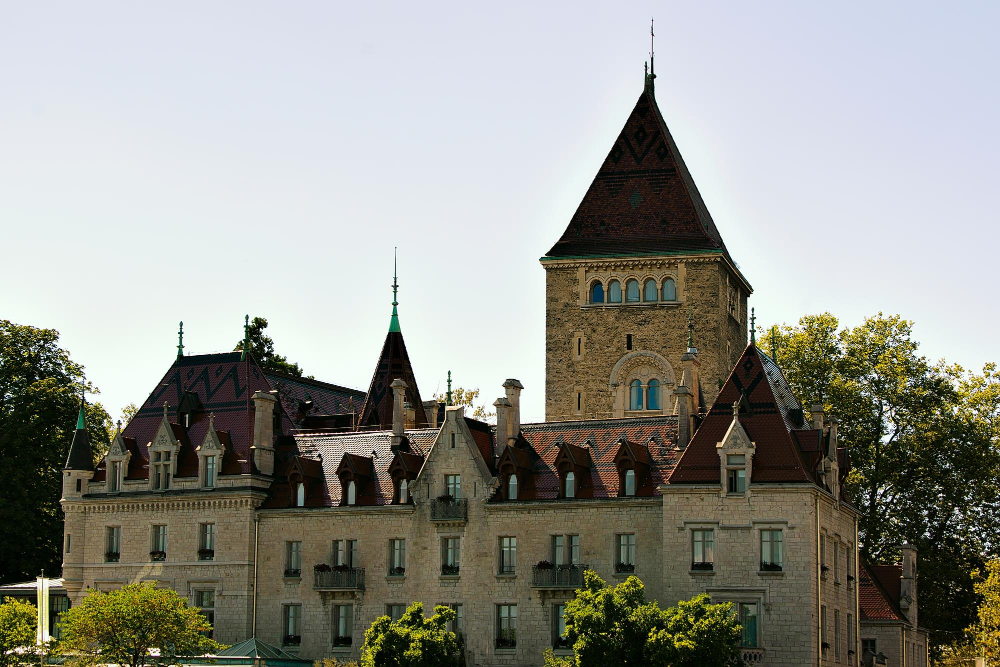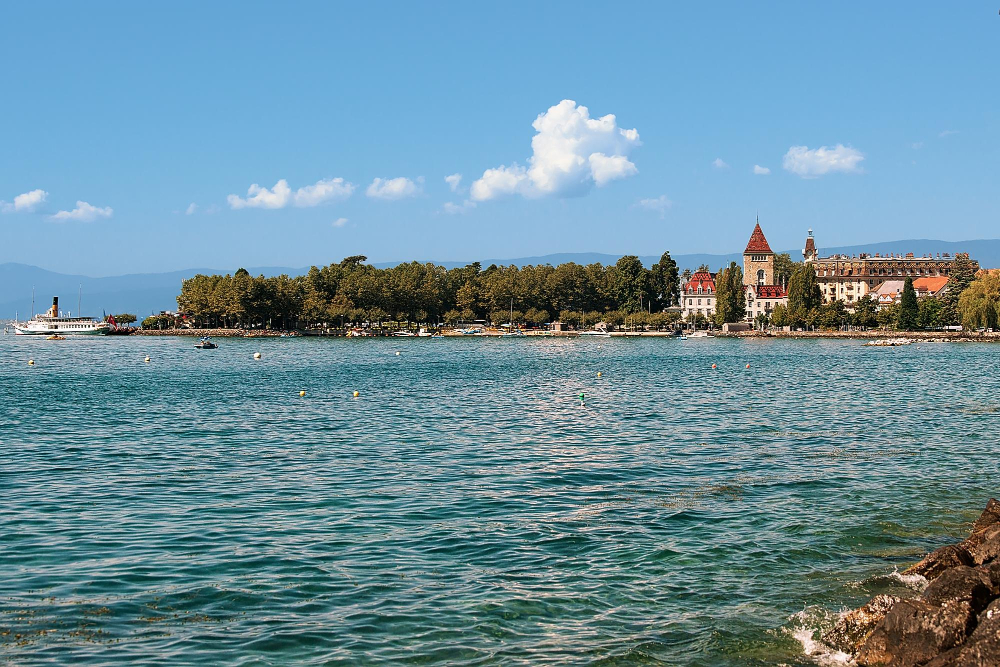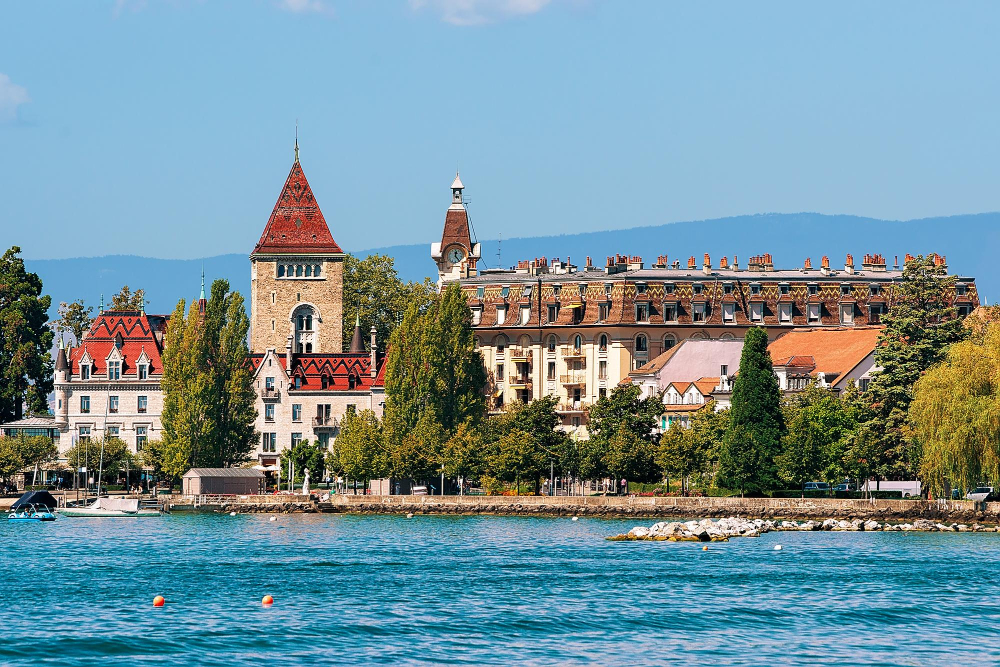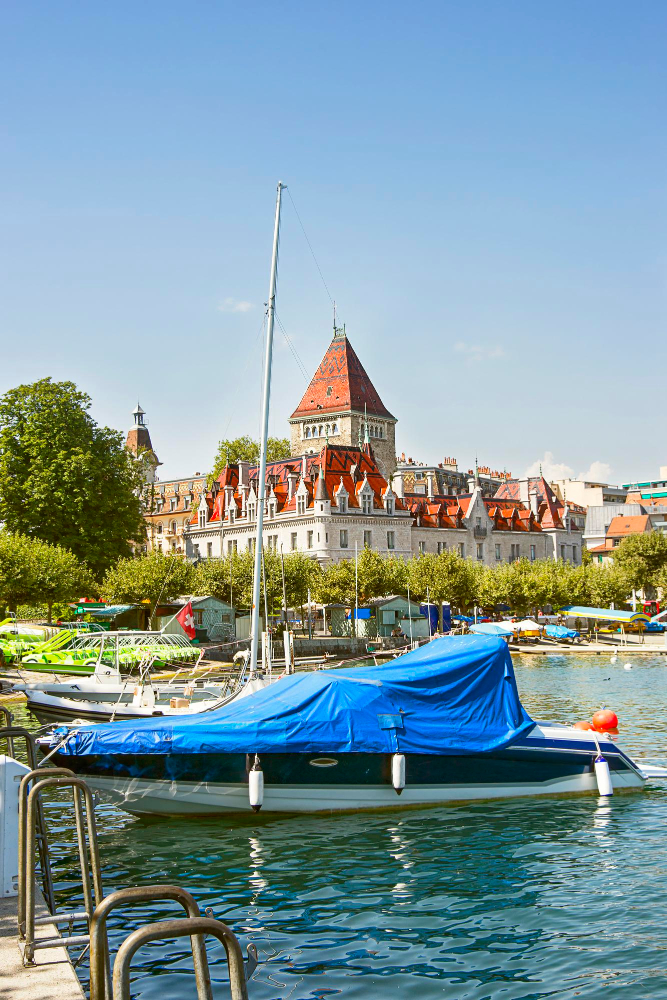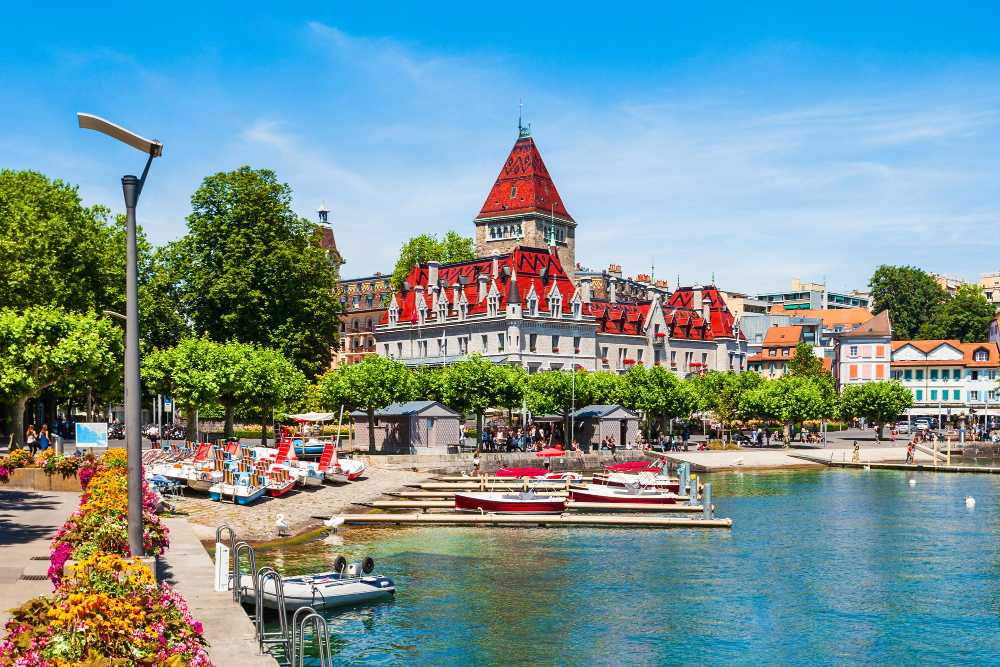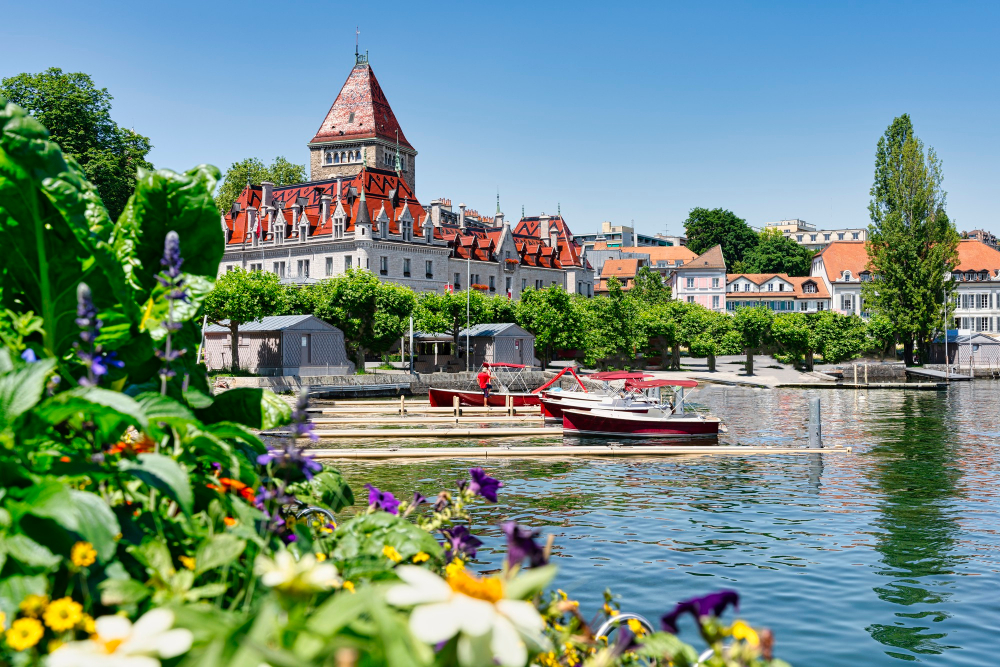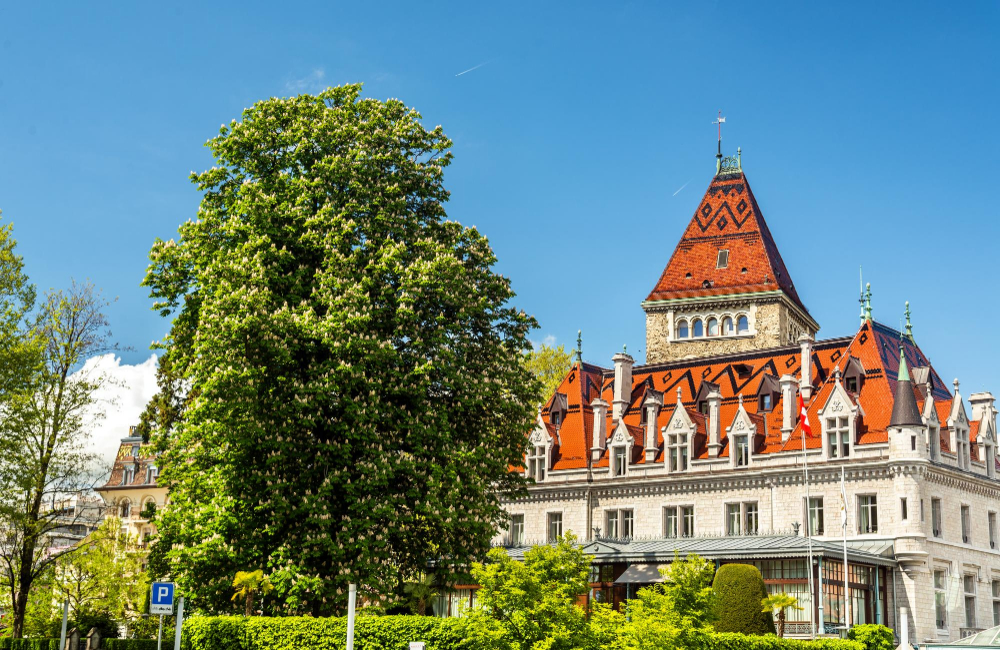

Château d’Ouchy stands majestically on the shores of Lake Geneva, nestled in the charming Ouchy district of the Swiss city of Lausanne. With a history stretching back over eight centuries, the château is more than just an impressive building – it bears witness to historical turning points and human destinies. From a modest residential tower to a magnificent château and finally a luxury hotel, this place has continually reinvented itself without losing sight of its roots.
The Beginnings: A Simple Residential Tower – The history of the Château d’Ouchy begins around the year 1170. Landrich von Dornach, the then Bishop of Lausanne, had a modest residential tower built on the River Ouchy. This tower initially served as part of his episcopal centre of power. But the peace was short-lived: in 1207, the building was destroyed by Count Thomas de Maurienne – a fate that befell many buildings of that era. Shortly afterwards, Bishop Roger I of Vico Pisano had the tower rebuilt. As early as 1273, the site appeared for the first time in historical documents as the ‘Bishop’s House of Ouchy’, before being officially mentioned in 1283 as a ‘castrum’, i.e. a castle complex. This marked the beginning of a phase in which the building grew increasingly in importance.
Expansion into a castle and episcopal summer residence – Over time, the original residential tower developed into an imposing fortified complex. Around 1283, a curtain wall and further outbuildings were added, giving the castle its character as a fortress. The conversion into a stately residence for the bishops of Lausanne is attributed in particular to Guillaume II de Champvent, who also commissioned other notable buildings in the Lucens and Champvent regions. Under his leadership, a great hall was constructed, serving both ceremonial and strategic purposes. The tower itself, often referred to as the ‘Tower of Ouchy’ or the ‘Tower on the Bank’ due to its location and imposing presence, remained the centrepiece of the complex. Over the centuries, the Château d’Ouchy was continuously extended and served various functions. Particularly noteworthy is the role of the castle under William of Varax, who served as Bishop of Lausanne from 1462 to 1466. During his tenure, the fortifications were reinforced and a prison for ecclesiastical offenders was established. The citizens of the surrounding villages of Aran, Chatagny and Grandvaux were required to assist with the expansion. In return, the castle offered them protection in times of crisis. Thus, the Château also became a refuge for the local population.
Destruction and Reconstruction – The 16th century brought dramatic changes for the castle and its surroundings. With the Reformation and the conquest of Vaud by the Bernese in 1536, the purpose of the Château d’Ouchy changed fundamentally. The episcopal residence and administrative centre was converted into a prison. However, these dark years came to an abrupt end with a fire in 1609, which destroyed the central tower and large parts of the complex. Arson was likely the cause of the devastating fire. After the fire, a long period of decline began. The once-proud castle was increasingly left to the ravages of time and even served as a quarry. The medieval tower, however, remained intact and was used as a storeroom for a time. Several new buildings were erected within the curtain wall in the late 17th century, but even these could not save the entire complex. The complex fell into final ruin, and contemporary reports describe how blackberry bushes grew through the ruins.
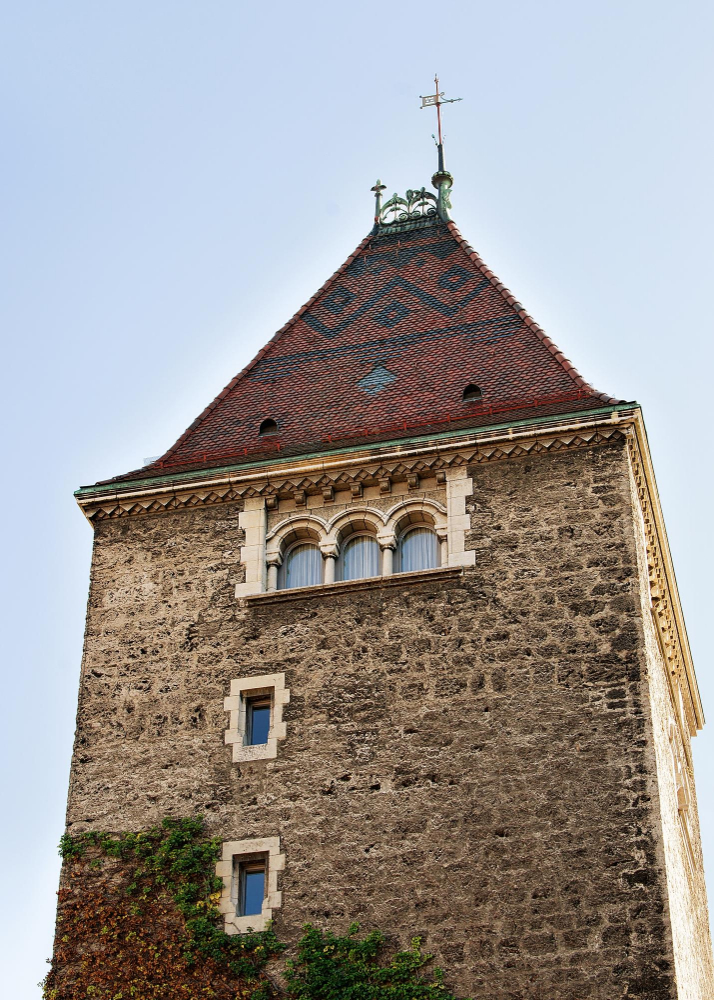
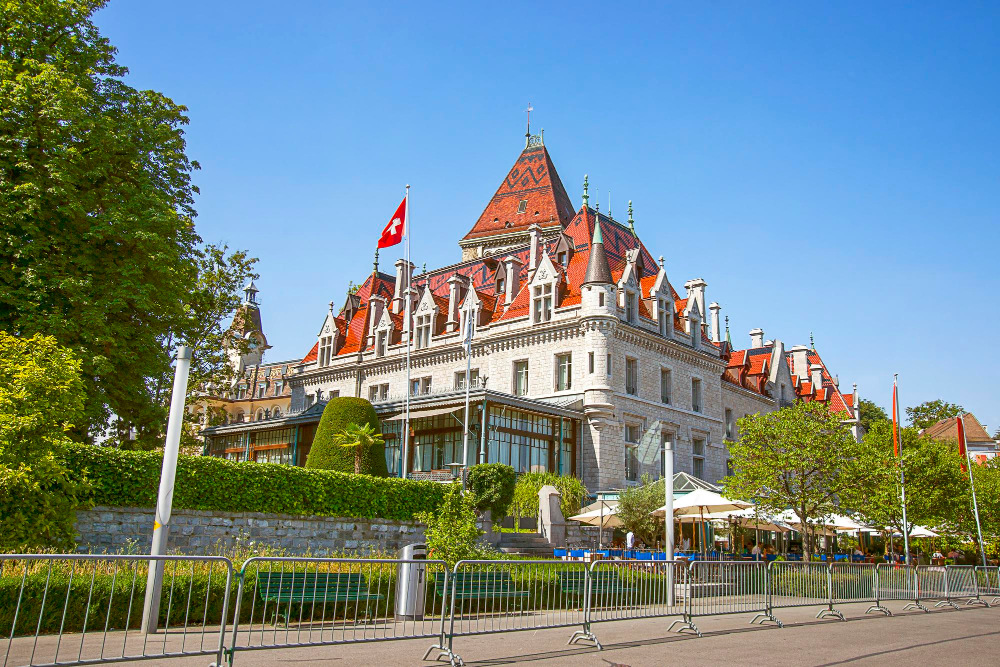
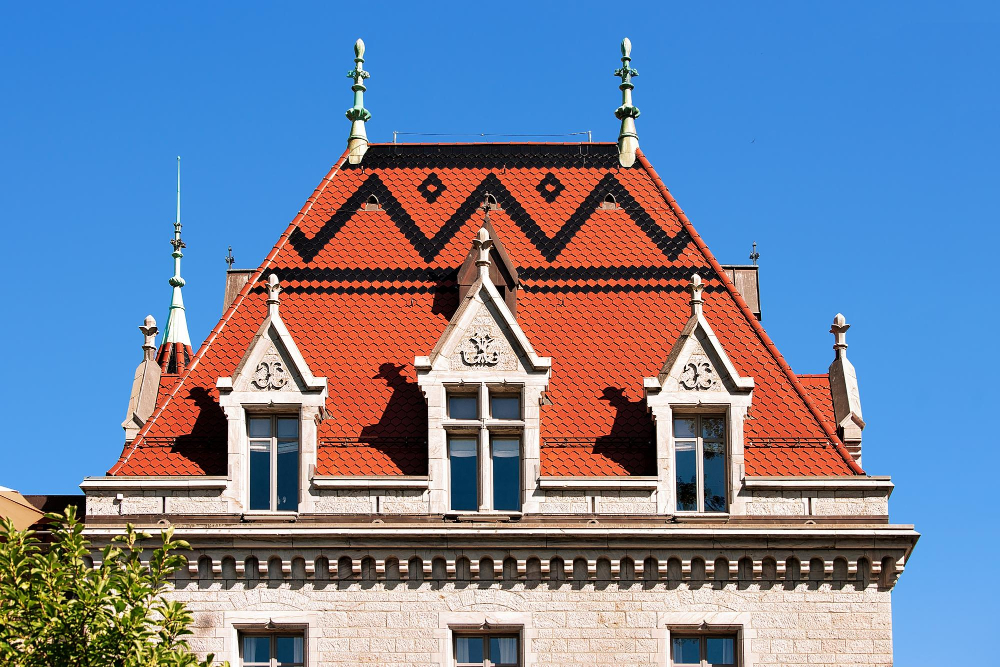
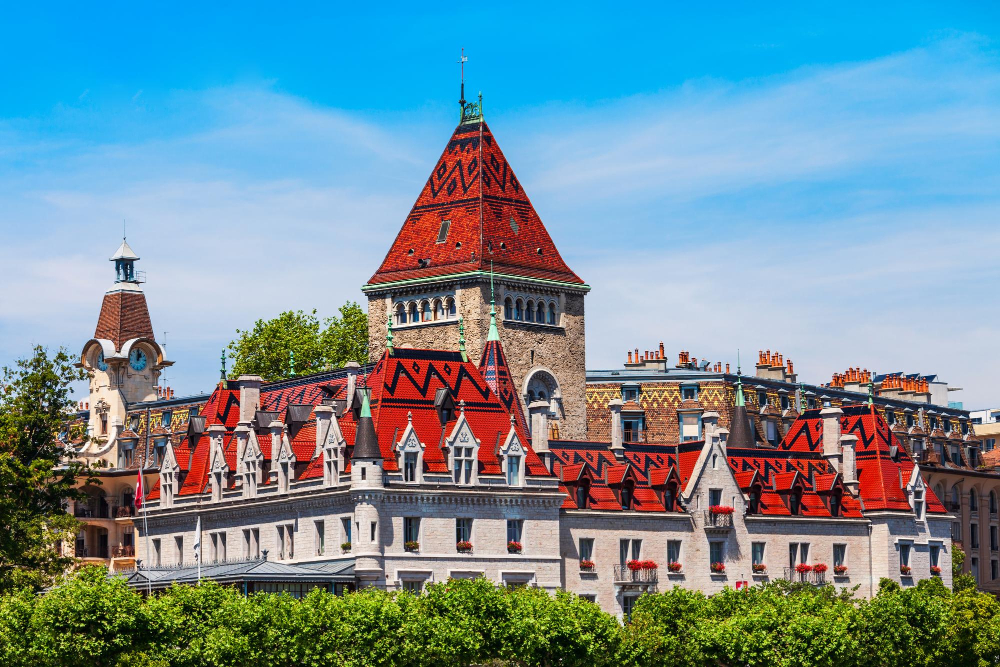
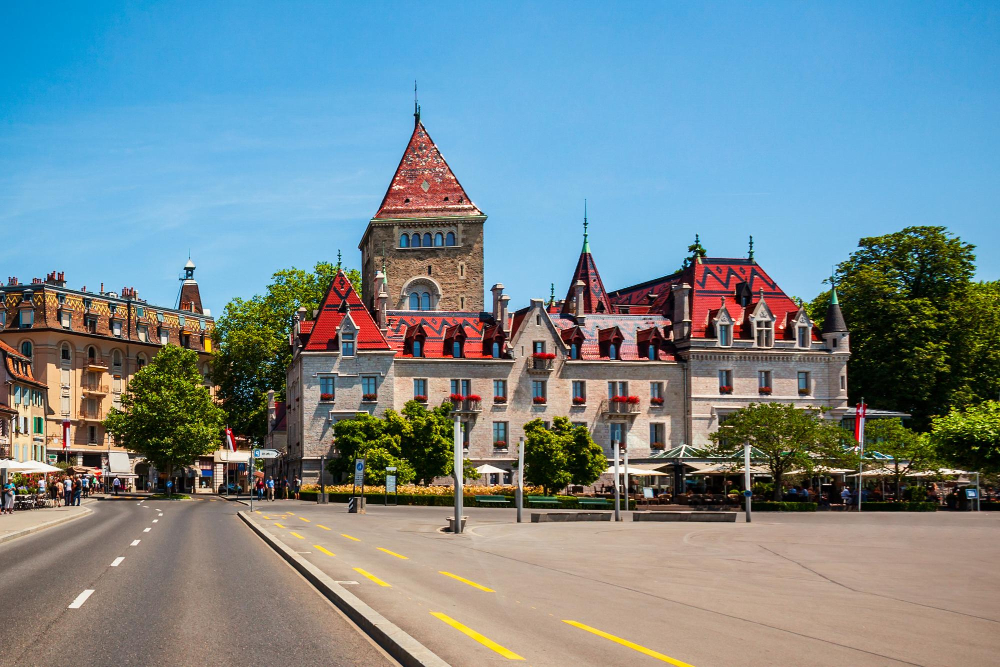
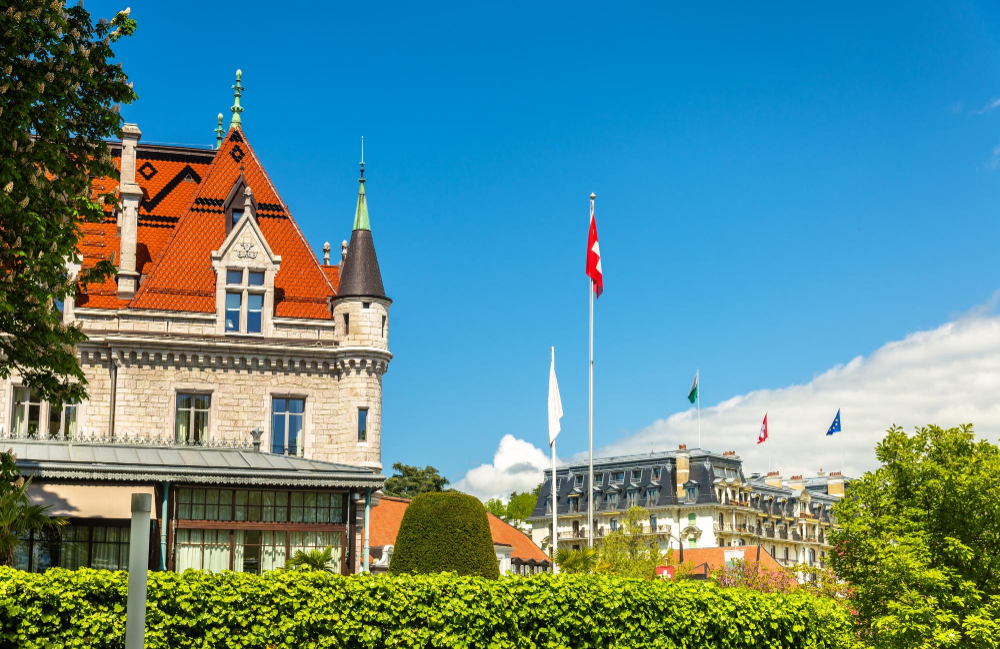
The modern transformation: from quarry to palace hotel – It was not until the 19th century that the Château d’Ouchy was brought back to life. In 1885, the Canton of Vaud decided to sell the estate. The buyer, a man named Jean-Jacques Mercier, had a revolutionary vision: he wanted to transform the dilapidated castle into a masterpiece of Neo-Gothic architecture. Between 1885 and 1888, he had the ruins demolished, whilst the historic tower was preserved and modernised. He then commissioned the architect Francis Isoz to construct a new, magnificent building. The result was a château that embodied the romanticism of the 19th century whilst offering all the amenities of a modern luxury hotel. Between 1889 and 1893, the Château d’Ouchy as we know it today was built, and it remains one of the most beautiful buildings on Lake Geneva to this day. The tower, the sole remnant of the medieval complex, was skilfully integrated into the neo-Gothic structure and reminds visitors of the site’s eventful history.
Political significance: The Treaty of Lausanne – In addition to its architectural beauty and historical significance, the Château d’Ouchy also played a role on the international political stage. On 24 July 1923, the Treaty of Lausanne was signed here. Following the Greco-Turkish War (1919–1922), this agreement led to a political reorganisation of the region and established the borders between Greece and Turkey. A controversial population exchange between the two countries was also agreed. The treaty is regarded as a turning point in Turkey’s recent history and demonstrates just how significant a seemingly remote château can be in international diplomacy.
The complex today: history you can touch – Today, the Château d’Ouchy is a popular destination for tourists and locals alike. As a luxurious four-star hotel, it attracts guests from all over the world who are captivated by its impressive architecture, picturesque lakeside location and historic atmosphere. The central tower, which has stood the test of time, tells of bygone eras, whilst the neo-Gothic architecture delights the eyes of modern visitors. The complex also offers an ideal setting for walks along the lakeshore or for sweeping views of the Alps. Historians, architecture enthusiasts and romantics alike will find inspiration and relaxation here. Despite numerous renovations and alterations, the château exudes a timeless aura that preserves its eventful past.
A landmark of Lausanne – The Château d’Ouchy is far more than just a beautiful building on Lake Geneva. It is a living history book that bears witness to power struggles, destruction, reconstruction and political significance. Its transformation from a bishop’s seat to a ruin and finally to a luxurious hotel shows that historic buildings are not only testimonies to the past, but can also create space for new stories. Visitors to the château are immersed in a world of legends and facts that unfold like the chapters of a gripping novel. Whether you are fascinated by the architecture, the history or simply the view of the sparkling Lake Geneva – the Château d’Ouchy will exceed your expectations. Perhaps during your visit you will discover hidden details that tell you of the many lives of this extraordinary place.