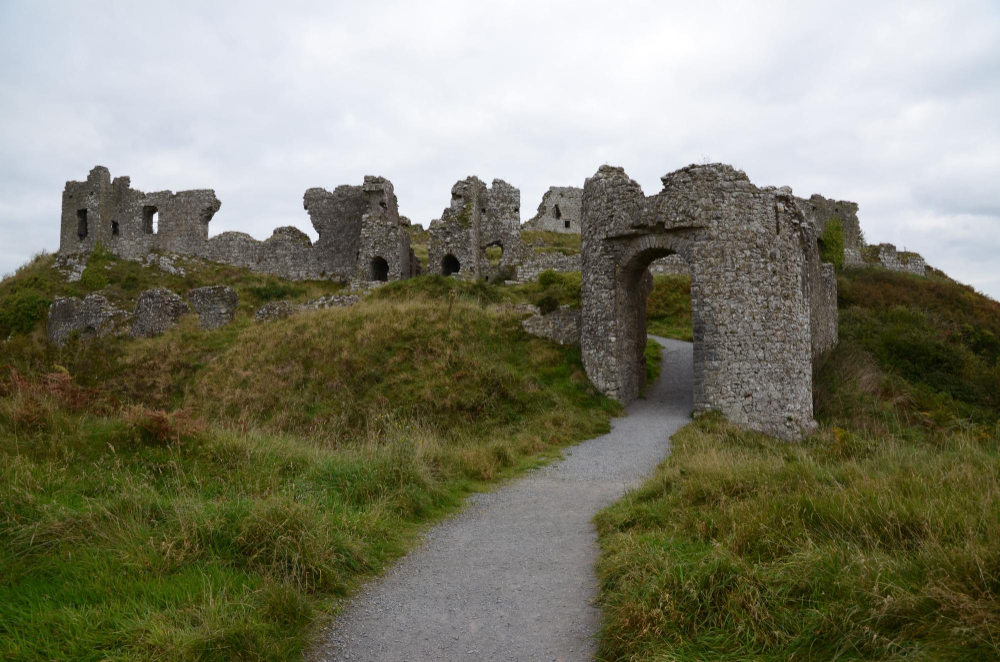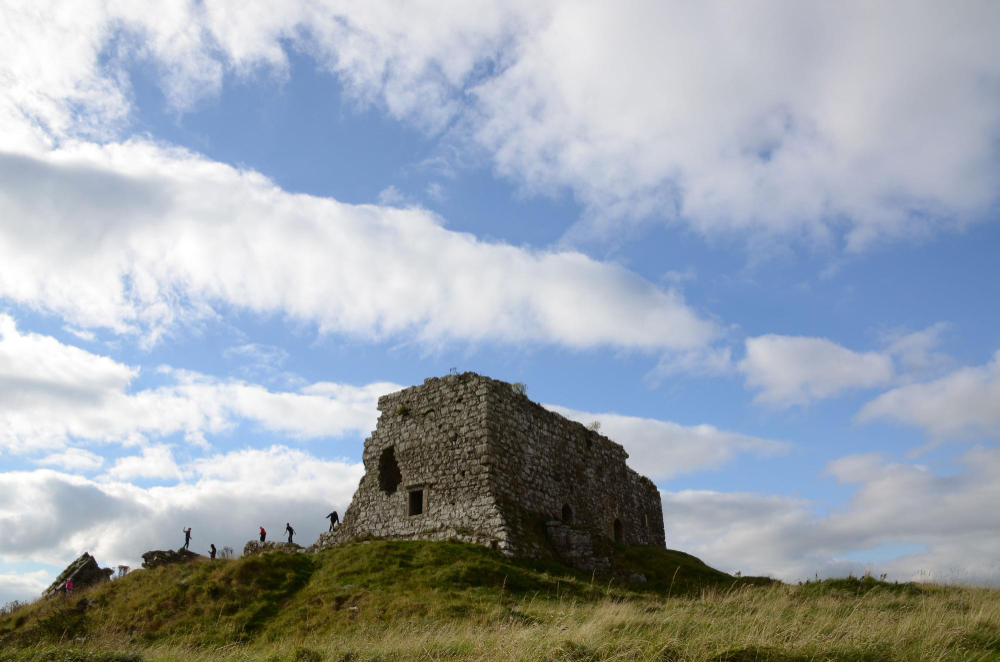

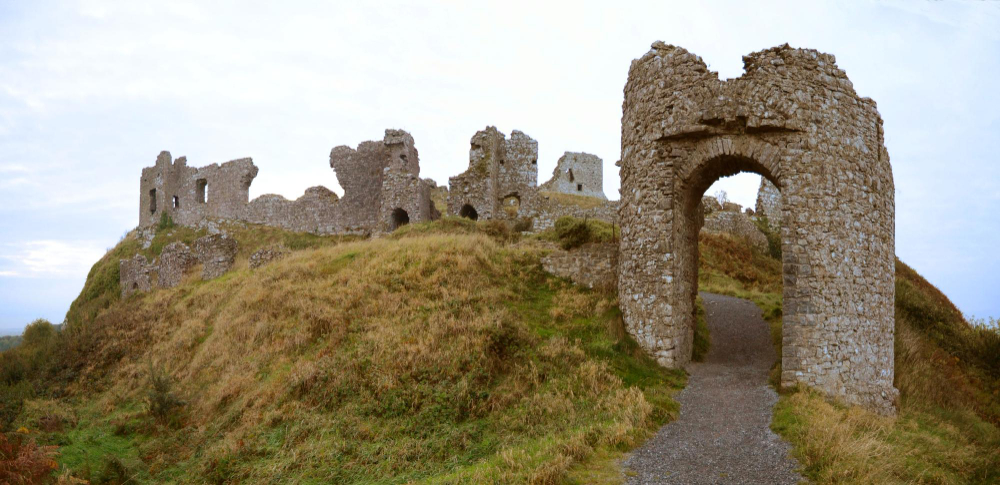
The “Rock of Dunamase,” also known as Dún Másc (Irish for “Fortress of Másc”), rises majestically on a rocky hill in County Laois, Ireland. The ruins of Dunamase Castle, rising 46 meters above the surrounding plains, offer a breathtaking view of the Slieve Bloom Mountains and attract visitors from all over the world. Yet behind the picturesque ruins lies a history steeped in myths, power struggles, and tragedies that dates back to the earliest years of Irish settlement.
A Historical Map and the Earliest Beginnings – The significance of the Rock of Dunamase dates back a long way, as far back as the year 140, when it was first recorded on the map of the Greek geographer Ptolemy. Archaeological excavations in the 1990s have shown that the distinctive hill was first settled in the 9th century. At that time, the inhabitants built a fortified complex, a so-called “Dún.” In 845, this site made headlines when Vikings from Dublin attacked the fortress and killed the abbot of Terryglass, Aed, son of Dub dá Chrích. However, there is no clear evidence that the site was continuously inhabited in the centuries that followed, before the Normans left their mark.
The Norman Era: Power and Intrigue – In the late 12th century, a new era began for Dunamase when the Normans arrived in Ireland and settled in the region. The castle became a strategic Hiberno-Norman defensive stronghold and played a key role in the political and social upheavals of that time. One of the most notorious episodes in the castle’s history is linked to the King of Leinster, Dermot MacMurrough. MacMurrough abducted Dervorgilla, the wife of the King of Breifne, and brought her to Dunamase. This act led to a conflict between the O’Rourke and O’Connor clans and MacMurrough, who was eventually forced to leave Ireland. To regain his power, MacMurrough allied himself with Richard de Clare, better known as Strongbow, a powerful Norman conqueror. As part of their agreement, Dunamase, along with MacMurrough’s daughter Aoife, was handed over to Strongbow. Their marriage laid the foundation for the Norman invasion of Ireland and marked a turning point in Irish history.
The Decline of the Castle – Through the marriage of Strongbow’s daughter Isabel, Dunamase later passed into the possession of the Marshal family. William Marshal, one of the most prominent knights of his time and Regent of England, inherited the castle. After his death, the estate passed through several hands, including the Mortimer family. By the mid-14th century, however, the castle had fallen into disrepair and was increasingly neglected. By as early as 1350, it was no longer habitable and resembled a ruin. From the late 1400s through the 16th century, Dunamase remained part of the territory of the powerful O’More family, who ruled County Laois. This family bravely resisted the steadily growing English influence, particularly during the Plantations of Ireland—a period marked by land expropriations and resettlements. Rory O’More, the family’s most famous member, fought tenaciously against the English and became a symbolic figure of Irish resistance.
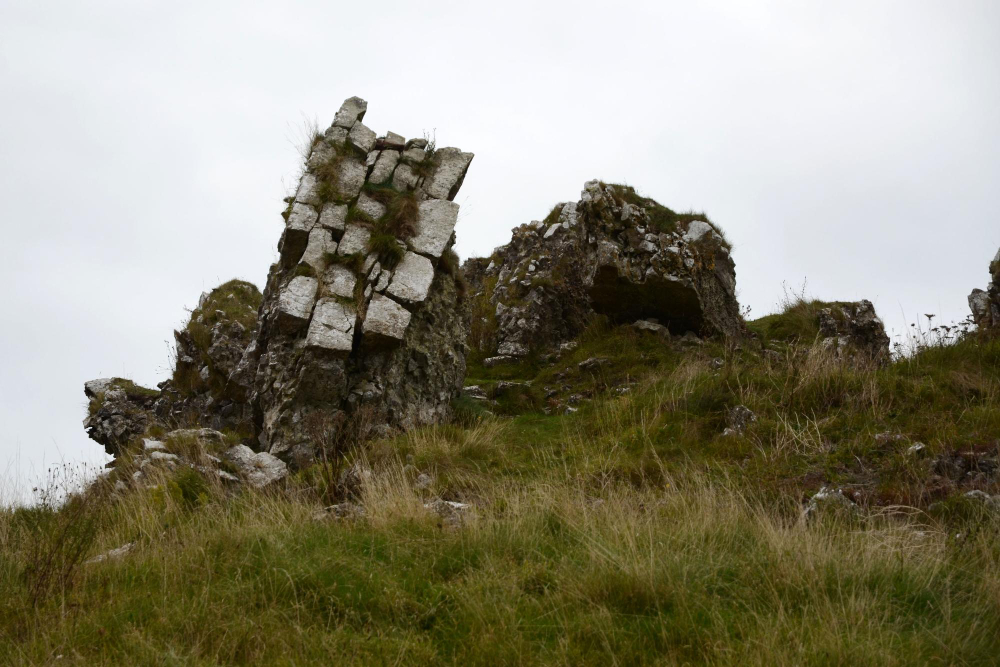
The Destruction and the New Beginning – A dark chapter in the castle’s history occurred in 1650, when it was deliberately damaged (“blown up”) during the Cromwellian Wars to prevent it from being used by enemy troops. Since then, the Rock of Dunamase has remained in a state of ruin. In the late 18th century, however, Sir John Parnell attempted to build a banquet hall within the ruins. In doing so, he utilized medieval architectural elements from the surrounding area, which were integrated into the new structures. His ambitious project was never completed, however, which has preserved the castle’s melancholic charm to this day.
The Legends of Rock of Dunamase – In addition to its historical significance, numerous myths and legends surround Rock of Dunamase. It is said that the ghost of Dervorgilla, the abducted wife, still wanders through the ruins in search of peace. It is also said that the castle was once full of riches and had secret tunnels leading to underground treasure chambers. The stories of hidden treasures and ghostly apparitions lend Rock of Dunamase a mystical character that has been passed down in Ireland for generations. Another legend associated with the castle concerns the O’More family. According to the tales, the blood of this proud family was never completely driven from Ireland, despite their expulsion and the losses they suffered due to English colonial ambitions. Some believe that the return of their descendants one day could symbolize the rebirth of Irish independence.
A Place Full of Magic and History – Today, the ruins of the Rock of Dunamase are a popular destination for tourists and history buffs. Its history as a setting for political intrigue, brutal battles, and romantic tragedies makes it one of Ireland’s most fascinating places. Visitors can explore the castle’s remains and marvel at the view once enjoyed by powerful rulers. But it is not only the physical beauty of the site, but also the aura of the past that makes Dunamase a unique experience.
The Rock of Dunamase is more than just a historical ruin. It is a living testament to Irish history, populated by legends and memories of times long past. From Viking raids to Norman conquests to the battles of the O’Mores, the castle remains a monument to Ireland’s complex and often painful history. At the same time, it is a place that inspires hope and fascination—a place where past and present converge, captivating every visitor with its magical atmosphere.