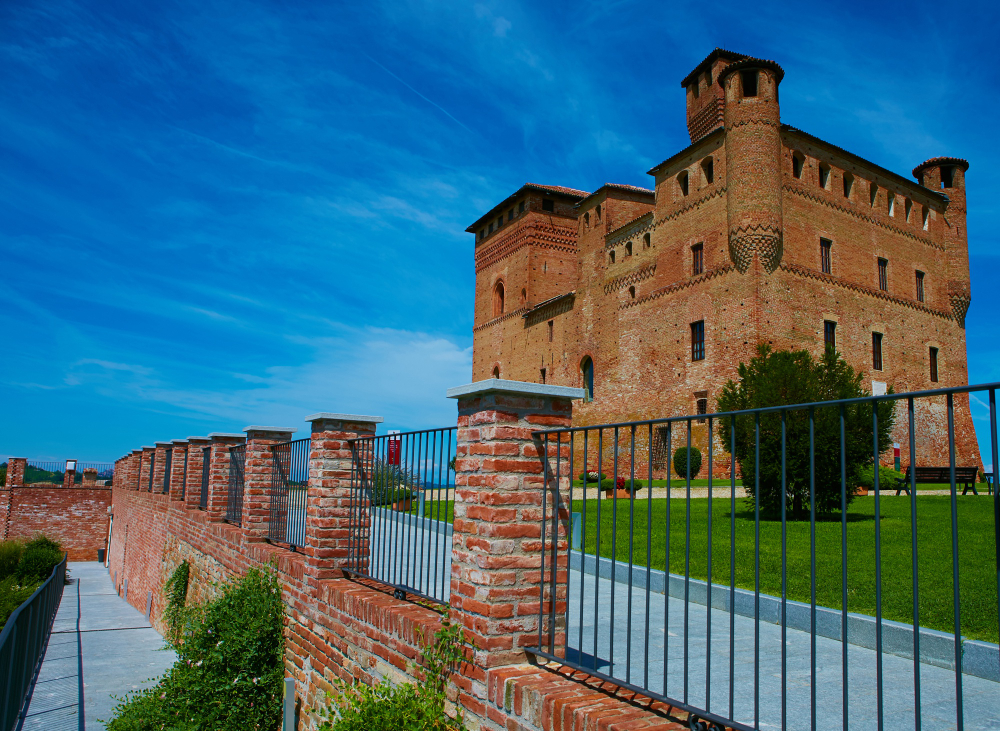

In the heart of the Piedmontese hills, surrounded by the famous vineyards of the Langhe, stands a historic castle that is not only a witness to Italian history but also a symbol of the region’s culture and viticulture: Grinzane Cavour Castle. With its rich history, impressive appearance, and the legends that surround its walls, this structure is more than just an architectural monument—it is a gateway to bygone eras and a living testament to significant events. Since June 22, 2014, the castle has been part of the “Vineyard Landscape of Piedmont: Langhe-Roero and Monferrato,” a UNESCO World Heritage Site.
Origins Shrouded in the Mists of Time – The origins of Grinzane Cavour Castle remain obscure. Historical sources provide only scant information about the building’s origins, and even experts cannot definitively date its beginnings. Some speculate that the castle was built as early as the 13th century, while others date its construction to around 1350. What is certain, however, is the central structure of the massive tower fortress, which is likely the oldest element of the castle. Although the castle was originally designed as a defensive structure, it was renovated and remodeled several times over the centuries to adapt it to the needs of its inhabitants. As early as the 15th century, the estate belonged to the Busca family, whose symbols and coats of arms were discovered beneath layers of plaster in some rooms. Later, the castle changed hands several times before coming into the possession, in the mid-19th century, of a man whose name is inextricably linked to the history of Italy: Camillo Benso di Cavour.
Cavour – The Architect of Unity – Camillo Benso di Cavour is known not only for the restoration and modernization of the castle, but also for his significant contribution to Italy’s political development. As mayor of Grinzane (from 1832 to 1849), Cavour used the castle both as a residence and as a center for innovation in viticulture. His efforts to develop the region and its wine production played a key role in laying the foundation for the fame of Langhe wines today. In addition to his contributions to agriculture, Cavour has gone down in history primarily as one of the leading figures of Italian unification. After Cavour’s death, his influence on the castle and the region remained undiminished. Today, his achievements are honored in an ethnological museum housed within the castle. Original 19th-century furniture, historical documents, and information about Cavour’s life and work transform the rooms into a place where history comes alive.
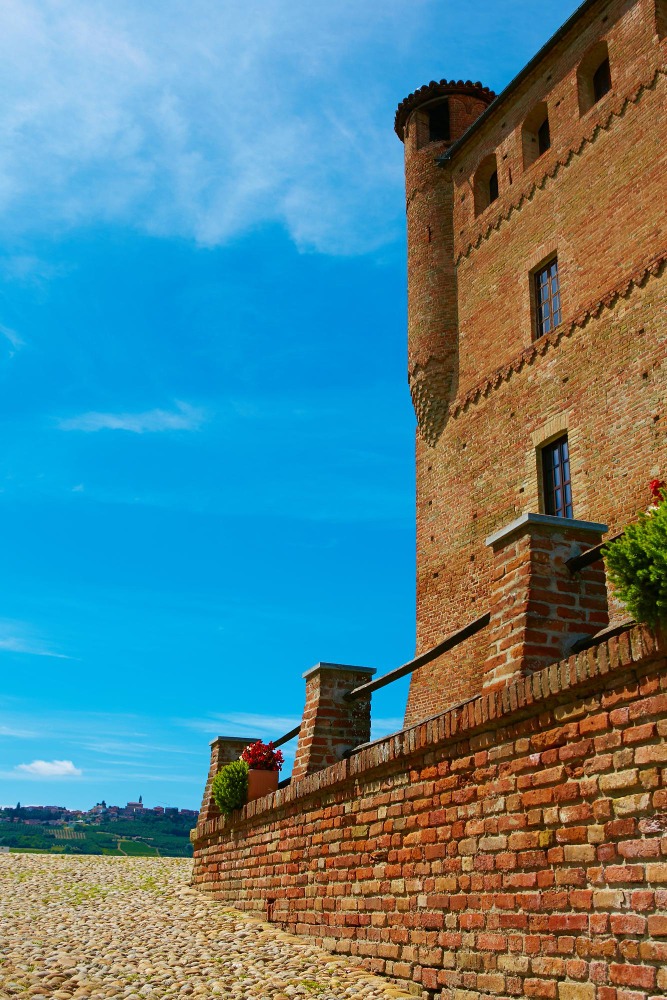
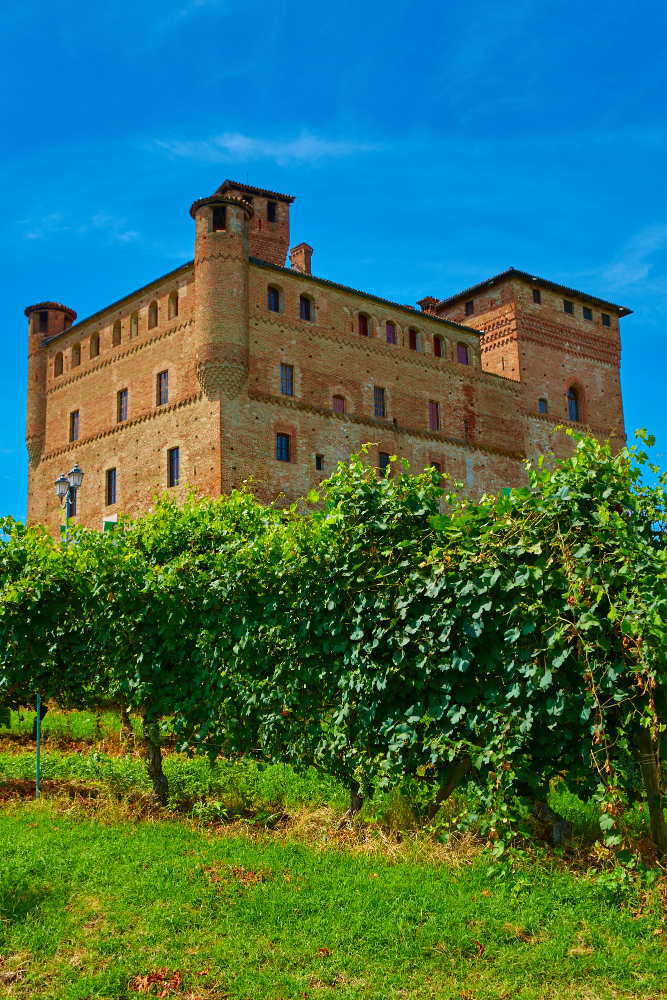
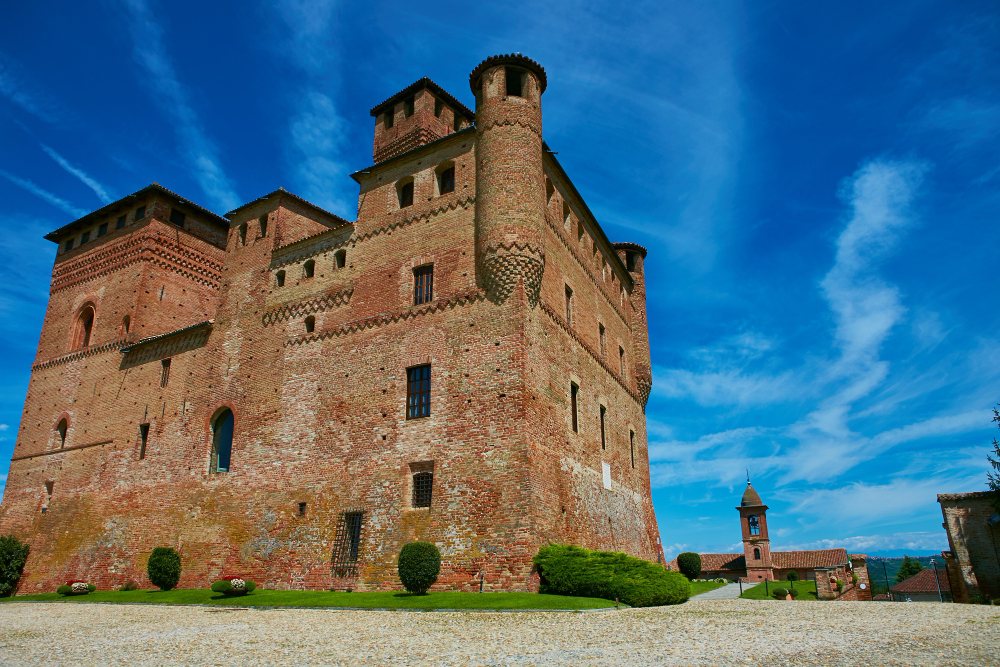
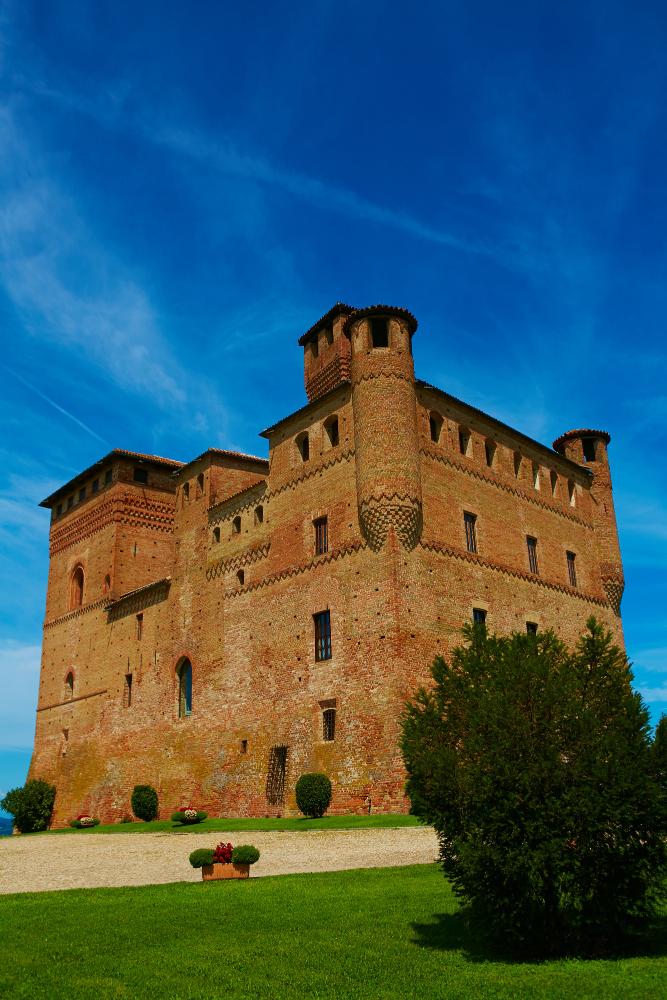
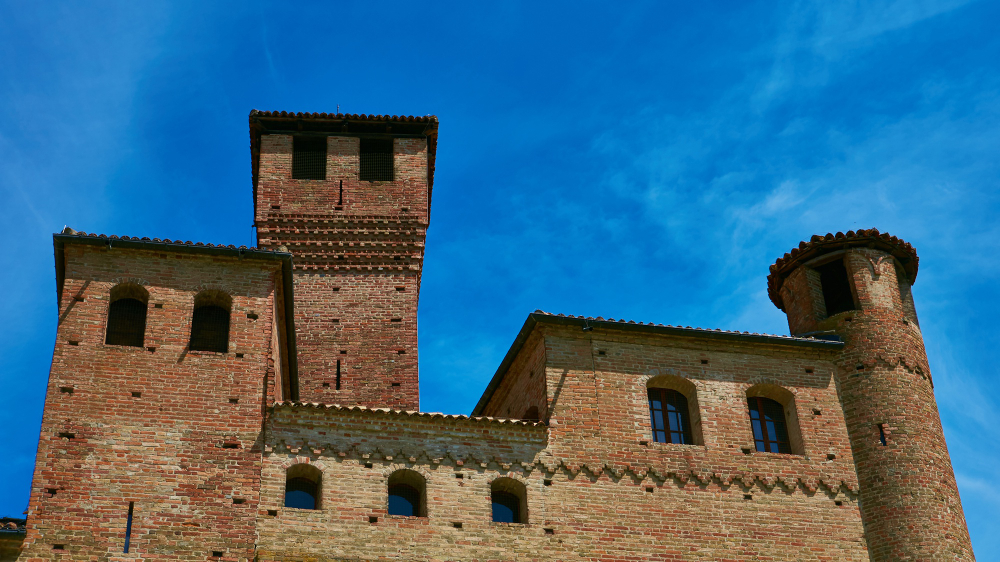
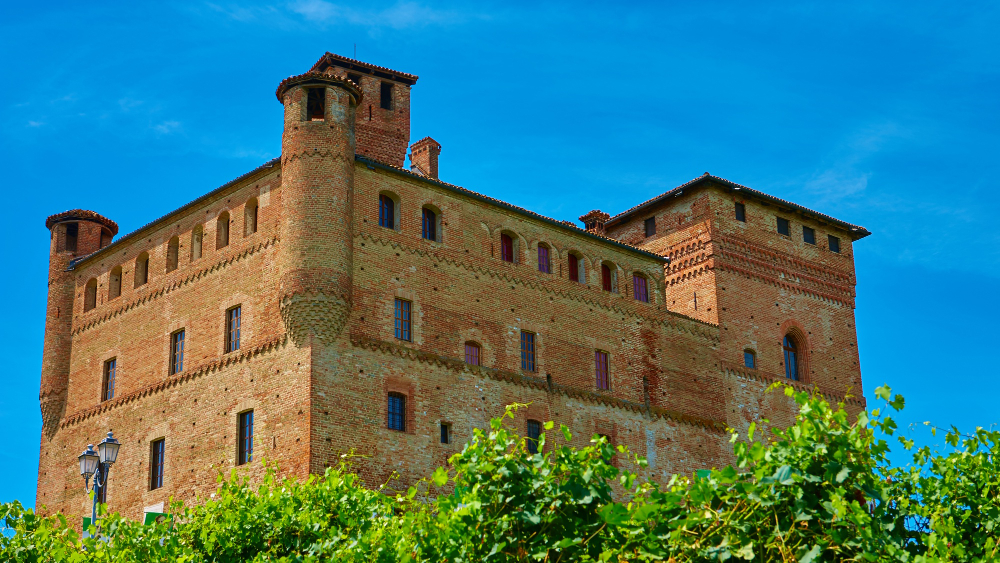
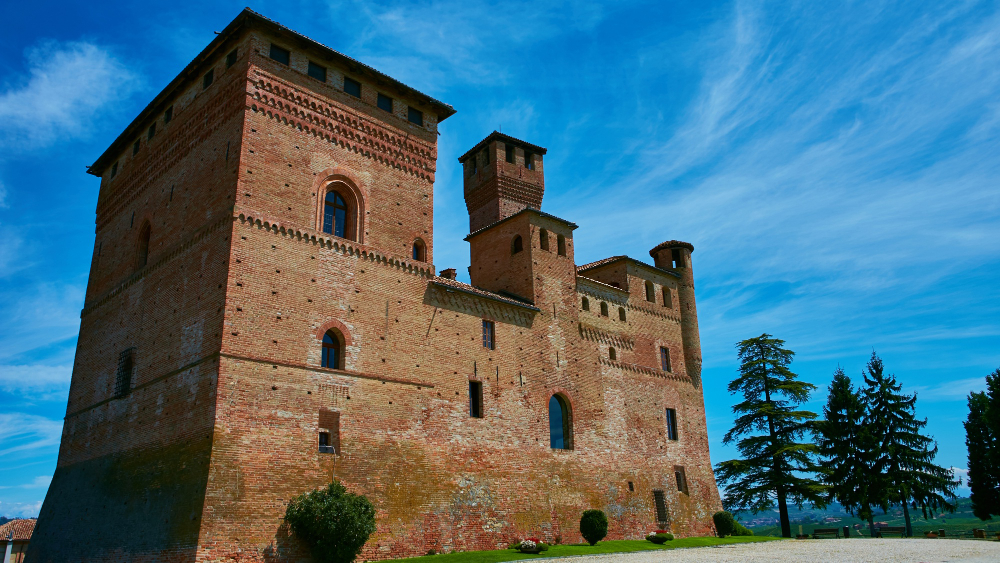
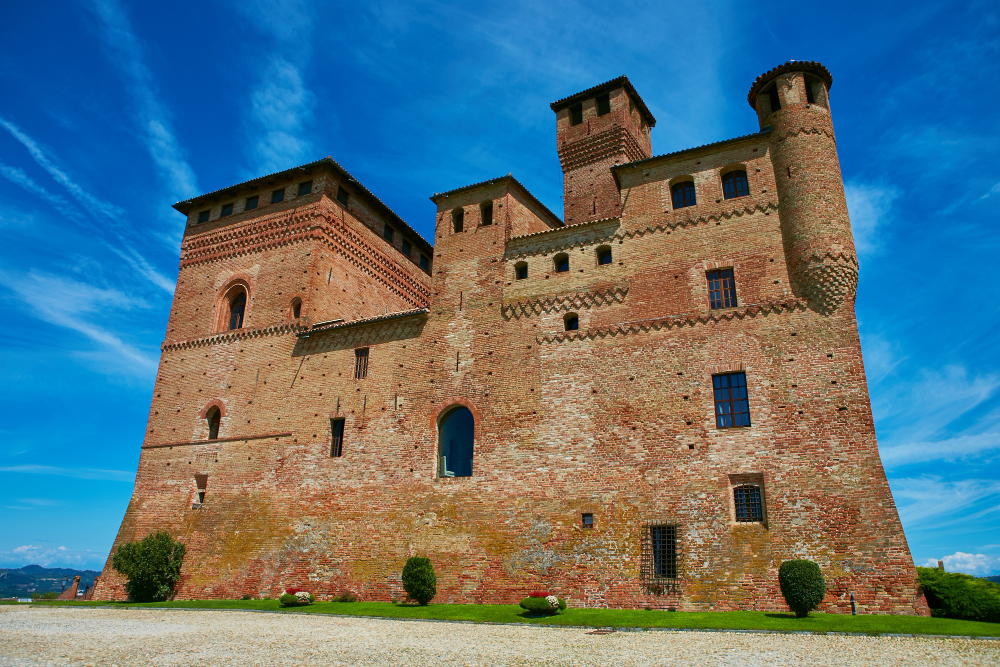
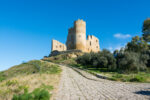
Architecture and Art in Harmony – Grinzane Cavour Castle impresses not only with its historical significance but also with its architectural design. With its rectangular floor plan and massive construction, the building appears both imposing and elegant. Particularly striking is the large keep, which occupies an entire wing. The U-shaped complex is complemented by four towers: two square and two round towers, the latter of which were added only in the 16th century. A particularly beautiful detail is the top of the round towers, which architecturally evokes the Renaissance. Also noteworthy is the so-called “Sala delle Maschere” (“Hall of Masks”), which represents a unique artistic highlight. The vaulted ceiling of this room is decorated with 157 artistically painted wooden panels depicting coats of arms, animals, and symbolic representations. Experts believe this work was created in honor of the wedding of Pietrino Falletti, who owned the castle in 1517. Another milestone in the castle’s modern history was the opening of a new building in 2010. This building houses educational facilities and conference rooms, transforming the castle into a hub for cultural and academic events.
The Castle Today: A Center for Wine, Culture, and Enjoyment – Today, Grinzane Cavour Castle is more than just a historic landmark—it is a vibrant place that celebrates the connection between past and present. Inside is a regional wine bar founded in 1967, dedicated to showcasing the famous wines of the Langhe region. Barolo and Barbaresco, considered top-tier wines, take center stage here. In addition, the castle houses a café and the renowned restaurant “Marc Lanteri Al Castello,” regarded by food connoisseurs as a culinary highlight of the region. The combination of fine wines and exquisite cuisine makes the castle an essential destination for connoisseurs.
Myths and Legends Surrounding the Castle – Like any ancient structure, Grinzane Cavour Castle is shrouded in numerous legends. One of the most mysterious stories concerns the underground vaults and passageways, which are said to have been used in times long past to secretly bring people to safety or to facilitate secret trade routes. Local lore even includes stories of hidden treasures said to lie deep beneath the castle’s foundations. Another legend tells of a ghost said to roam the halls of the castle, particularly near the Masked Hall. It is said to be the ghost of a former resident who met a tragic end in the Middle Ages. Whether these stories are true or merely a product of the imagination remains a mystery—yet they lend the castle an additional mystical aura.
A Must-See for Culture and History Enthusiasts – Grinzane Cavour Castle is not just a building, but a journey into the past and a testament to Italian history. Here, architecture, art, politics, viticulture, and legends merge into an impressive overall experience. The UNESCO designation honors not only the beauty of the structure but also its role as a center for culture and wine tradition.
Whether you’re a lover of historic sites, a foodie, or simply curious about the secrets of bygone eras—Grinzane Cavour Castle promises an unforgettable experience that appeals to all the senses. Embark on a journey back in time to medieval Italy and discover the fascinating stories this place has to tell.