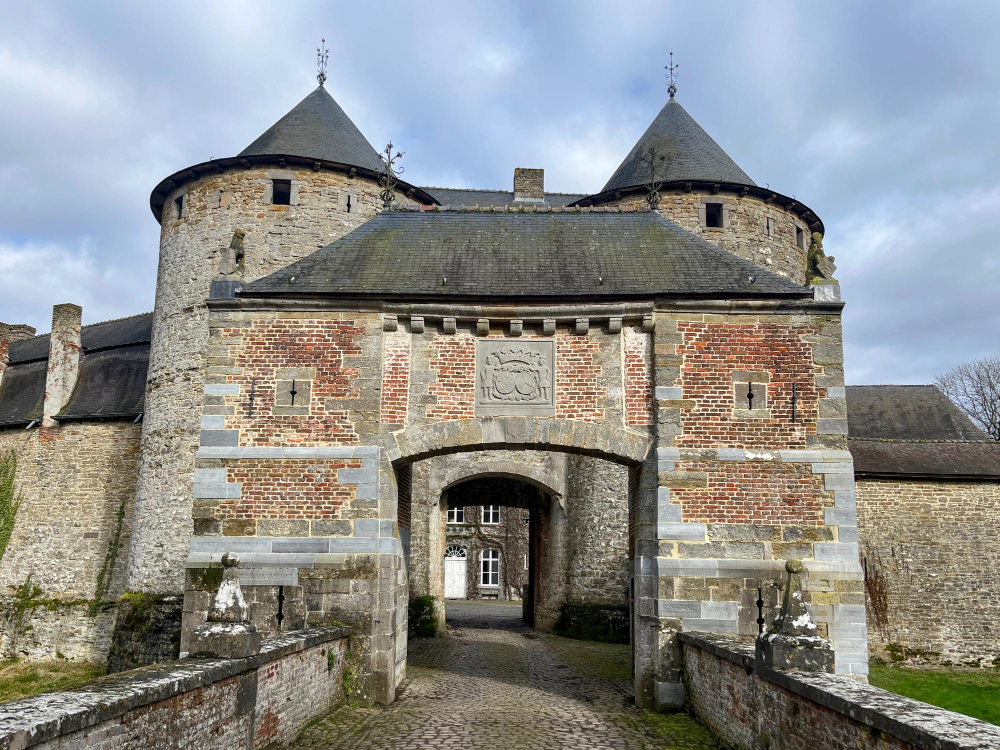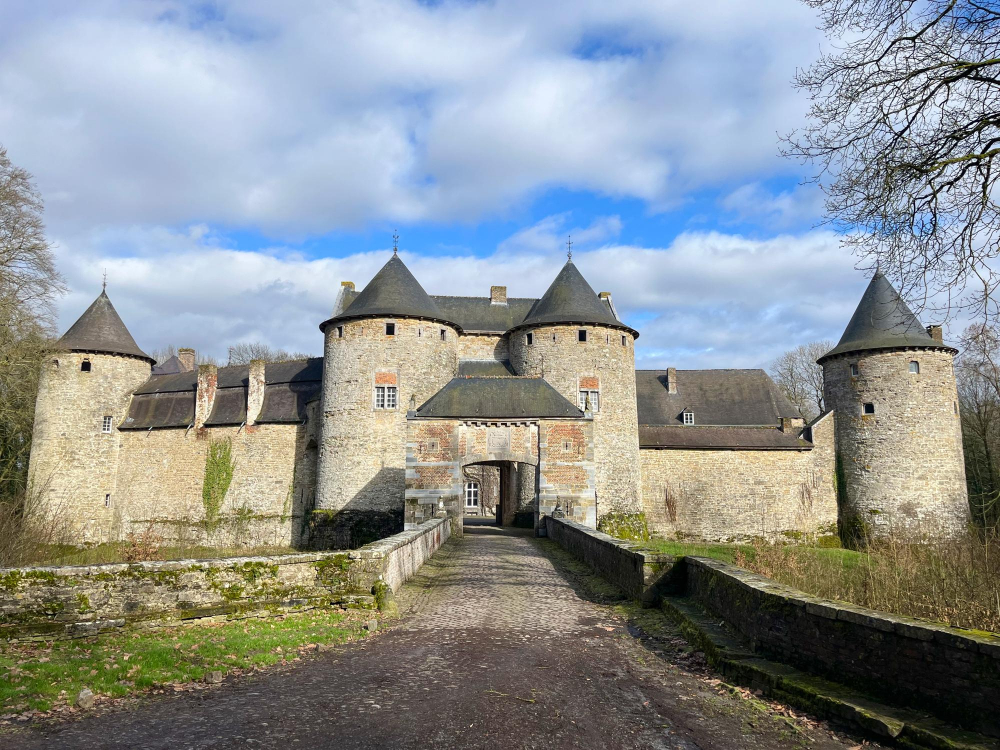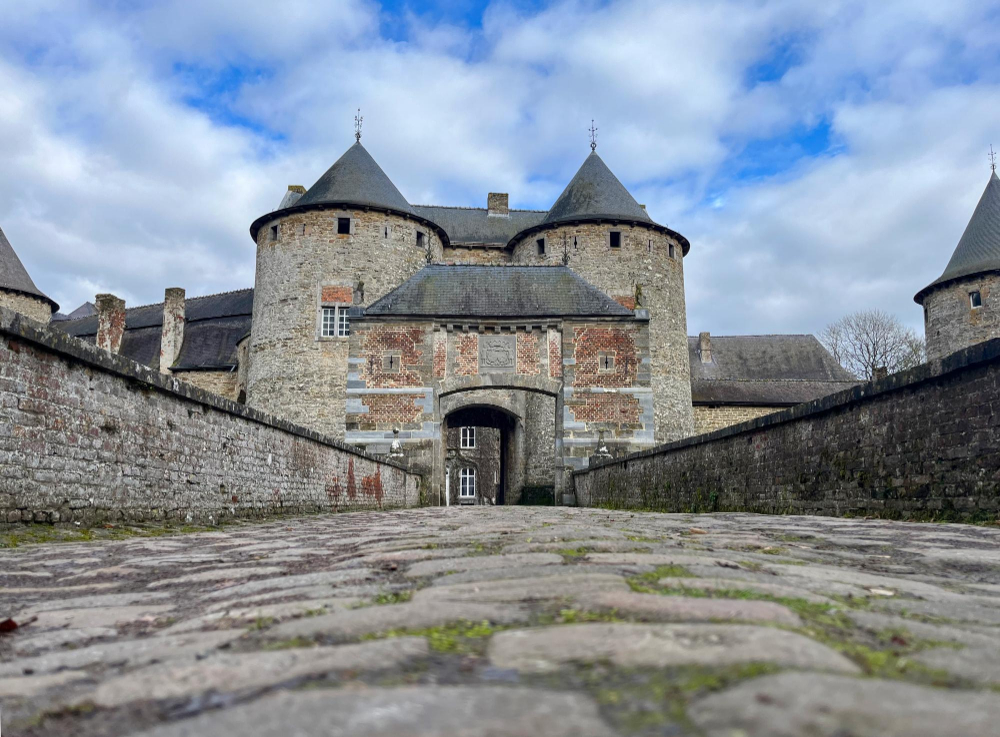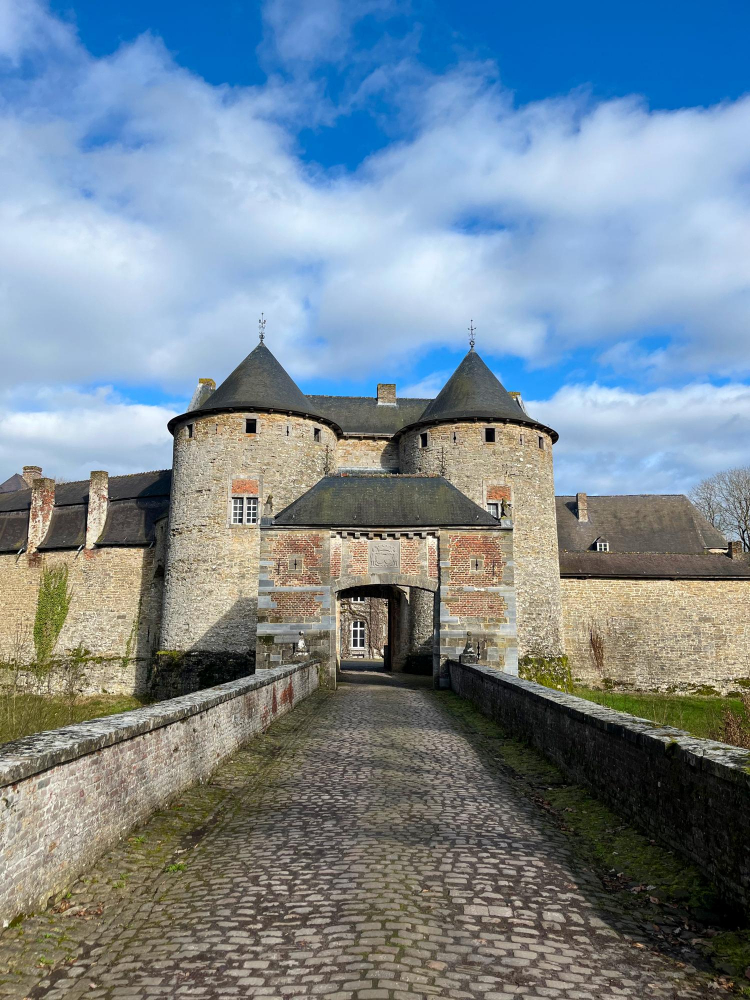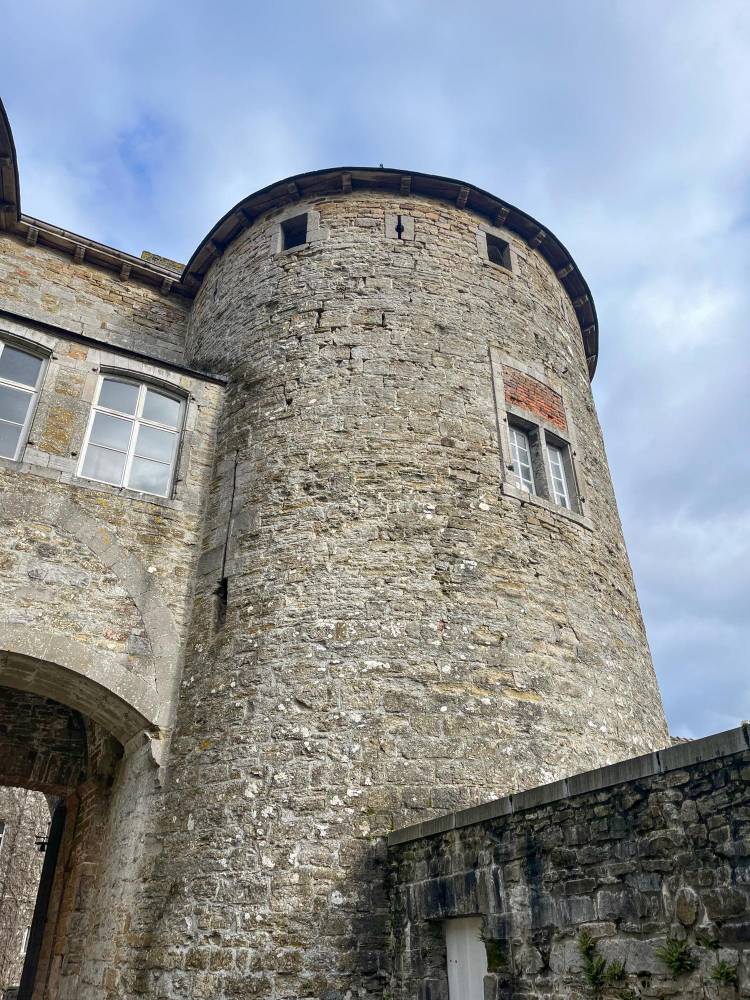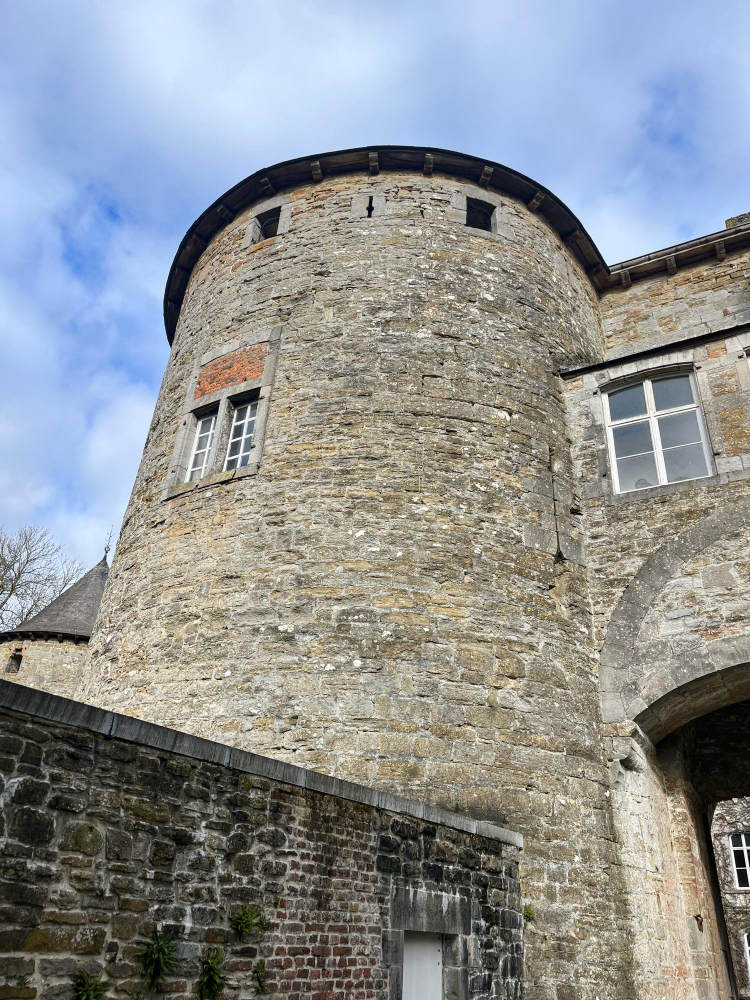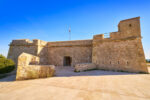

Tucked away in the picturesque countryside of the province of Namur in Wallonia, Belgium, the imposing Corroy-le-Château castle stands as a living testament to centuries past. With its massive round towers and a moat surrounded by water, it is one of the best-preserved medieval structures in the country. Yet behind the stone walls lies far more than architectural mastery – a history full of drama, family feuds and legends.
The origins of the castle – The origins of Corroy-le-Château date back to the period between 1220 and 1230, when William of Brabant, a powerful nobleman, commissioned the construction of this impressive fortress. The aim was not only to create a strategic defensive fortress, but also to consolidate the political influence of the Brabant family. The castle’s architecture is typical of the High Middle Ages: mighty round towers, thick walls and a moat designed to keep enemies at bay. The castle became a bastion of the nobility, a symbol of power, wealth and prestige. For almost eight centuries, Corroy-le-Château remained in the possession of the descendants of William of Brabant, including the Counts of Nassau-Corroy. Over the generations, the castle was maintained, renovated and extended, ensuring that it has retained its medieval splendour to this day. One of the most fascinating figures among the owners was Alexis of Nassau-Corroy, an illegitimate son of Henry III of Nassau-Breda, whose life story caused much social debate at the time. His descendant Joseph-Ignace de Nassau, the first Count of Corroy, later devoted himself to the restoration of the castle and its interiors, thereby restoring a touch of majestic elegance to the estate.
Legends and stories surrounding Corroy-le-Château – Like many ancient fortresses, Corroy-le-Château is shrouded in numerous legends and myths. One of the best-known stories concerns a cursed treasure said to be hidden deep within the castle’s catacombs. According to legend, a former owner is said to have sealed the treasure with dark forces, so that no one could ever recover it without bringing great misfortune upon themselves and the region. To this day, these stories attract the curious and adventurers, yet no one has ever found anything – whether out of fear or because the legend is, in reality, nothing more than a fairy tale. Another legend concerns the ghostly apparitions that are said to haunt the castle’s gloomy chambers. Particularly on the nights around All Saints’ Day, one is said to be able to see the silhouettes of former inhabitants darting through the long corridors. Whether this is mere superstition or genuine paranormal activity remains a mystery that continues to fascinate visitors.
Family feud and the near-loss of the castle – In 2008, the historic estate made headlines, though not for its architecture or its legends. A bitter family feud led to a court ordering the public auction of the castle. This meant that the family could lose their centuries-old heritage. The Belgian artist Wim Delvoye expressed interest and planned to convert the castle into a museum of modern art. This idea sparked both enthusiasm and controversy, as some wanted to preserve the estate in its original form and feared that its historical significance might suffer as a result of the modern redesign. But the story took a surprising turn: Olivier, Marquis de Trazegnies, a direct descendant of the Nassau-Corroy family, managed to prevent the sale and save his family’s heritage. This rescue operation demonstrated not only the strong bonds within the family, but also the deep-rooted significance of the castle as a symbol of the region’s history and identity.
A new owner and an open gateway to history – In 2010, Olivier, Marquis de Trazegnies, finally handed the château over to the ‘Association Royale des Demeures Historiques et Jardins de Belgique’ (Royal Association of Historic Houses and Gardens of Belgium). This finally opened the gates of Corroy-le-Château to the public. Today, visitors can admire the well-preserved medieval architecture, stroll through the magnificent rooms and gain an insight into the mysterious stories that surround these walls. The association, which is dedicated to the preservation of historic buildings, not only ensures the upkeep and restoration of the castle but also organises guided tours, cultural events and educational campaigns to keep the history of the estate alive. In this way, Corroy-le-Château is not only preserved as a monument but also used as a place for people to meet and learn.
Modernisation or preservation? A current point of contention – However, the question of how historic buildings such as Corroy-le-Château can survive in the modern world often remains a matter of debate. Should such a building be used to showcase contemporary art and culture, or should it be preserved as close as possible to its original state? The debate surrounding Corroy-le-Château reflects a broader discussion affecting many historic sites. Whilst some argue that modernisation is necessary to make these sites economically viable, others advocate for the strict preservation of historical authenticity. In the case of Corroy-le-Château, the Royal Society’s approach appears to be a good compromise – it combines the protection of cultural heritage with a cautious openness to new uses.
A visit to the heart of Wallonia – Today, Corroy-le-Château is one of the biggest attractions in the Namur region. Visitors are drawn to the tranquillity and mystical atmosphere of the place and can embark on a journey back to the Middle Ages. Guided tours of the magnificent interior, walks along the moat and tales of fascinating legends make a visit an unforgettable experience. Children in particular are often enthralled by the stories of ghosts and hidden treasures, whilst history buffs enjoy the well-documented exhibitions.
A living piece of history – Corroy-le-Château is more than just an old ruin; it is a living witness to Belgian history and a reflection of social development over the centuries. The fact that it has been preserved despite family disputes, economic challenges and modern demands shows just how important it is to safeguard such cultural heritage. Anyone visiting the castle will quickly sense that it is not just the stone walls that make this place so special – it is the history that has lived there and continues to live there. As one of Belgium’s best-preserved castles, Corroy-le-Château remains a magnificent example of the connection between past and present. The protection and preservation of this gem allow us to continue telling its story and make it accessible to future generations.