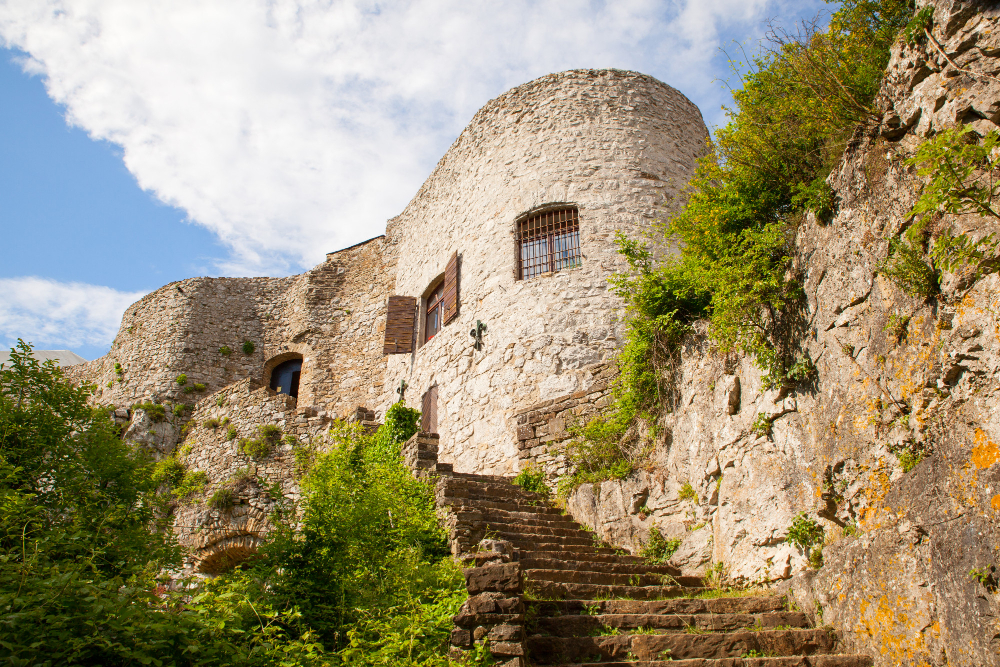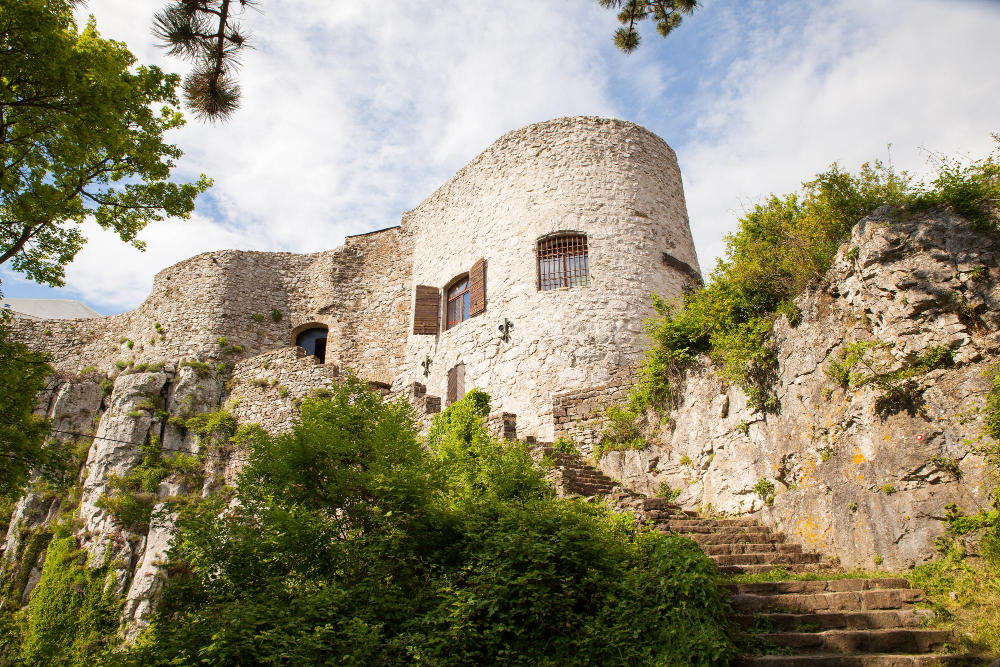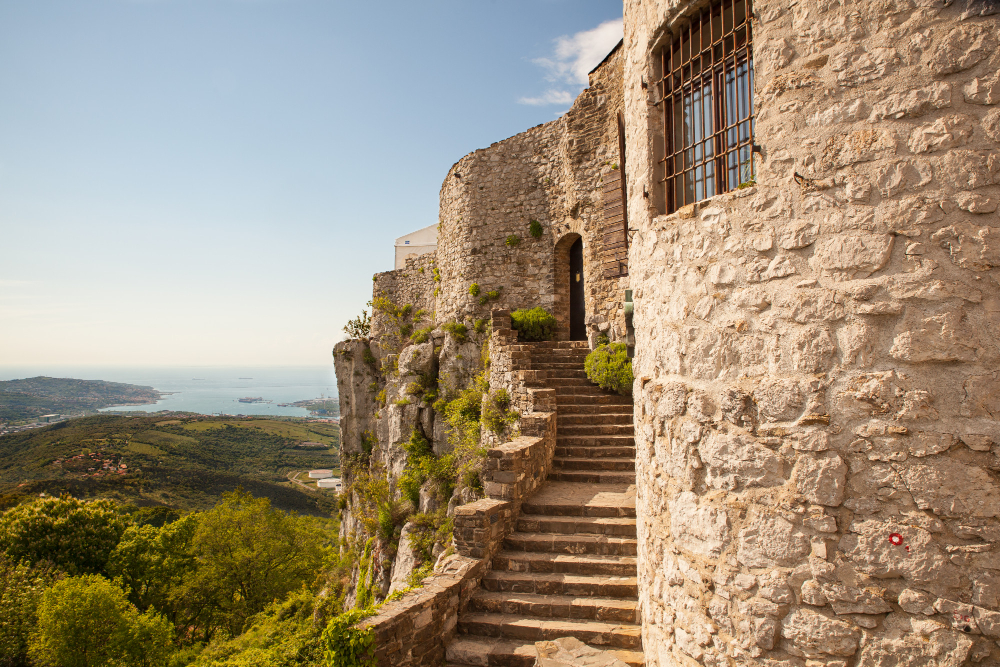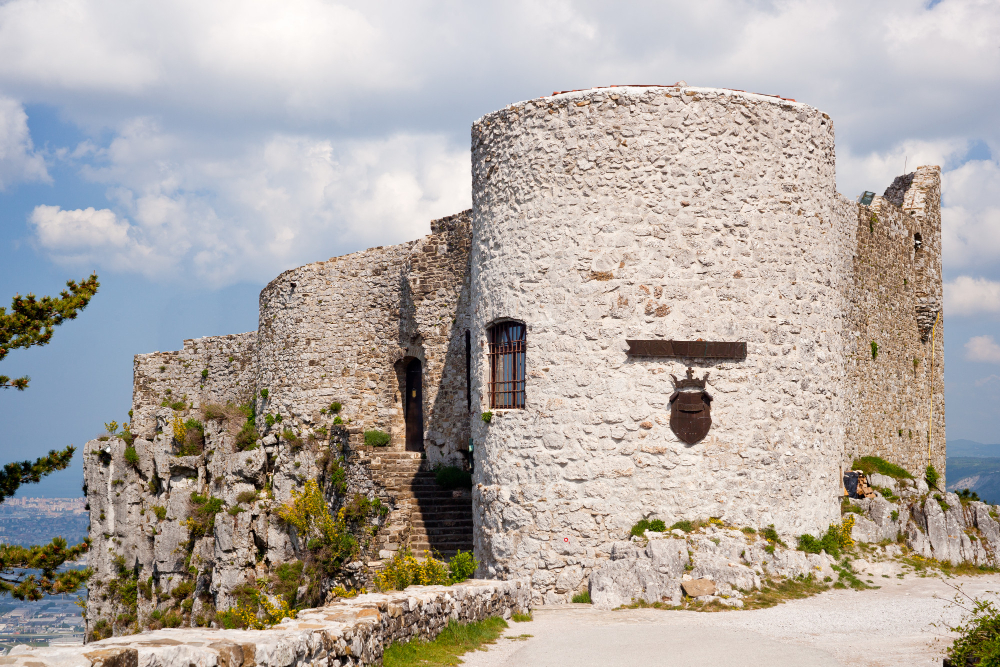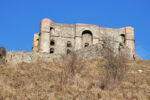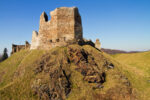

On the edge of the Karst Mountains, high above the Gulf of Trieste, stand the imposing ruins of Socerb Castle. Perched on a rugged rocky outcrop at an altitude of 440 metres, the fortress seems to watch over the surrounding countryside, harbouring numerous stories and secrets. This medieval fortification in Slovenia, also known as Strmec Castle or Sankt Serff Castle, is now a cultural monument of national importance. Yet it is not only its historical significance, but also the legends that have grown up around the castle over the centuries, that make it a fascinating sight.
A strategic position at the crossroads between Istria and Trieste – Socerb Castle is situated near the village of Socerb in the municipality of Koper. Its position on a steep cliff has granted it unrivalled strategic importance for centuries. From here, there is a breathtaking view over the Rosandra Valley (Slovene: Dolina Glinščice) and the coastal region between Istria and Trieste. This unique location made the fortress a coveted strategic point for various ruling houses – and the scene of numerous power struggles.
The origins and eventful history of the castle – The fortress was first mentioned in 1040 and is thus considered one of the oldest structures in the region. Its original owners were the Diocese of Trieste, but it soon fell under the influence of the city of Trieste. During the 14th century, the castle came under the control of the Republic of Venice for a time, leading to bitter conflicts between the Venetians and the Habsburgs. A significant event occurred in 1780, when a lightning strike triggered a devastating fire. This disaster destroyed large parts of the complex and marked the end of the castle as an impregnable fortress. From then on, it fell into disrepair until it eventually existed only as a ruin.
Reconstruction and Modern Use – The history of Socerb Castle took an interesting turn at the beginning of the 20th century. In 1924 and 1925, Baron Demetrio Economo of Trieste had parts of the old walls restored. This work gave the castle its present appearance, although the original splendour of bygone days could not be fully restored. During the Second World War, the castle once again played a role in political and military affairs. It served as an important base for the Slovenian Security Service (VOS), which coordinated resistance activities against the occupying forces, as well as the seat of a people’s court. Today, however, the site has lost its militaristic character and has become a cultural and tourist destination. Visitors can explore the ruins, enjoy the impressive views and relax in the castle’s restaurant.
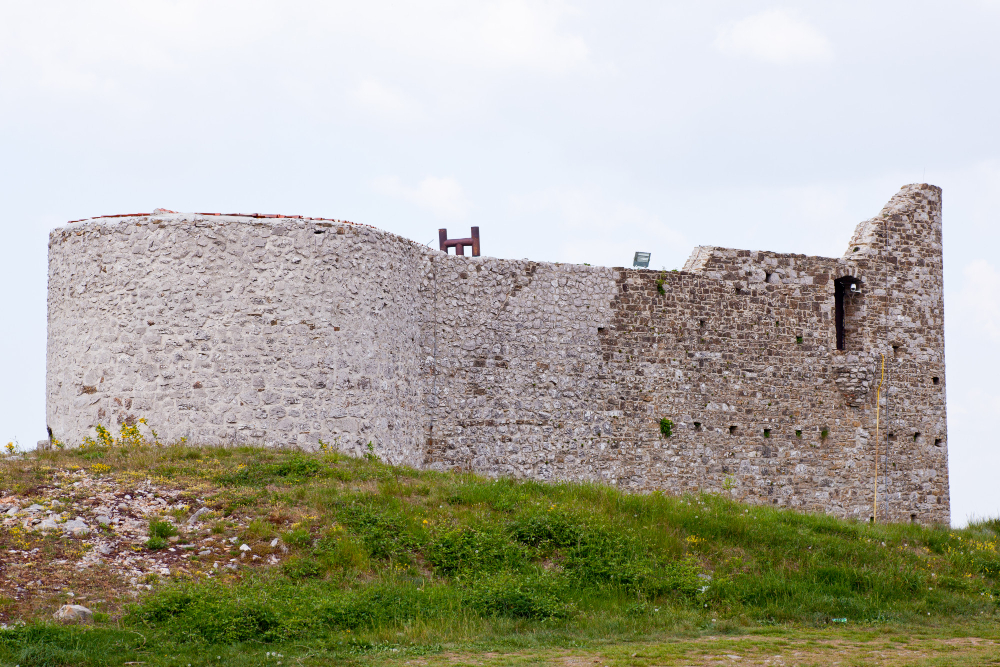
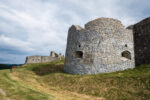
The Architecture: A Glimpse into the Past – Although only parts of the original fortress remain today, the architecture of the ruins bears witness to its former grandeur. The curtain walls, in particular, are well preserved and offer a fascinating insight into medieval architecture. Historical depictions, such as those by Johann Weichard von Valvasor in the 17th century, give an idea of just how imposing the castle must once have been. Valvasor, a famous Slovenian scholar and cartographer, recorded details of the castle in his work *Topographia Ducatus Carnioliae* and played a key role in preserving knowledge of its original form. His illustrations depict a heavily fortified complex that elegantly adapted to the natural rocky cliff yet still towered powerfully over the surrounding landscape.
The Legends of Socerb Castle – In addition to its historical significance, Socerb Castle is also a place steeped in myths and legends. One of the best-known stories revolves around Saint Servolo, after whom the castle was originally named. According to legend, Servolo was a young nobleman who converted to Christianity in the 3rd century. At a time when the Roman authorities were persecuting Christians, Servolo fled to the caves of the region to practise his faith undisturbed. Of particular interest is the so-called Socerb Cave, located not far from the castle. This cave is said to have been a meeting place for early Christians and now serves as a place of pilgrimage. Legend has it that Servolo performed numerous miracles there before he was betrayed and eventually executed. His martyrdom made him a saint, and the castle has borne his name ever since. Another mystical tale tells of a hidden treasure said to be buried somewhere within the castle walls. It is rumoured to be a collection of valuable artefacts and gold that were brought to safety during the Venetian rule. To this day, treasure hunters and adventurers flock to the castle to get to the bottom of this mystery – though without success.
The link between past and present – Socerb Castle is more than just a ruin; it is a symbol of this region’s eventful history. Its walls tell tales of power struggles, religious zeal and natural disasters. At the same time, it offers us insights into the lives and beliefs of past generations. Today, the castle attracts numerous tourists with its rich historical and cultural heritage. Guided tours are particularly popular, as they not only explore the castle’s architecture but also bring the legends and myths to life. The view from the summit over the Karst region and the Gulf of Trieste remains an unforgettable experience for many visitors.
Socerb Castle combines history, legends and culture and remains one of Slovenia’s most fascinating places. Its strategic location, impressive architecture and the mysterious stories that surround it make it a must-see for anyone interested in the past and myths. Although the castle now exists as a ruin, it still possesses an irresistible allure. Anyone who steps within its walls and lets their gaze wander over the breathtaking landscape will understand why this place was so fiercely contested for centuries – and why its stories live on to this day.