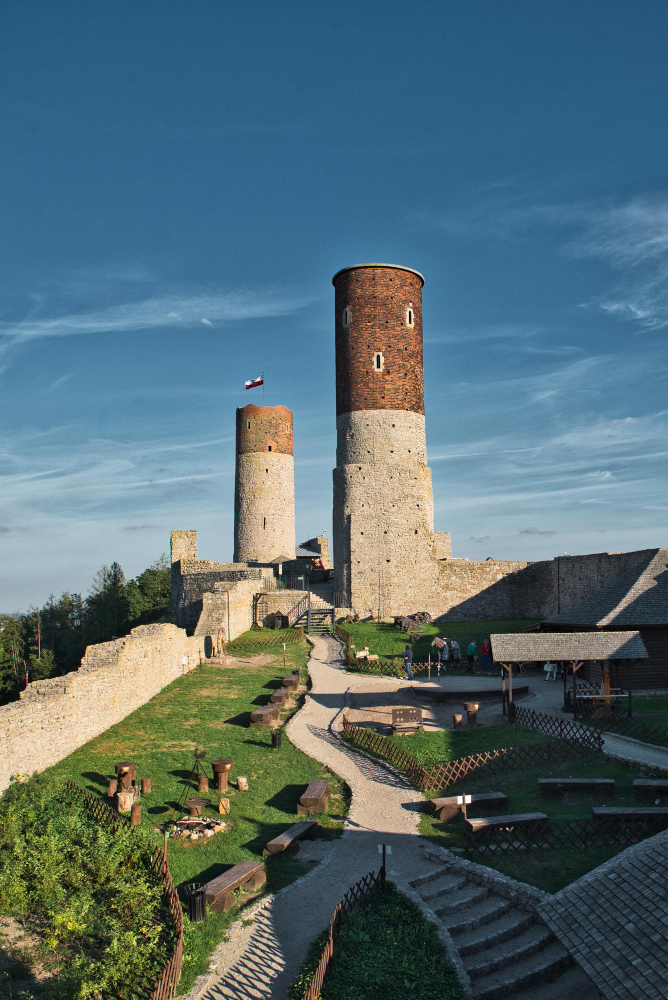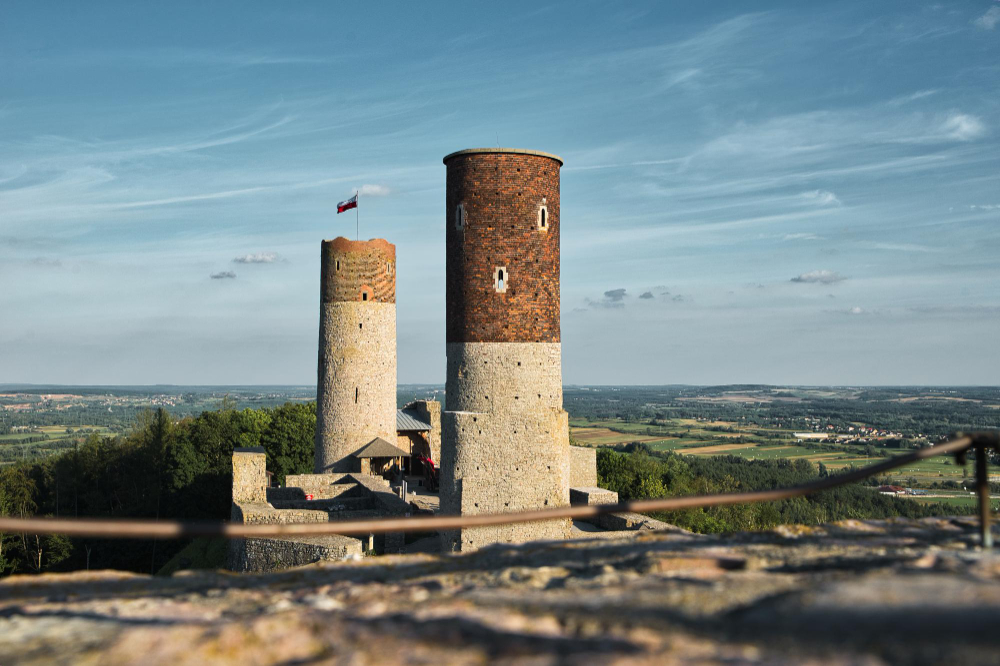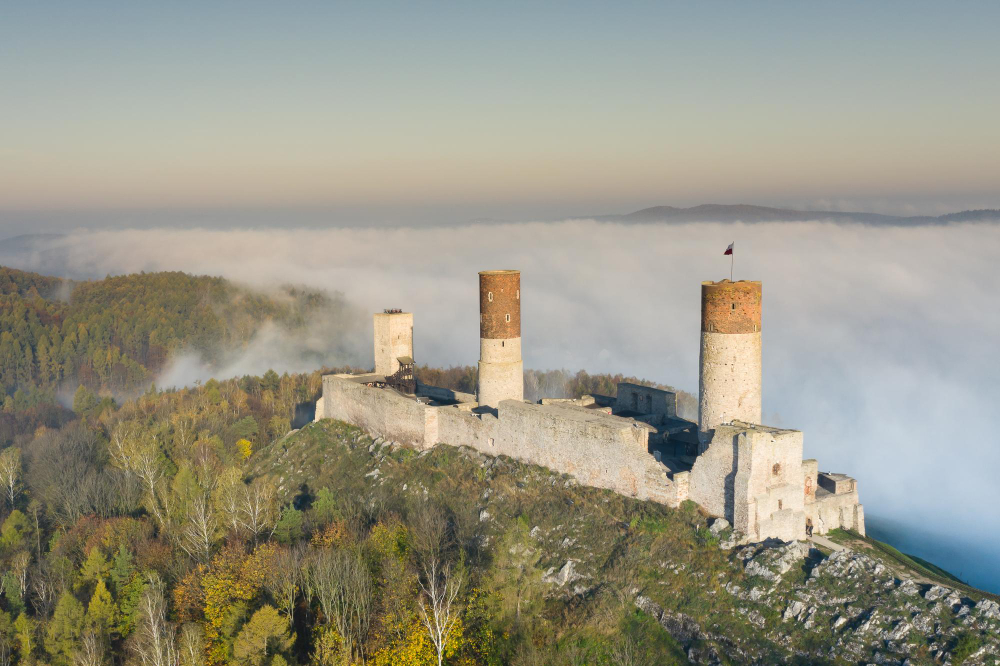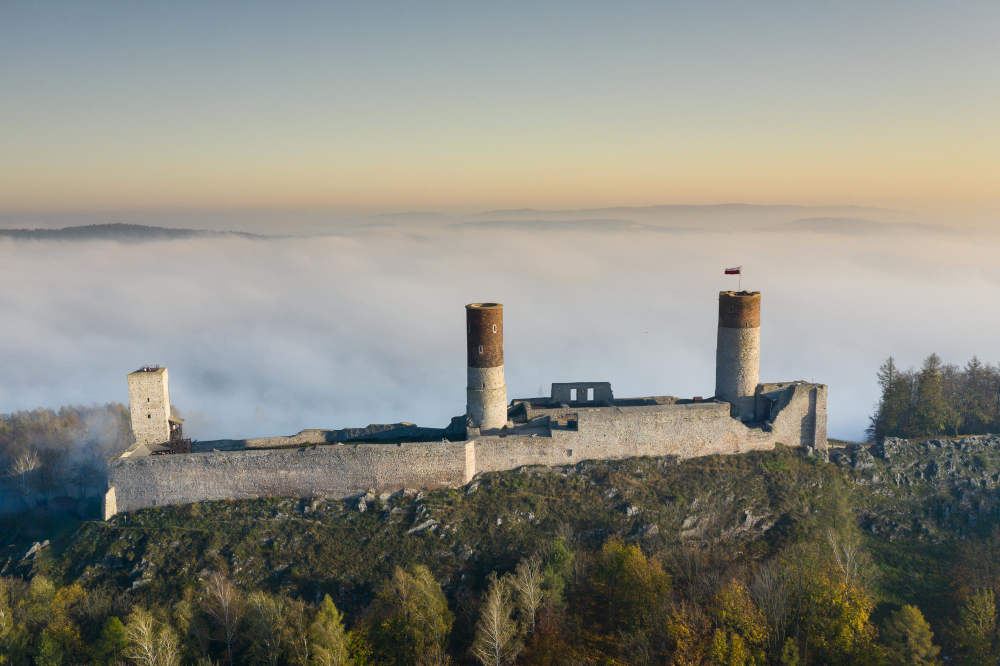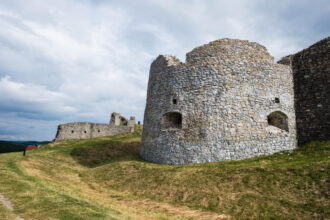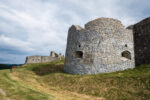

In the heart of Poland, in the small town of Chęciny, stands an impressive medieval fortress whose walls tell a fascinating story. Chęciny Castle, once a proud symbol of royal power and strategic importance, now lies in ruins, yet it continues to attract numerous visitors who are captivated by its legends and eventful past.
The Beginnings of a Fortress – The origins of Chęciny Castle date back to the late 13th century. Although there are no precise records of when it was built, it is believed that the fortress was constructed between the end of the 13th and the beginning of the 14th century. The first written mention of the castle dates from 1306. In that year, King Władysław I, also known as ‘Władysław Ellenlang’, gifted the fortress to the Archbishop of Kraków, Jan Muskata. Yet just one year later, the castle returned to the king’s possession under a pretext. Allegedly, the bishop had been involved in a conspiracy against the royal authority. Even then, the fortress played a central role in military affairs. It served as a gathering point for troops preparing to fight the Teutonic Order – one of Poland’s greatest adversaries in the Middle Ages. Its strategic location and imposing walls made Chęciny a vital stronghold both for defence and for the enforcement of royal authority.
A Royal Residence – Following the death of Władysław Ellenlang, the castle experienced its heyday under King Casimir III the Great. Casimir had the fortress expanded, thereby increasing its importance. During his reign, Chęciny served not only as a military fortress but also became an important residence for members of the royal family. Among its famous residents were Adelaide of Hesse, Casimir’s second wife, and Elizabeth of Poland, who later became Queen of Hungary. Sophia of Holszany, the mother of Władysław III of Varna, also found refuge here for a time. Of particular interest is the castle’s connection to Bona Sforza, the Italian Queen of Poland. Bona Sforza implemented numerous reforms in the country and is often associated with the introduction of Italian cultural influences in Poland. It is said that parts of her life and political strategy were directed from Chęciny Castle, making the fortress a cultural centre of that era.
A dark chapter: The castle as a prison – Alongside its glamorous life as a royal residence, Chęciny Castle was also the scene of less pleasant events. For years, it served as a state prison where prominent figures from various parts of Europe were held. Among the famous inmates was Michael Küchmeister von Sternberg, who later became Grand Master of the Teutonic Order. Likewise, Andrzej Wingold, a half-brother of Jogaila (Władysław II), and Warcisław von Gotartowice, a nobleman from Silesia, were imprisoned behind the castle’s gloomy walls. For many of these prisoners, Chęciny marked the end of their political or military careers, and some vanished from the history books following their imprisonment, lending the castle an air of mystery.
The Decline of the Fortress – Despite its former importance, the castle began to fall into disrepair after the 16th century. In 1588, the Polish Parliament decided to transfer the castle’s valuable inventory to the Church of Chęciny – a first step towards its neglect. The decline was exacerbated by the Zebrzydowski Uprising in 1607, during which parts of the fortress were damaged and burnt down. There were brief attempts to restore the castle, particularly under the leadership of Stanisław Branicki, Lord of Chęciny. However, the terrible devastation during the Swedish-Brandenburg and Transylvanian occupations between 1655 and 1657 inflicted further damage on the fortress. Finally, the second Swedish occupation in 1707 completed the destruction. The last inhabitants left the walls, and the once mighty fortress was left to its fate.
The Aftermath and Legends – Throughout the 18th and 19th centuries, the castle was increasingly plundered. Its stones were used as building material for the villagers’ houses. Despite this desecration, the castle has given rise to a multitude of legends and stories that live on to this day. One of the most famous legends tells of a hidden treasure, said to have been buried in the depths of the castle by Queen Bona Sforza. It is said that she hid her jewels and coins for fear of plundering soldiers during times of war. Since then, many treasure hunters have tried to find this legendary treasure, but without success. Another mystical tale speaks of shadows and ghosts said to hover over the ruins on dark nights. According to legend, these are the souls of former prisoners and inhabitants who cannot find peace. This eerie atmosphere makes the castle a popular destination for adventurers and history enthusiasts to this day.
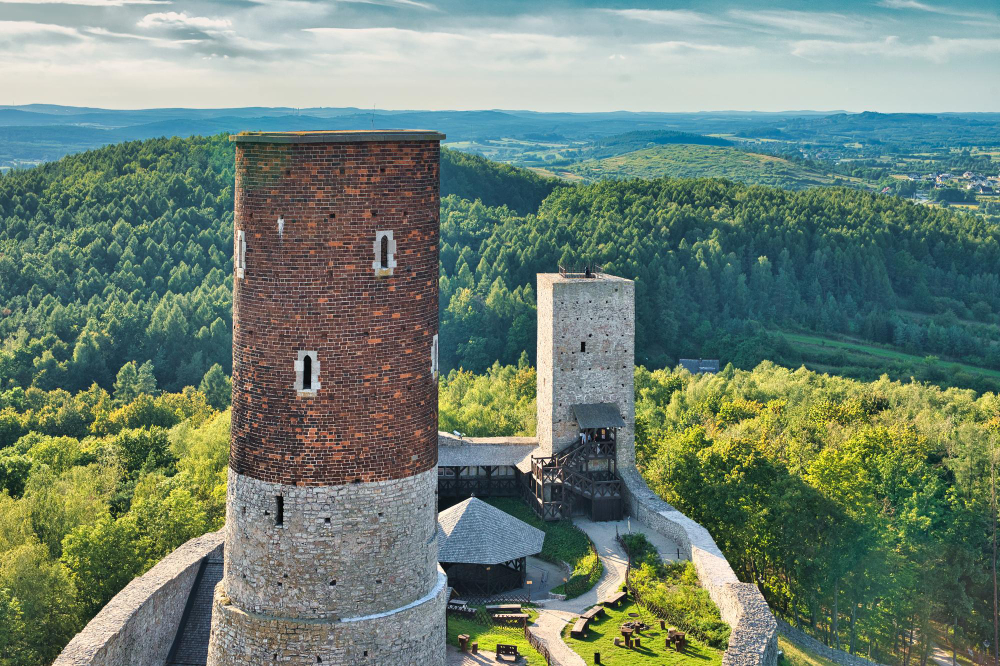
The Present: A Place Full of Fascination – Although Chęciny Castle is now in ruins, it exerts a powerful attraction on visitors from all over the world. Its towers offer breathtaking views of the surrounding landscape, and the remains of the walls tell stories from centuries of European history. With some areas partially restored, the fortress now also serves as a venue for medieval festivals and cultural events. Chęciny Castle is a symbol of the turbulent times in Polish history – full of splendour and tragedy, secrets and myths. Its ruins stand not only as a monument to past power, but also as a source of enduring fascination. Those who allow themselves to be enchanted by it can feel the spirit of the past and listen to the echoes of a bygone era.