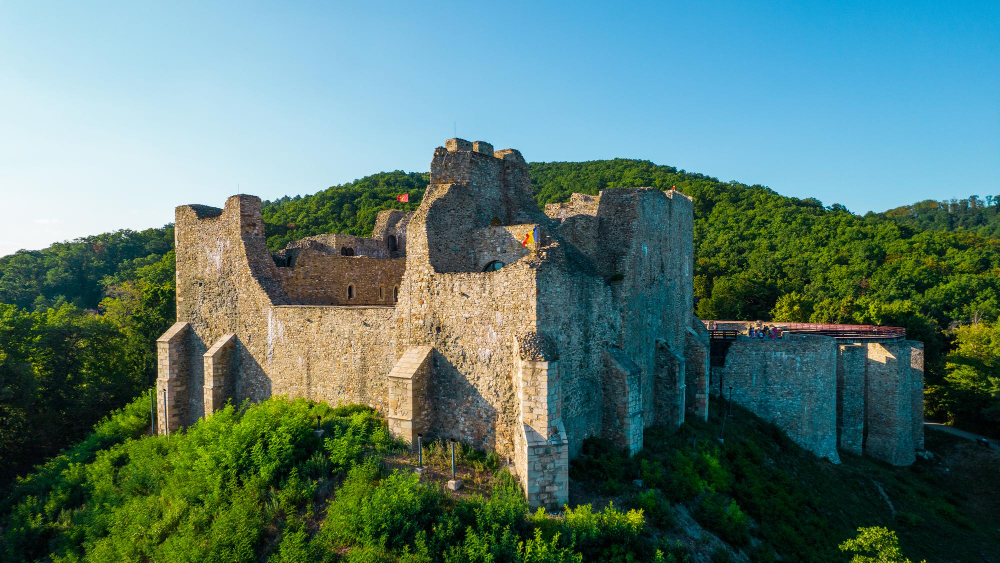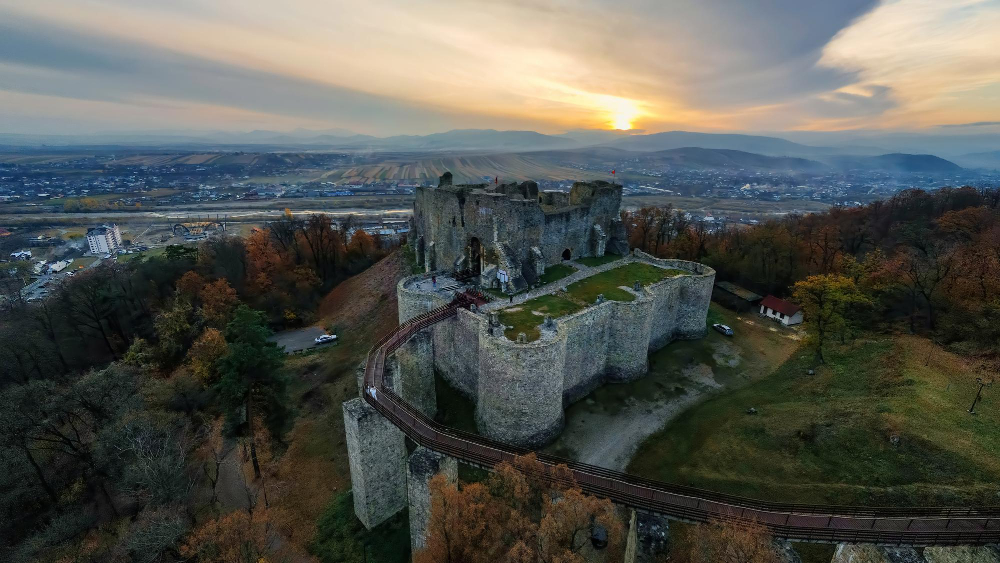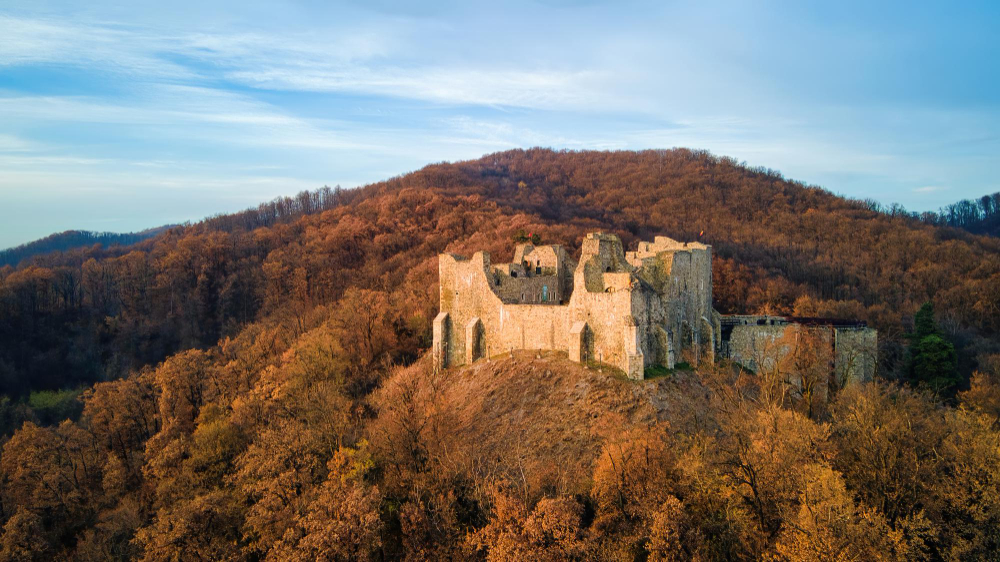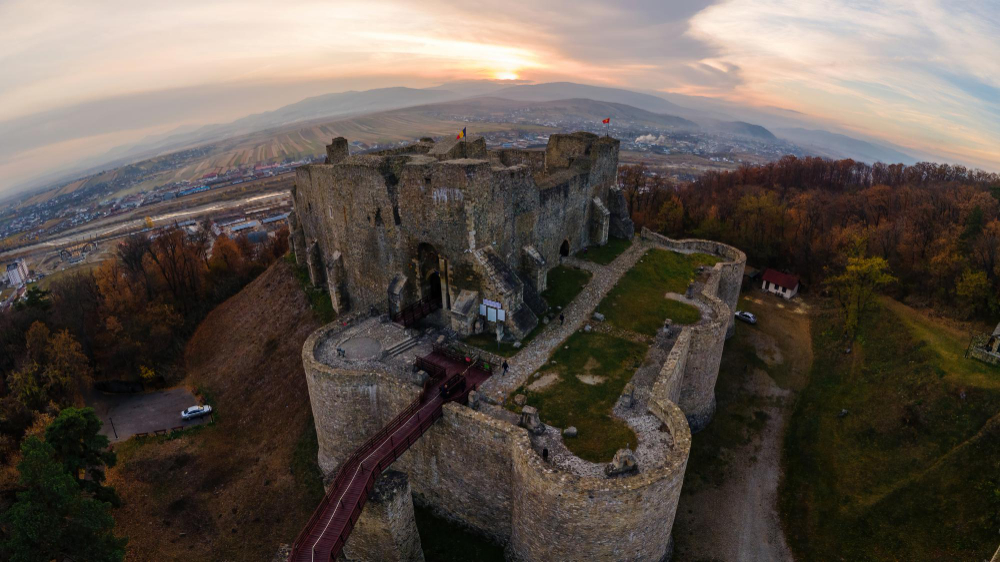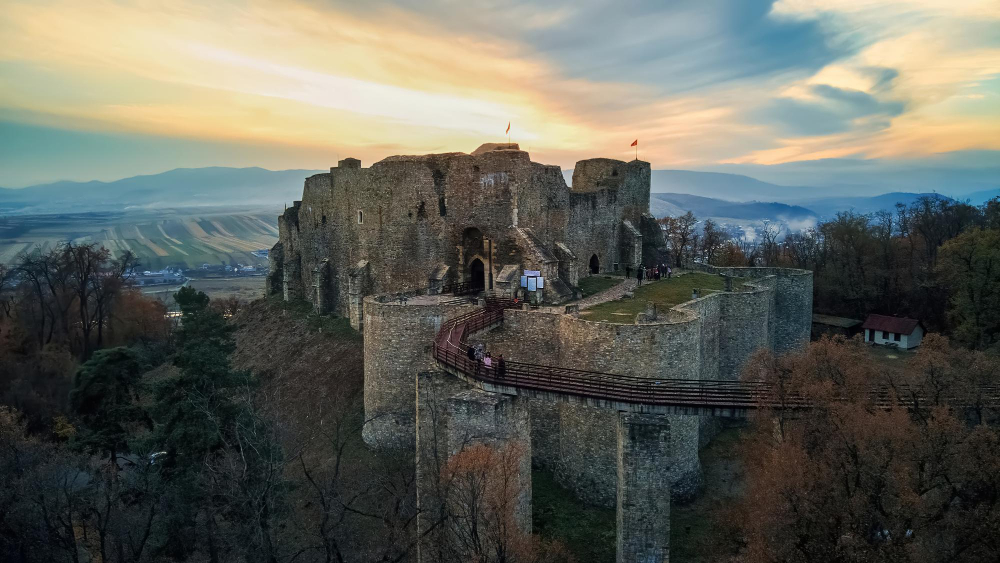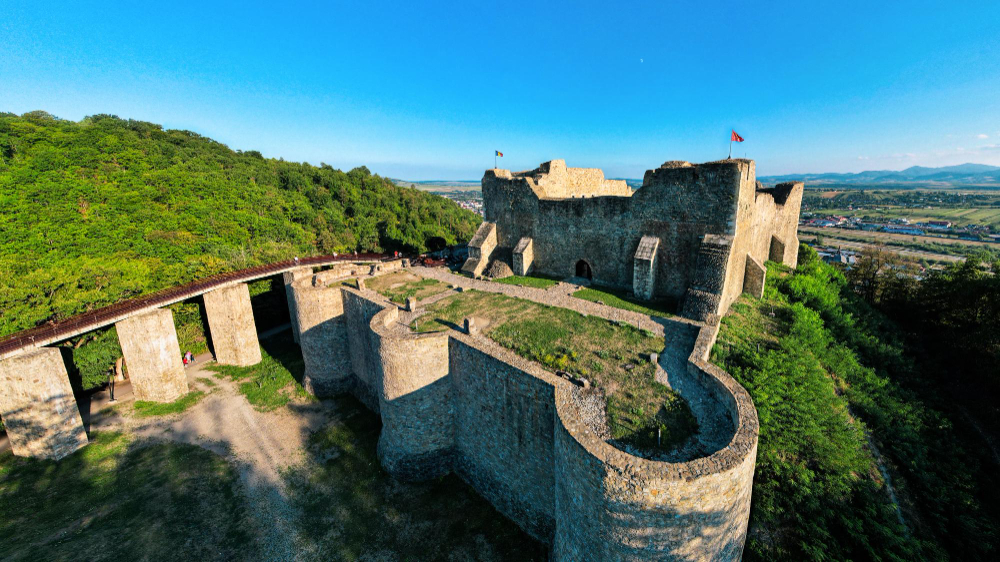

Cetatea Neamț, also known as Neamț Castle (Romanian: Cetatea Neamț or Cetatea Neamțului), stands majestically on a hill in north-eastern Romania, not far from the town of Târgu Neamț in the Moldavia region. This architectural masterpiece from the Middle Ages is not only a significant part of Romanian history, but also a symbol of the resilience and strategic ingenuity of the Princes of Moldavia. Since its construction in the 14th century, the castle has withstood numerous sieges and historic turning points, and remains a magnet for history enthusiasts and tourists alike to this day.
Origins and Legends of Cetatea Neamț – The origins of Cetatea Neamț are enigmatic in many respects and have sparked numerous theories and debates amongst historians. Some researchers, including A.D. Xenopol and B.P. Hasdeu, hold the view that the castle may date back to the period between 1211 and 1225, when the German-descended knights of the Teutonic Order were active in Transylvania. This theory, often referred to as the ‘Germanic hypothesis’, is based on the name ‘Neamț’, which means ‘German’ in the Slavic and Romanian languages, as well as on architectural features reminiscent of the military architecture of the Staufer period. According to this theory, the German settlers and knights are said to have been tasked with protecting Transylvania’s eastern borders from incursions. However, archaeological excavations at the site of the fortress have yielded no evidence of such an early construction. Instead, finds such as coins from the reign of Prince Peter II (1375–1391) suggest that the fortress was probably not built until the late 14th century. This is consistent with the assumption that Cetatea Neamț was a structure built by the Moldavian rulers, who commissioned it as a strategic defensive fortress. Its proximity to Neamț Monastery, which was also built in the 14th century, further suggests that the region was already of great cultural and religious significance at that time.
A fortress of strategic importance – The strategic location of Neamț Castle made it a key defensive stronghold in the region. The fortress played a decisive role, particularly during the reign of Ștefan cel Mare (English: Stephen the Great), one of Moldavia’s most important princes. Together with other important castles such as Suceava, Hotin and Cetatea Albă, it formed an essential part of a well-thought-out defence system against external enemies. The castle’s history is marked by sieges and battles that cemented its reputation as an impregnable fortress. In 1395, for example, it successfully withstood a siege lasting several days by Hungarian troops who sought to bring Moldavia under their control. However, the fortress faced its greatest test in 1476, when the Ottomans under Mehmed the Conqueror attempted to capture it. Despite the enemy’s numerical superiority and fierce attacks, the castle held firm and went down in history as a symbol of valiant resistance.
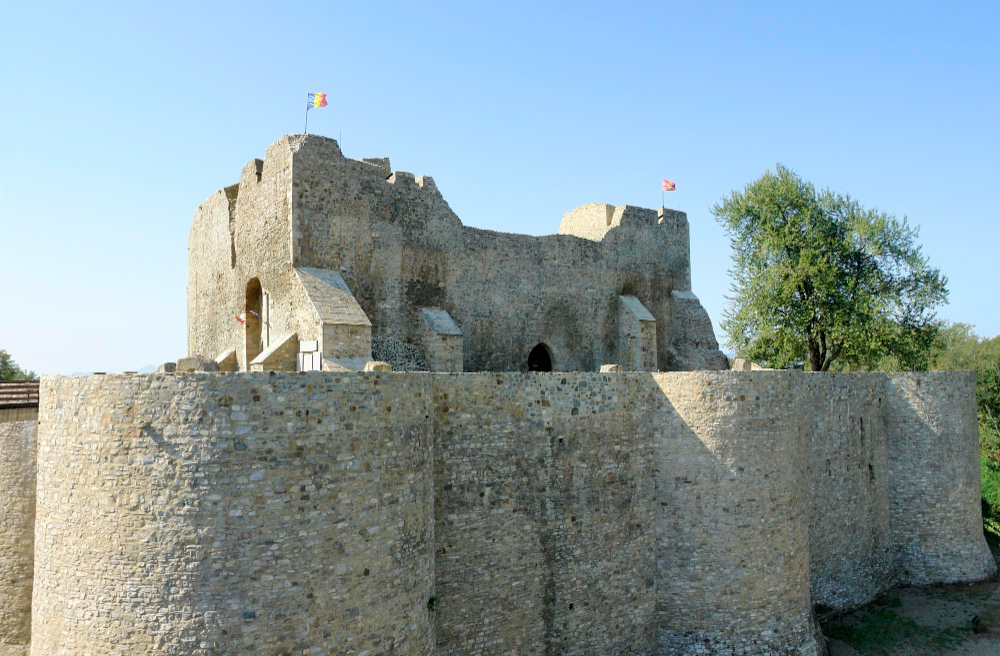
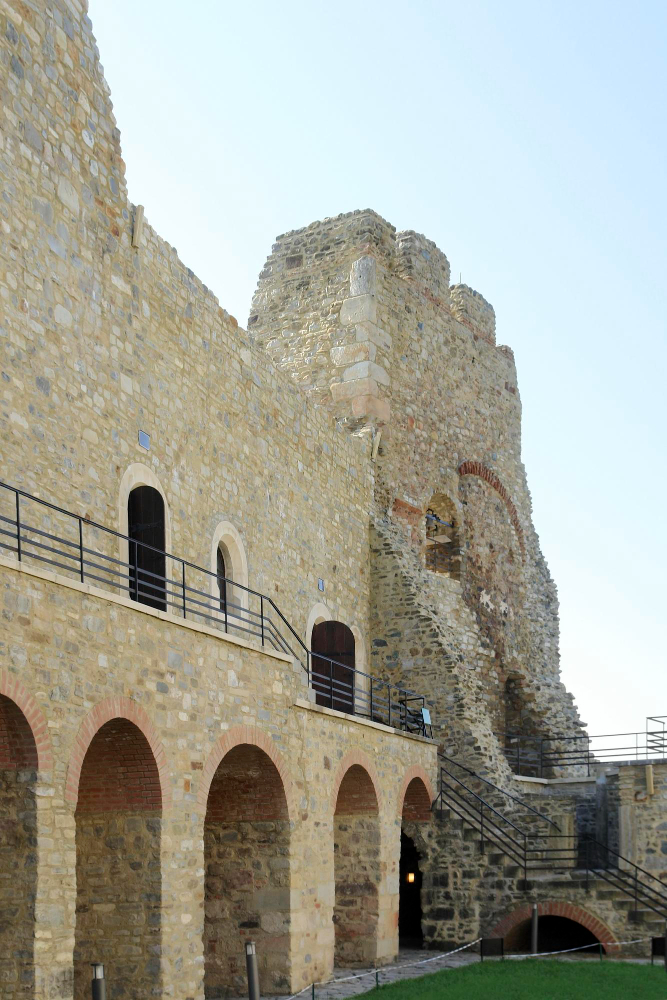
A Journey into the Past: Architecture and Distinctive Features – The architecture of Cetatea Neamț is an impressive testament to medieval building craftsmanship and reflects both the military requirements and the architectural tastes of its time. The castle’s basic structure consists of river stones, which were used both for the walls and as infill, as well as greenish sandstone, which was employed for decorative elements such as arches and buttresses. The walls are almost three metres thick, thus forming a virtually impregnable defensive structure for the garrison. A distinctive feature of the fortress is its rectangular shape with irregular side lengths. At the four corners of the central structure are defensive towers which – unlike in other castles of that period – are integrated directly into the walls. Inside the fortress are over twenty rooms that served various purposes: from prisons and storerooms to a chapel, a dining hall and living quarters for the garrison, as well as, on occasion, for the prince and his family. A particularly innovative feature was the ingenious access system. To ensure the castle’s security, Ștefan cel Mare designed a deep moat and a bridge with a movable lifting mechanism. The main entrance through the so-called Mușatin Gate was further protected by trapdoors designed to lure intruders into deadly traps.
The rebirth of a medieval gem: the restoration of the castle – After centuries of decay caused by wars, neglect and the elements, Cetatea Neamț underwent extensive restoration between 2007 and 2009 with the support of the European Union. Funded by the Economic and Social Cohesion Programme (2004–2006), as well as additional funding from the Neamț County Council and the Târgu Neamț Town Council, the fortress was restored to its former glory. The restoration work included the modernisation of the access roads, the expansion of the car parks, the connection to modern water and sewerage systems, and the installation of new lighting that bathes the castle in a fascinating glow at night. In addition, the historic rooms were carefully reconstructed, so that visitors can now embark on an authentic journey into the past. In some rooms, scenes from the castle’s medieval past have been recreated, including a courtroom and a prison featuring lifelike figures. On 4 July 2009, the restored Cetatea Neamț was officially reopened and has since become an integral part of national and international tourism. The castle attracts thousands of visitors every year, who come not only to admire the architecture but also to discover the fascinating stories and legends surrounding this extraordinary structure.
Myths and Legends of Cetatea Neamț – No medieval structure would be complete without its own myths and legends – and Cetatea Neamț is no exception. One of the best-known stories concerns the ghostly apparition of a knight who is said to still guard the fortress walls. It is said that the spirit of a brave Moldavian soldier, who fell whilst defending the castle, has never found rest and now appears on the battlements on stormy nights to ensure that the fortress never again falls into enemy hands. Another legend tells of a secret tunnel that is said to connect the fortress with the nearby Neamț Monastery. According to tradition, this tunnel served as an escape route and supply line in times of war. So far, however, archaeologists have found no evidence of the tunnel’s existence, which only adds to the mystery of the legend.
A living piece of history – Cetatea Neamț is far more than just a historical attraction – it is a living monument to Romania’s eventful history and a place that captures the imagination of its visitors. Its impressive architecture, fascinating stories and picturesque surroundings make it an unmissable destination for anyone visiting the Moldavia region. Whether you’re interested in history, want to enjoy the beauty of nature, or wish to follow in the footsteps of ancient legends: Cetatea Neamț offers all this and much more.