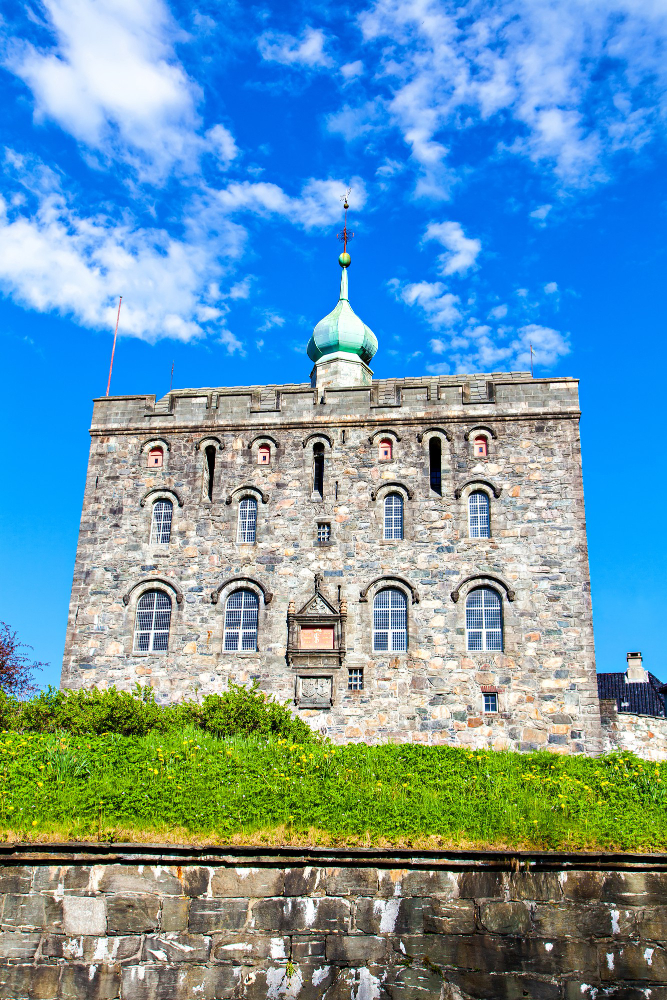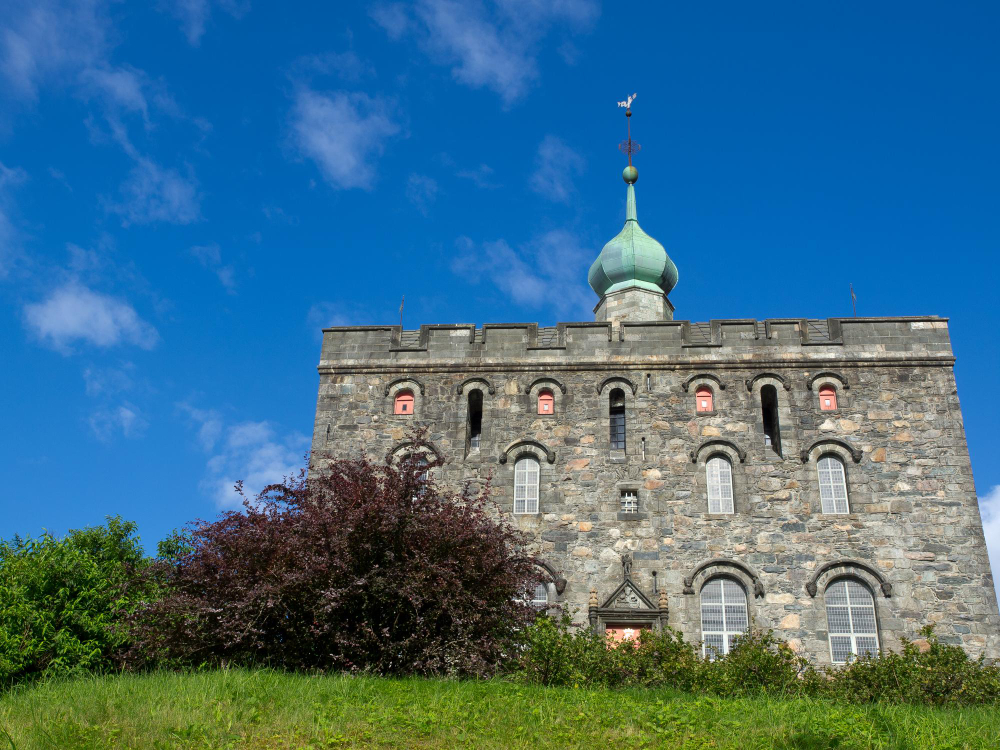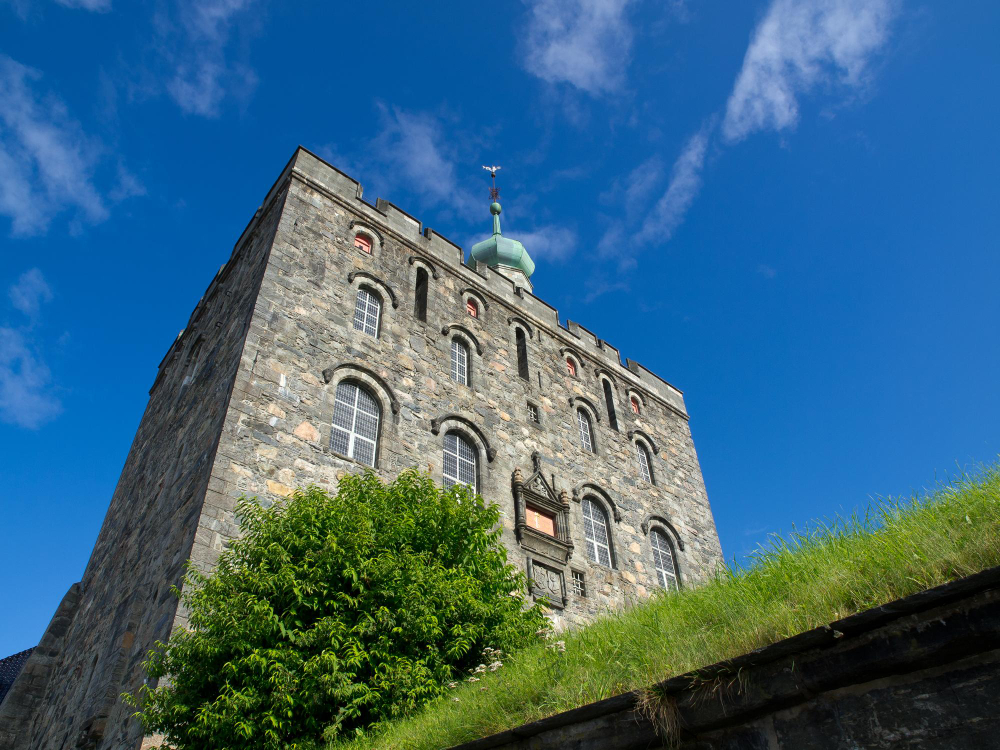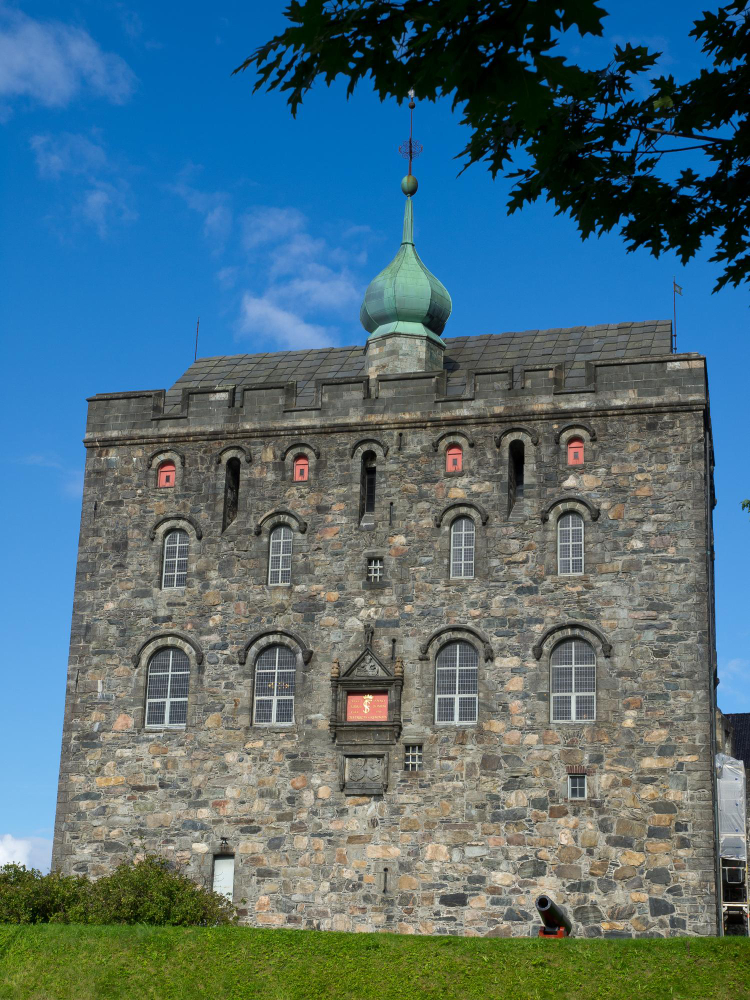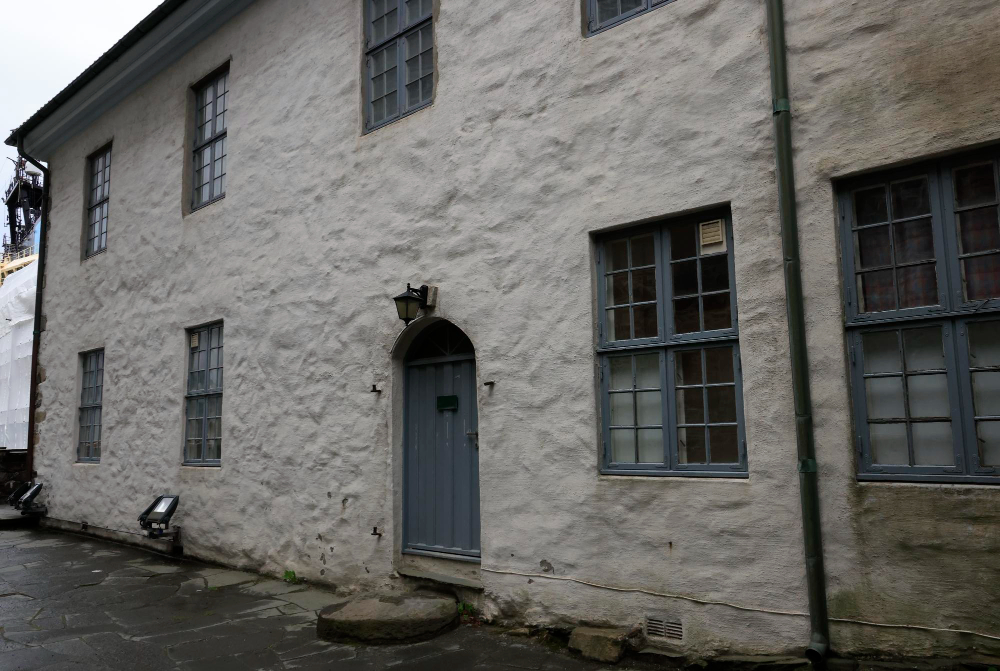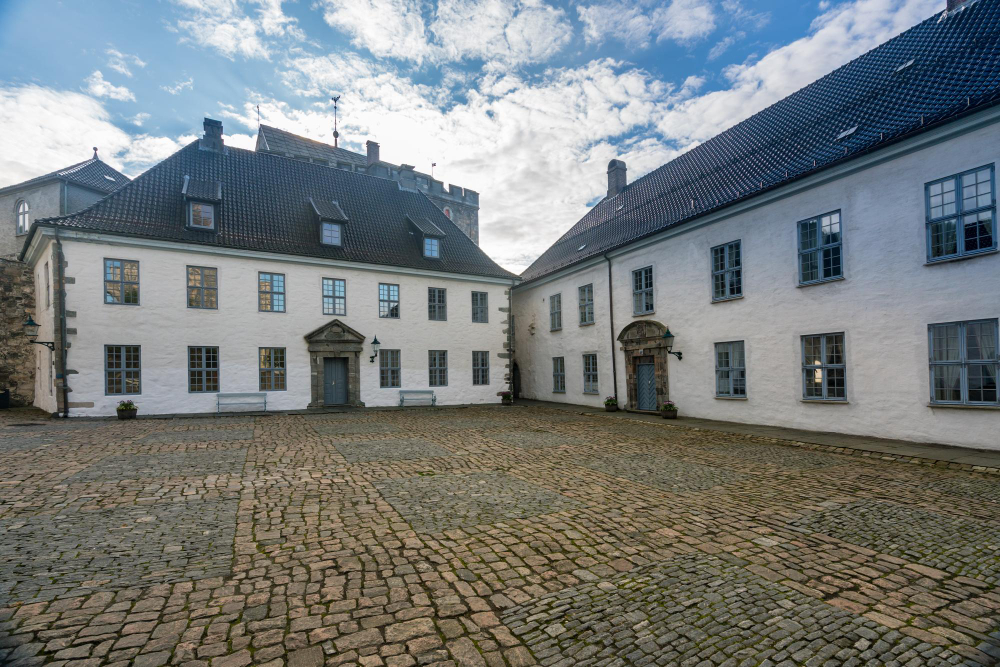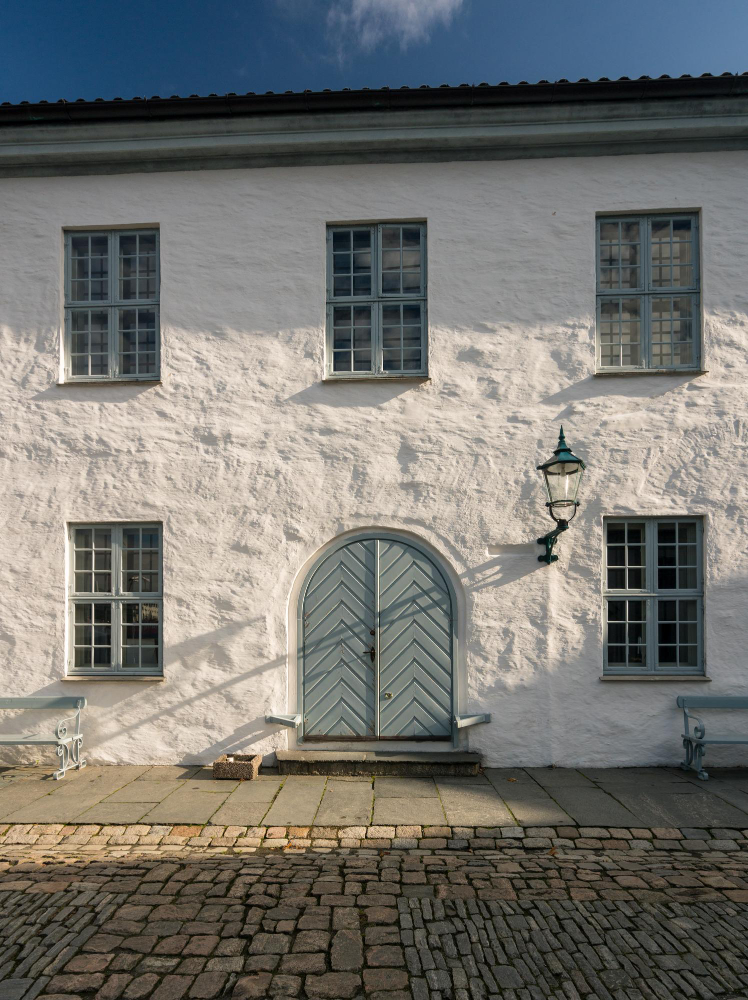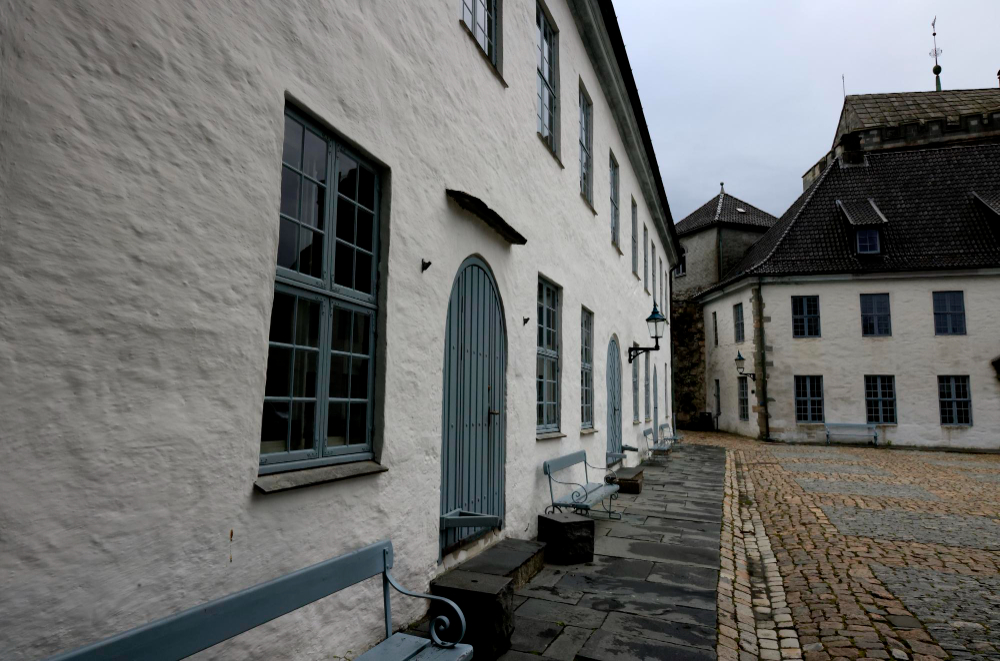

Bergenhus Fortress is undoubtedly one of Norway’s most impressive historic buildings. Situated in the heart of Bergen, where Vågen Bay meets the city centre, it tells the story of Norway like no other monument. With a history dating back to the 12th century, Bergenhus stands not only as a symbol of military strength and strategic foresight, but also of power, rule and change throughout a turbulent past. Once the residence of the Norwegian kings, then a theatre of war, and today a living cultural monument: the fortress embodies many facets of Norwegian identity.
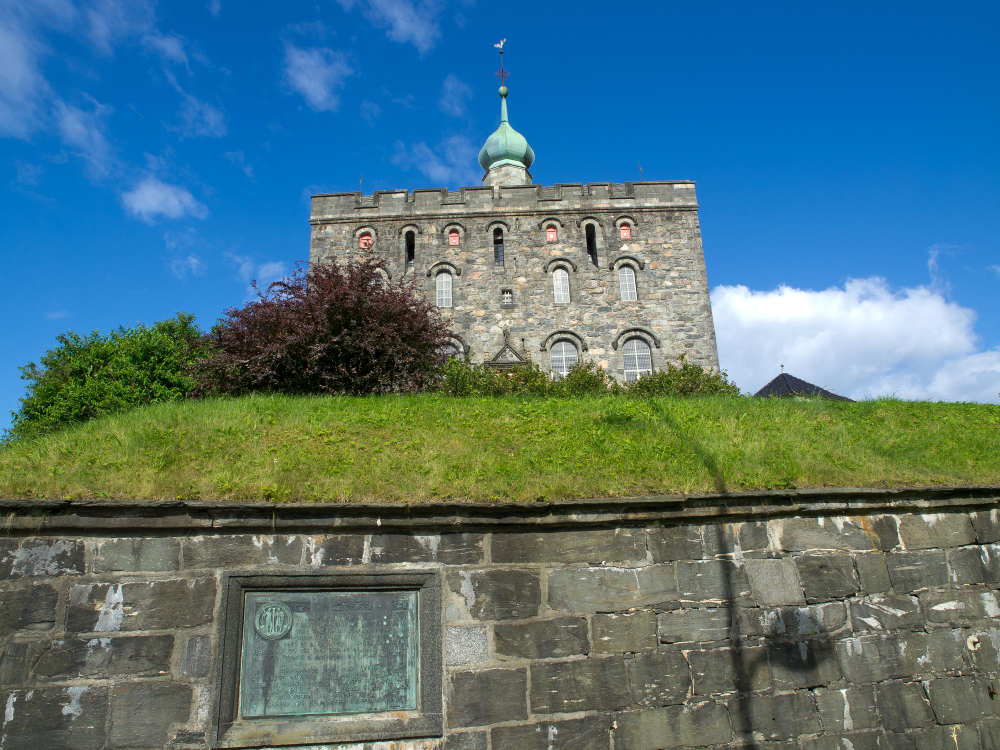
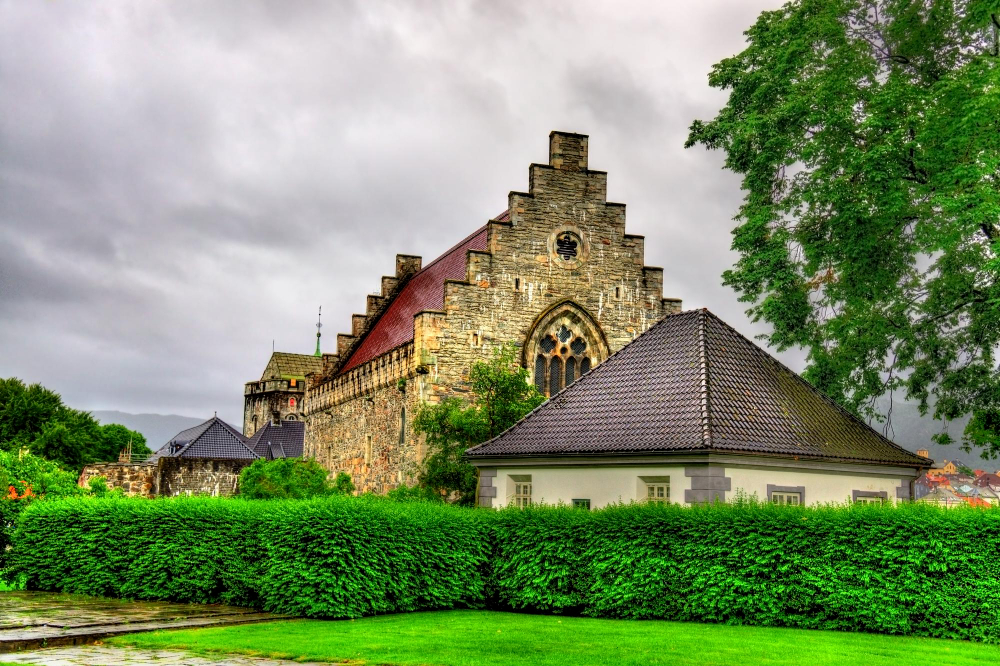
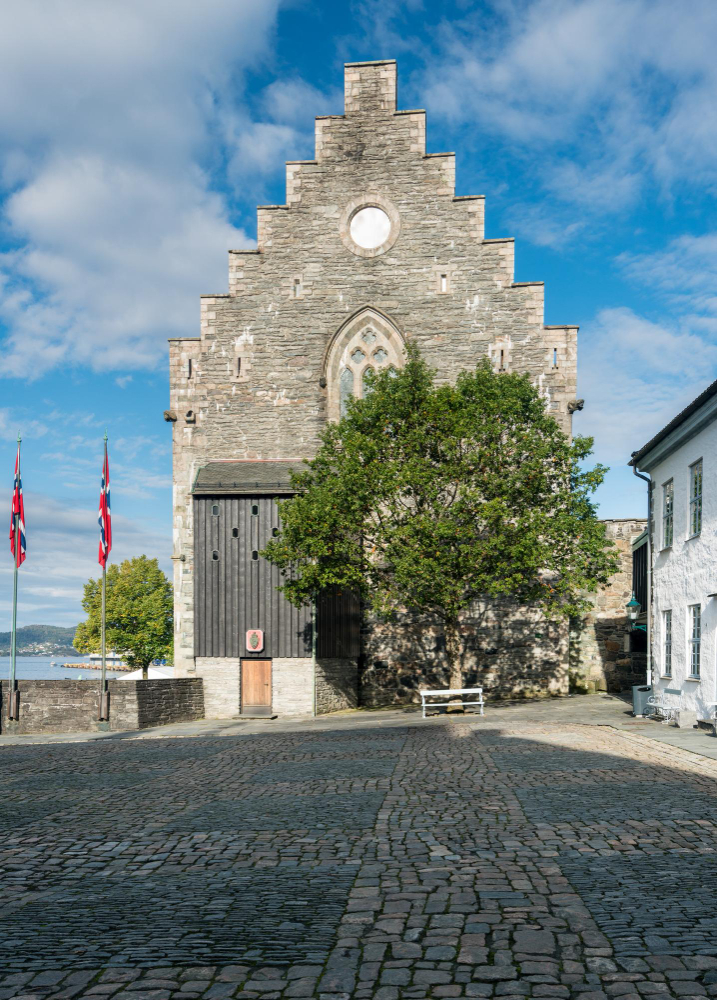
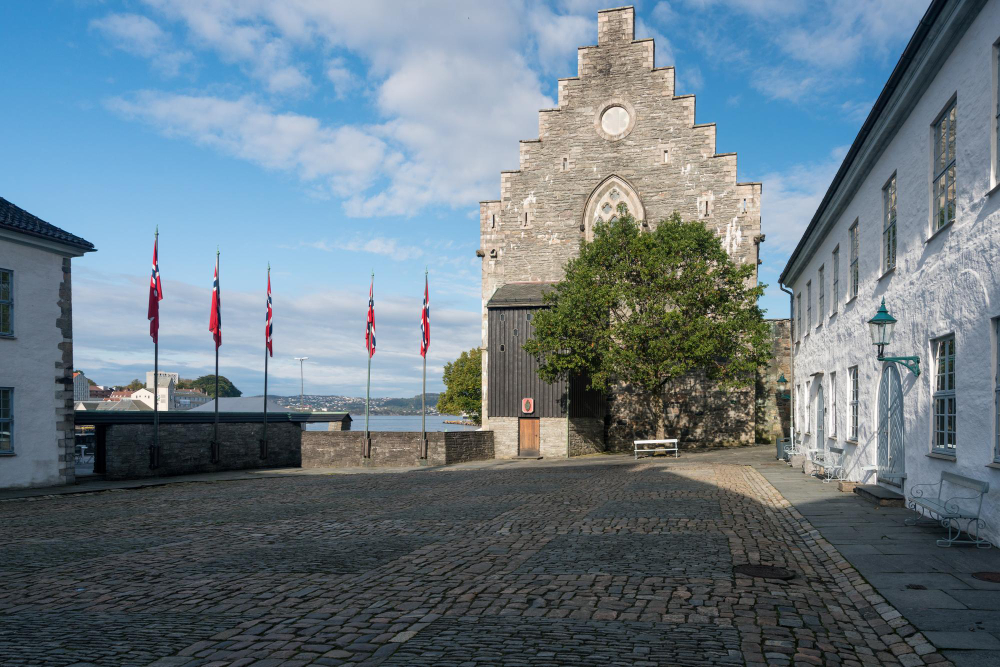
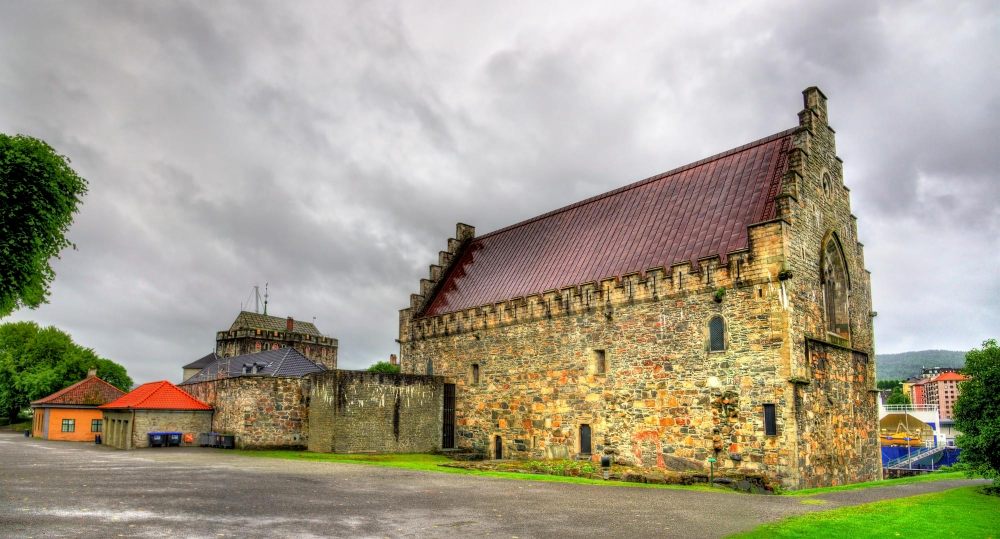
The Beginnings: From Royal Court to Fortress . The origins of Bergenhus Fortress lie in a time when Norway was consolidating its power from within. In the 12th century, King Øystein Magnusson moved the royal court to Holmen – as the area where the fortress stands today was known at the time. The location was not chosen at random: its strategic position at the entrance to the bay made Holmen a centre of political and economic power. Following a period of bloody civil wars that shook large parts of Norway, King Håkon Håkonsson began to expand the royal court into a stone fortress. This decision marked a turning point in the country’s history. The construction of fortifications symbolised the consolidation of royal power and centralised control over the realm. To this day, two buildings from this period bear witness to the architectural and historical significance of the complex: the magnificent Håkonshalle, built between 1247 and 1261, and the Rosenkrantz Tower, which houses the former castle of Magnus Lagabøte. In the Middle Ages, Bergen was regarded as the capital of the Kingdom of Norway, and Holmen became the country’s political centre. In addition to the main buildings, the fortress at that time also comprised a stone church, several halls, gates and a mighty fortress wall that protected the site.
From Centre of Power to Periphery: The Impact of the Danish-Norwegian Union – With the Danish-Norwegian personal union in the late 14th century, the centre of political power shifted to Copenhagen. Bergen lost its status as a royal residence, but the fortress remained an important administrative centre for western and northern Norway. During this period, numerous alterations and extensions were carried out, particularly under the direction of the castle commander Eske Bille around 1530. Bille had an entire district demolished, including significant religious buildings such as Christ Church and the Church of the Apostles. This was done to make way for the expansion of the military infrastructure. This radical transformation illustrates just how much the fortress’s function had changed: it was no longer a royal court, but was increasingly developing into a military centre designed to safeguard the Crown’s interests. Bergenhus’s importance as a defensive structure was particularly evident in 1665, when it played a role in the famous Battle of Vågen. At that time, English ships attacked a Dutch merchant fleet in the bay off Bergen. The fortress played a central role in the defence and demonstrated its strategic importance.
From Defence Fortification to Pleasure Garden – Over the centuries, the use of the fortress continued to evolve. In the 19th century, the complex was partially demilitarised. Whilst the defensive structures were gradually dismantled and relocated to other sites, the area surrounding the fortress was partly transformed into a public park and a pleasure garden. Here, the city’s inhabitants could go for a stroll and enjoy the picturesque view of the bay. Nevertheless, Bergenhus remained a military installation. In the 20th century, the fortress once again became the scene of historic events. During the German occupation of Norway in the Second World War, it served as the local headquarters of the Wehrmacht. Among other things, a large concrete bunker was built by Soviet prisoners of war during this dark period. On 20 April 1944, however, one of the most tragic disasters in Bergen’s history occurred. The Dutch ship ‘Voorbode’, laden with dynamite, exploded near the fortress. The incident not only caused considerable damage to the city but also damaged parts of the venerable fortress.
A New Beginning After the War – Following the end of the Second World War in 1945, a new era began for Bergenhus. The Norwegian Armed Forces took command of the complex, which initially served as the headquarters of the Vestlandet District Command. Later, however, the fortress was redesigned once again. Since 2002, it has housed modern military facilities, including the naval academies and the Bergen Conscription Centre. Of particular note is the Bergenhus Fortress Museum, which opened in 2006. The exhibition sheds light on various periods of Norwegian history, particularly the time of the German occupation. Gunnar Sønsteby, one of Norway’s best-known resistance fighters, personally opened the museum. Today, the museum is regarded not only as a place of learning but also as a memorial to the victims of the war.
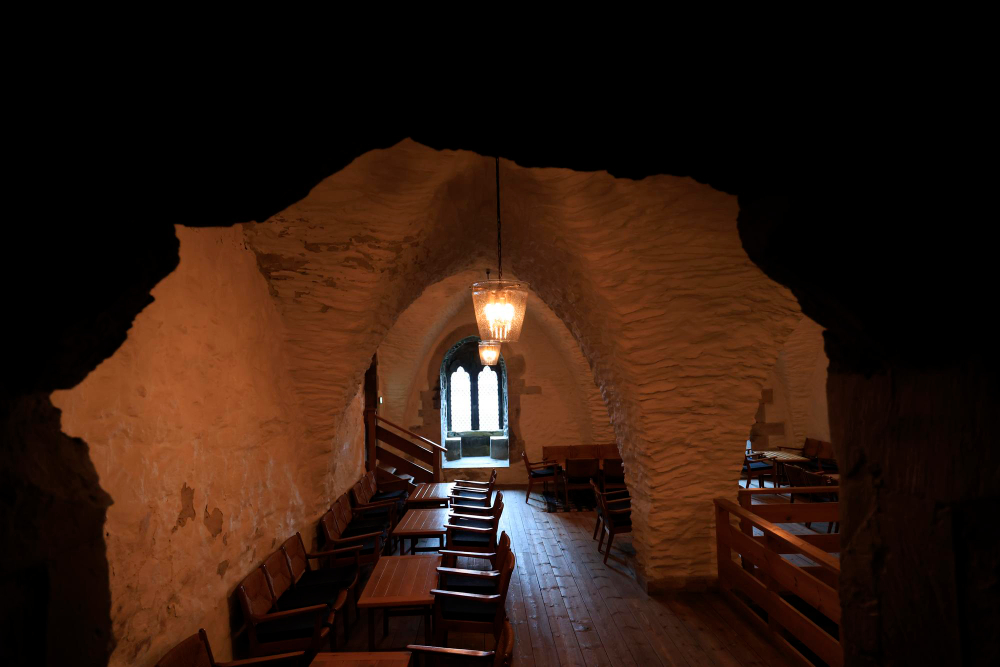
A monument with a living significance – Today, Bergenhus Fortress is not just a relic of times gone by, but also a living part of the city of Bergen. Around 150 people work in the various military and cultural facilities housed on the site. These include, amongst others, the Vestland Music Corps, whose concerts regularly attract visitors. In addition to its military and historical significance, Bergenhus now also serves as a venue for cultural events. Concerts, festivals and theatre performances take place within its historic walls, bringing the past back to life. A particular highlight is the well-preserved Håkonshalle. As one of Norway’s oldest and most imposing secular buildings, it attracts thousands of tourists every year. Once the venue for banquets and royal celebrations, it is now a popular venue for official receptions and cultural events.
Legends and myths surrounding the fortress – Like any historic site, Bergenhus also harbours its secrets. It is said that the castle’s ancient walls are the setting for countless stories – from tragic love stories to encounters with supernatural phenomena. Particularly popular is the legend of a young woman who was once held captive in the fortress’s chambers and has been wandering there as a ghost ever since. Whether myth or truth is left to the imagination, but such stories contribute to the mystical aura of the place.
A landmark of inestimable value – Bergenhus Fortress is far more than just a collection of old stones. It is a symbol of Norway’s eventful history and has constantly evolved and adapted over the centuries. From its function as a royal residence, through its role as a military fortress, to its current status as a modern cultural centre, it embodies the ability to reinvent itself without losing its connection to the past. Today, Bergenhus offers both history buffs and art and culture enthusiasts a unique insight into Norway’s rich past. The fortress remains a monument that deserves both respect and admiration – a place that has withstood the test of time and will continue to tell future generations of a nation’s triumphs and tragedies.