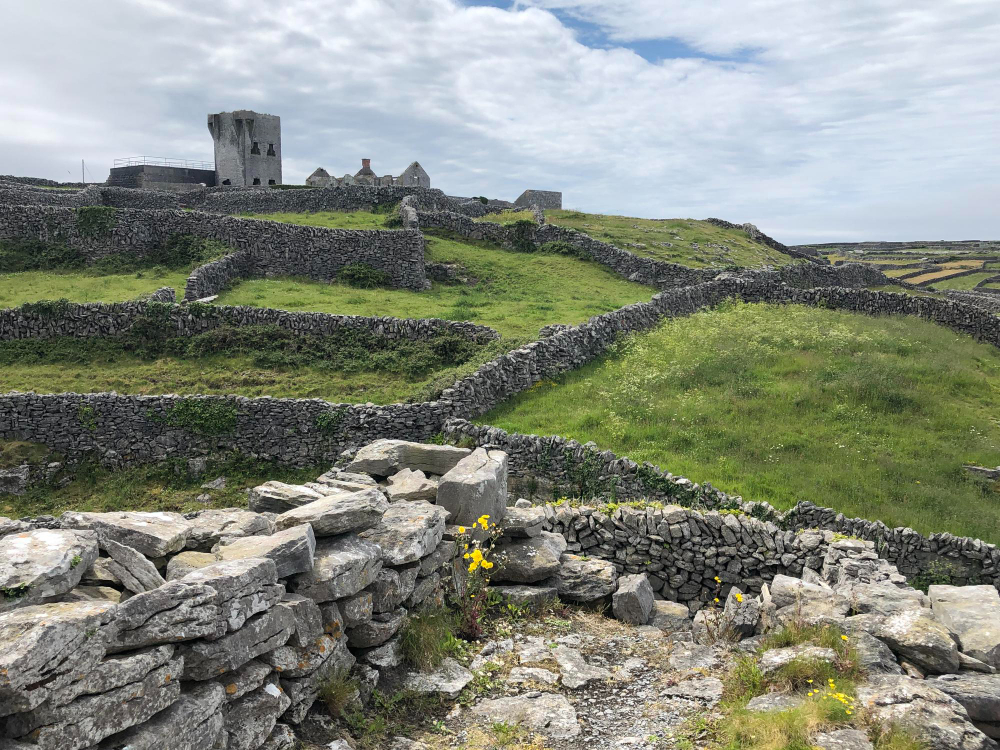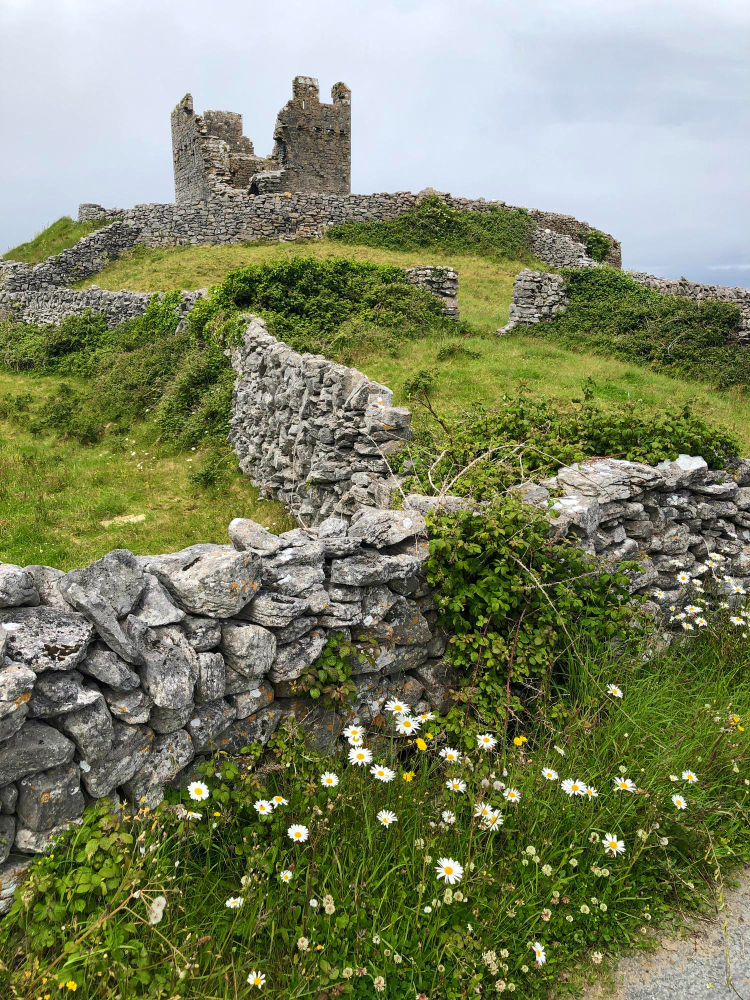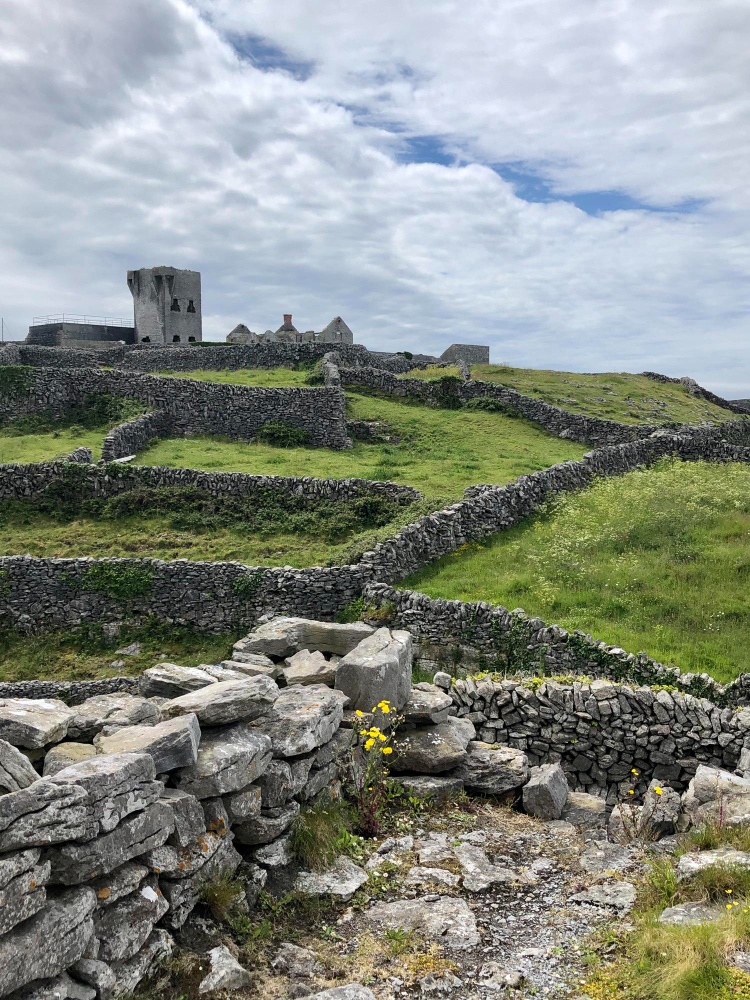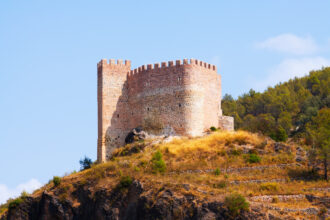

Perched high on one of the highest points of the small Irish island of Inisheer, the ruins of O’Brien’s Castle – also known as Furmina Castle – tower into the sky. This historic structure, built in the 15th century, is not only a national monument but also a fascinating testament to Irish history and mythology. In this article, we take a detailed look at the history, architecture and cultural context of this impressive fortress and shed light on the legends that surround this mysterious structure.
The Location: A Fortress on the Cliffs – O’Brien’s Castle is situated in the north of Inisheer (Irish: Inis Oírr), the smallest of the three Aran Islands off the west coast of Ireland. The island itself is known for its barren, limestone-dominated landscape and its traditional Irish culture. The castle’s strategic position on a hilltop once offered its inhabitants a sweeping view of the entire surrounding area and the sea. From here, they were able to spot potential threats at an early stage, making the structure a valuable defensive stronghold. However, the choice of location was not arbitrary: the area had been of significance for centuries before the castle was built. On the very spot where the remains of the fortress stand today, there once stood Dún Formna, a prehistoric ring fort. The name ‘Dún Formna’ roughly translates as ‘hill fort on the ridge’ and provides clues as to the topographical nature of the site. Archaeologists date this ring fort to a period between the 5th century BC and the 1st century AD, meaning it was built several millennia before the castle was erected.
The origins of the castle: the power and influence of the O’Briens – O’Brien’s Castle was built around the year 1400 by the Clann Teige, a branch of the powerful O’Brien dynasty (in Irish: Uí Briain). The O’Briens were among the most influential families in medieval Ireland and traced their lineage back to Brian Boru, the legendary High King of Ireland, who fell at the Battle of Clontarf in 1014. The construction of the castle on Inisheer was presumably intended to secure control over this strategically important region and to demonstrate the family’s supremacy over rival clans. However, the castle did not remain in the hands of the O’Briens for long. Towards the end of the 16th century, around 1582, the castle was captured by the Ó Flaithbheartaigh (O’Flahertys), another powerful clan from the west of Ireland. This takeover reflects the turbulent political climate of the time, when clashes between rival families were the order of the day.
Destruction by Cromwell’s army – Arguably the most momentous episode in the history of O’Brien’s Castle took place in 1652 during Oliver Cromwell’s conquest of Ireland. The army of the English Lord Protector waged a brutal campaign against the Irish clans, leaving a trail of destruction in its wake. In the course of these conquests, O’Brien’s Castle was also attacked, plundered and largely destroyed. The damage inflicted by Cromwell’s troops is still visible today – the ruins bear witness to a fate that befell many Irish castles and fortresses during that period.
The Architecture: A Window into the Past – Despite its ruined state, there is still much to be learnt about the architecture of O’Brien’s Castle today. The structure is a rectangular donjon – a residential tower that served as the central defensive and residential structure within the fortifications. Originally, the interior of the building was accessed via a door on the first floor, which was reached by an external wooden staircase. This architectural choice was designed for security: attackers had to overcome additional obstacles to gain entry to the tower. The first floor formed the castle’s central living area – a large hall where the inhabitants’ daily lives unfolded. A staircase built into the thick walls led to a battlement on the roof, from which the defence could be organised. The ground floor, on the other hand, was divided into three vaulted chambers, which presumably served as storerooms. A particularly remarkable feature of the fortress is a human face carved in stone, which has been preserved on the corbelled structure of a barbican (a projecting bay). Such decorative elements are typical of medieval Irish castles and may have held symbolic or religious significance.
A reflection of an eventful history – The history of O’Brien’s Castle is emblematic of the turbulent events that have shaped Ireland over the centuries. From the prehistoric ring fort, through the O’Briens’ display of power, to its destruction by Cromwell’s army, the ruins reflect the political, social and cultural upheavals the country has endured. The geographical isolation of Inisheer has helped to ensure that both the ruins and the traditional way of life of the island’s inhabitants have been largely preserved to this day. Visitors can explore the remains of the castle and soak up the unique atmosphere that surrounds this historic relic.
O’Brien’s Castle today: A popular destination for history enthusiasts – Today, O’Brien’s Castle is one of the main attractions on Inisheer. Every year, the ruins attract numerous history and culture enthusiasts to the island, drawn by the region’s rich past. As well as visiting the castle, Inisheer offers other attractions, including the famous stone walls, traditional cottages and the shipwreck of the Plassey, which gained international fame through the TV series Father Ted. Moreover, the area around the castle is an ideal spot for walks, during which visitors can enjoy breathtaking views of the Atlantic Ocean. The fresh sea air, the sound of the waves and the ever-present traces of times gone by make a visit here a truly special experience.
A monument to the past and identity – O’Brien’s Castle is more than just a historic ruin – it is a symbol of Ireland’s turbulent history, its cultural identity and the indomitable spirit of its people. The walls may be crumbling, but the stories they tell remain alive. For anyone interested in the history of Ireland and the significance of its historic sites, a visit to this place is an absolute must. With its blend of history, legends and breathtaking natural beauty, O’Brien’s Castle remains a place full of magic and mystery, constantly reminding us just how closely our present is intertwined with the past.