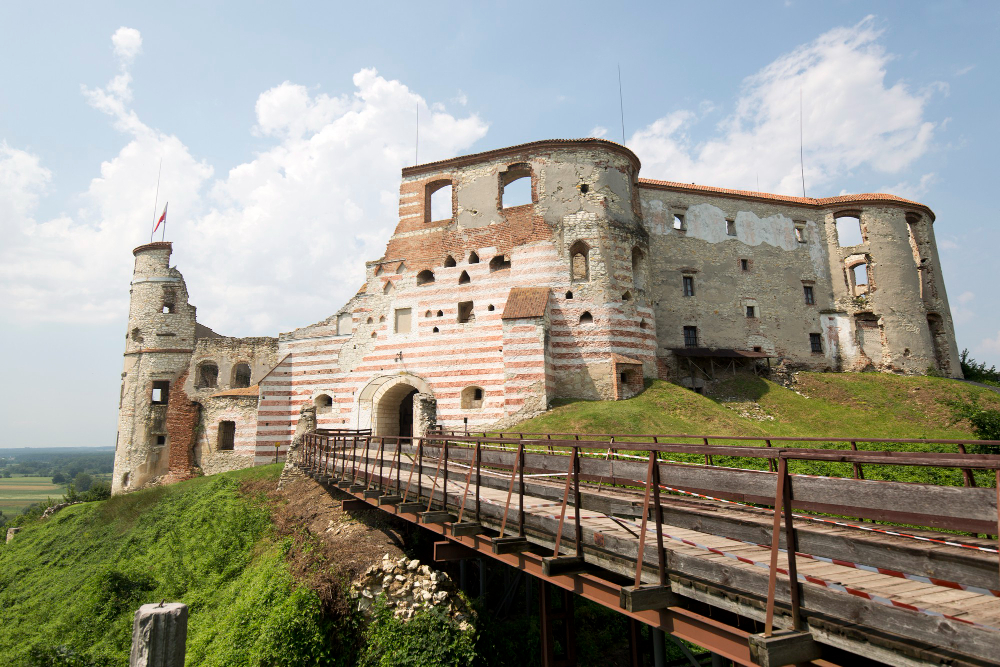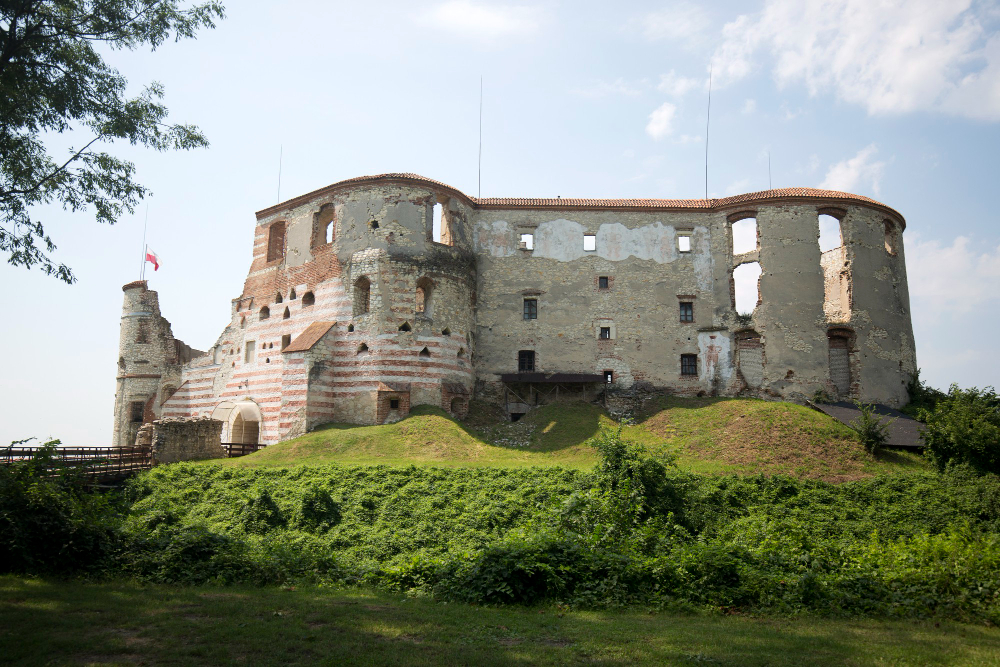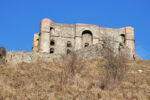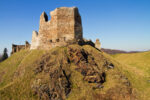

Janowiec Castle, a truly majestic Renaissance structure, stands proudly atop a steep cliff on the banks of the Vistula and tells the story of over five centuries of Polish history. This architectural masterpiece, built between 1508 and 1526, is situated near the town of Puławy and harbours both historical treasures and fascinating legends. What was once a magnificent residence is now a popular tourist destination – a place where history, architecture and myths converge.
The Beginnings in the 16th Century – The history of Janowiec Castle begins in 1508, when Mikołaj Firlej, a member of the noble Firlej family and bearer of the Lewart coat of arms, who later became Starost of Kazimierz, laid the foundation stone. Under the leadership of his son Piotr Firlej, Voivode of Ruthenia, the fortress was further expanded. Originally designed as a defensive structure in the late Gothic and Renaissance styles, the castle was protected by strategically positioned bastions. These enabled artillery fire to be directed along the fortifications, making the castle an impregnable fortress of its time. Between 1565 and 1585, the castle underwent extensive remodelling in the late Renaissance Mannerist style. The renowned Italian architect Santi Gucci redesigned both the castle’s living quarters and its decorative elements. The residence was extended to include two additional wings, connected by arcaded corridors. With four courtyards, large halls and around a hundred rooms, the complex stood as an impressive testament to the wealth and power of the Firlej family.
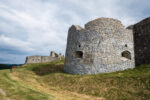
Political events and changes in the 17th century – At the beginning of the 17th century, the castle passed into the possession of the wealthy Tarło family. Barbara Dulska brought it into the marriage as part of her dowry in 1614. Under the Tarłos’ stewardship, the building underwent significant extensions, including the construction of two cylindrical towers and the enlargement of the living quarters. Particularly noteworthy was the design of the exterior walls, which were painted with red and white stripes and folk-art depictions of soldiers – a symbol of the connection to the art of the common people. The castle served not only as a residence but was also the scene of historical events. In 1606, King Sigismund III Vasa and the rebellious Marshal Mikołaj Zebrzydowski met here as part of the so-called Zebrzydowski Rokosz. This meeting marked a brief reconciliation during a period of political unrest. Some 50 years later, the castle was plundered and burnt down by the Swedish army under the command of Karl Gustav. Despite this devastating attack, the Lubomirski family – who had acquired the castle through the marriage of Barbara Tarłówna to Jerzy Sebastian Lubomirski – began reconstruction work. Under the direction of the Dutch architect Tylman van Gameren, the castle was restored in the Baroque style and extended to include a chapel.
Decline and Decay in the 18th and 19th Centuries – The 18th century marked the beginning of the decline of Janowiec Castle. After Jerzy Marcin Lubomirski sold the estate in 1783, it changed hands several times. However, none of the new owners – including Mikołaj Piaskowski, the Osławski and Zawisza families, and others – were able to bear the costs of maintaining the extensive building complex. This led to valuable furnishings and building materials being sold off, until the castle was finally abandoned and left to fall into disrepair.
Efforts to Save the Castle in the 20th Century – A new glimmer of hope for the castle emerged in 1931, when Leon Kozłowski of Warsaw acquired the estate. Despite financial difficulties, he had at least two rooms restored, thereby preventing further deterioration. He also revived the vineyards on the southern slope and laid out orchards and a park around the castle ruins. Tragically, during the Second World War, artillery fire caused further damage, placing an additional strain on the already weakened structure. After the war, the estate was not nationalised and thus remained one of the few castles in the Eastern Bloc to remain in private ownership. In 1975, the Nadwiślańskie Museum finally acquired the castle and began restoration work in 1993. Since 2025, the castle has functioned as an independent museum, guiding its visitors through the centuries whilst presenting the building’s fascinating history.
Architectural Features – The original Firlej family fortress was built on the site of an old wooden and stone fortress, with the structure adapting to the natural contours of the hill. The castle took the form of an elongated polygon, surrounded by natural defences – a steep Vistula cliff and a limestone moat. It was built from local limestone and bricks, which enclosed a courtyard approximately 100 metres long. Over the course of the various construction phases, the castle acquired a number of new architectural features. Particularly noteworthy are the decorative exterior façades, the richly ornamented halls and ingenious defensive elements such as cylindrical towers and bastions. The castle’s classical Renaissance aesthetic was complemented by details such as sgraffito paintings and ornate attics in the south wing, and was later enriched with Baroque elements.
The Legend of the Black Lady – As well as its historical significance, Janowiec Castle is also known for its ghostly history. It is said that the ‘Black Lady’, the ghost of Helena Lubomirska, appears in the ruins when there is a full moon. According to legend, Helena fell in love with one of her father’s servants, but due to her social standing, she was not allowed to marry him. In her grief, she leapt from a window of her chambers into the castle courtyard and lost her life. To this day, this tragic love story attracts both romantics and enthusiasts of the paranormal, who hope to encounter the mysterious apparition.
The castle today – a living monument – Today, Janowiec Castle is a living monument that captivates visitors with its rich history and impressive architecture. The ongoing restoration work preserves the building’s character and makes it a fascinating experience for anyone interested in history and culture. From the picturesque views of the Vistula River to the well-preserved parts of the castle complex and the stories of times gone by – the castle remains a symbol of Poland’s turbulent history.
Janowiec Castle is far more than just a historical site; it reflects Poland’s turbulent history with all its highs and lows. The combination of stately architecture, political significance and local mythology makes the building a unique piece of cultural heritage that captivates every visitor. Whether you’re a history buff, an architecture enthusiast or a passionate researcher of legends – Janowiec Castle has something to offer everyone and remains an unmissable attraction in the heart of Poland.