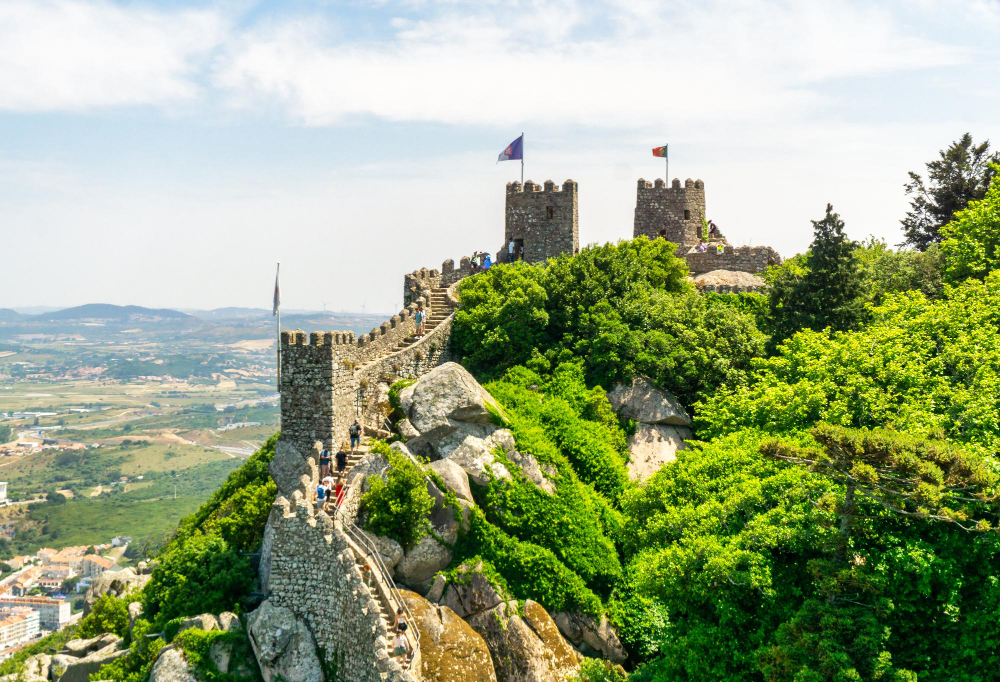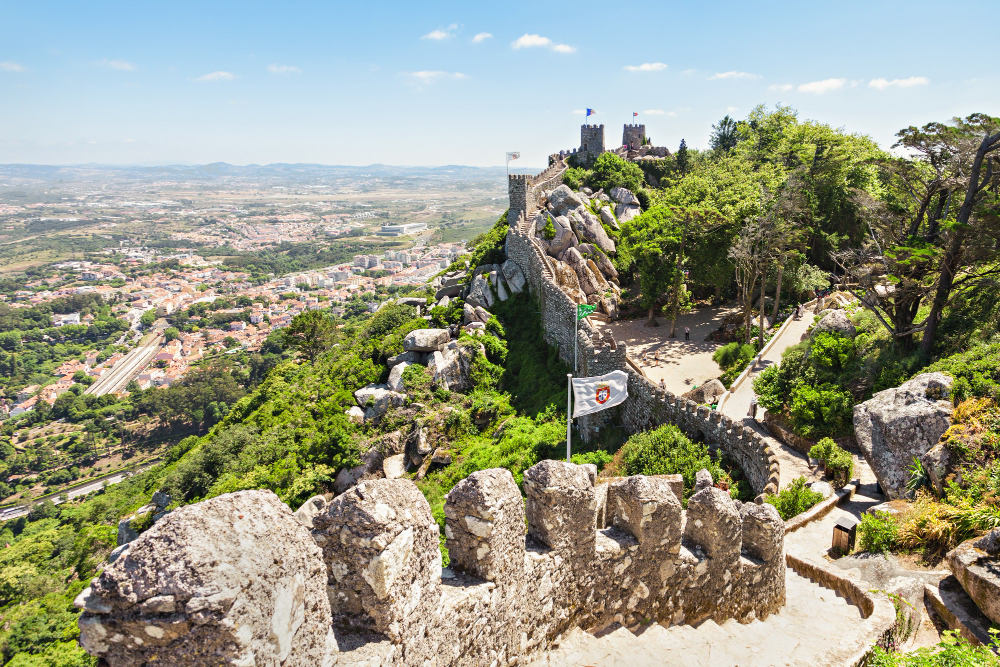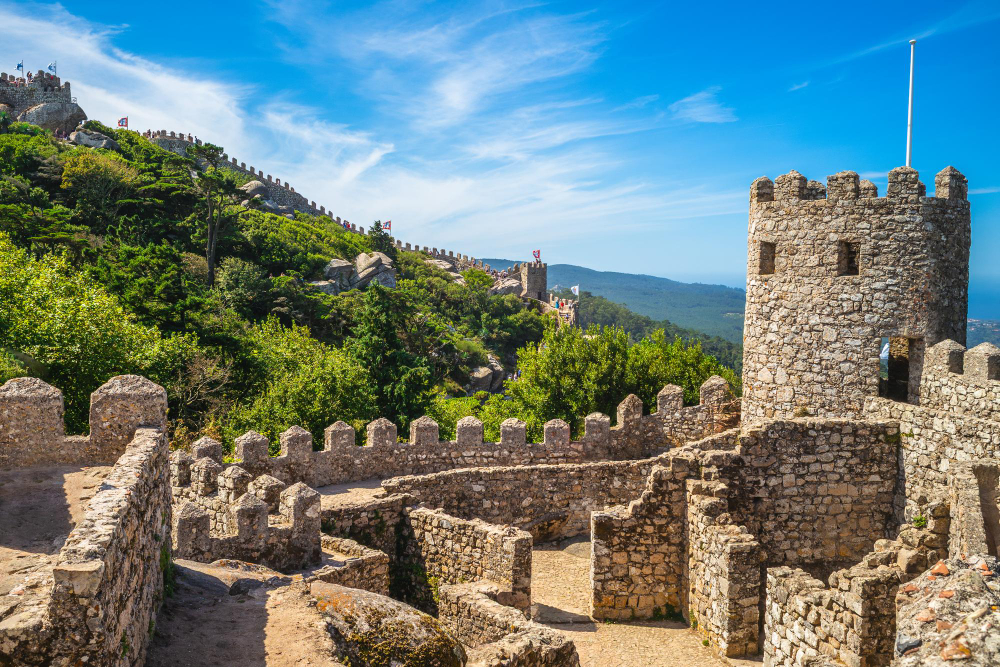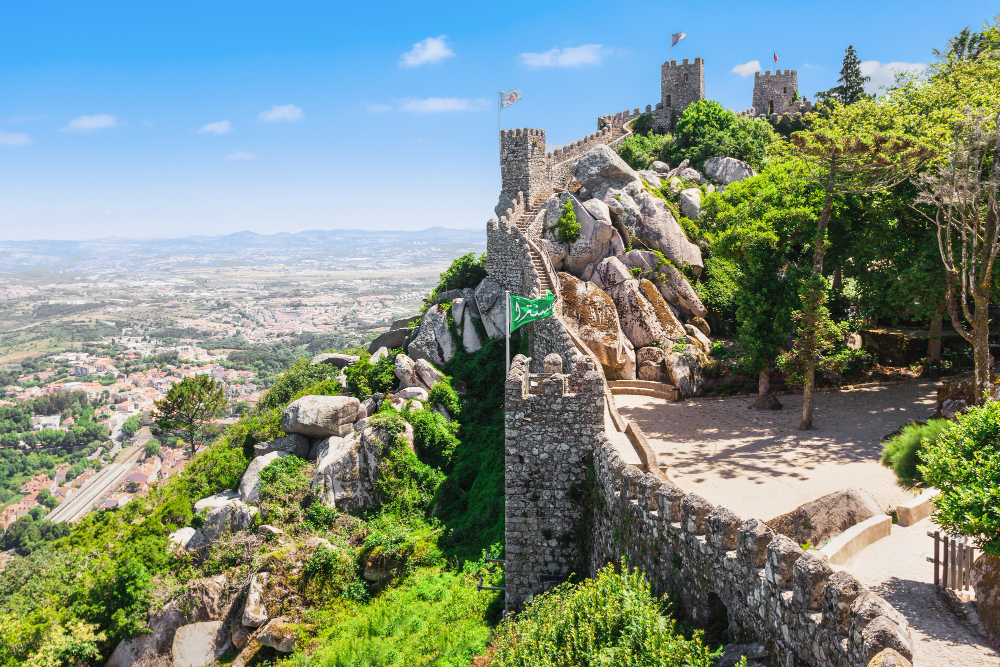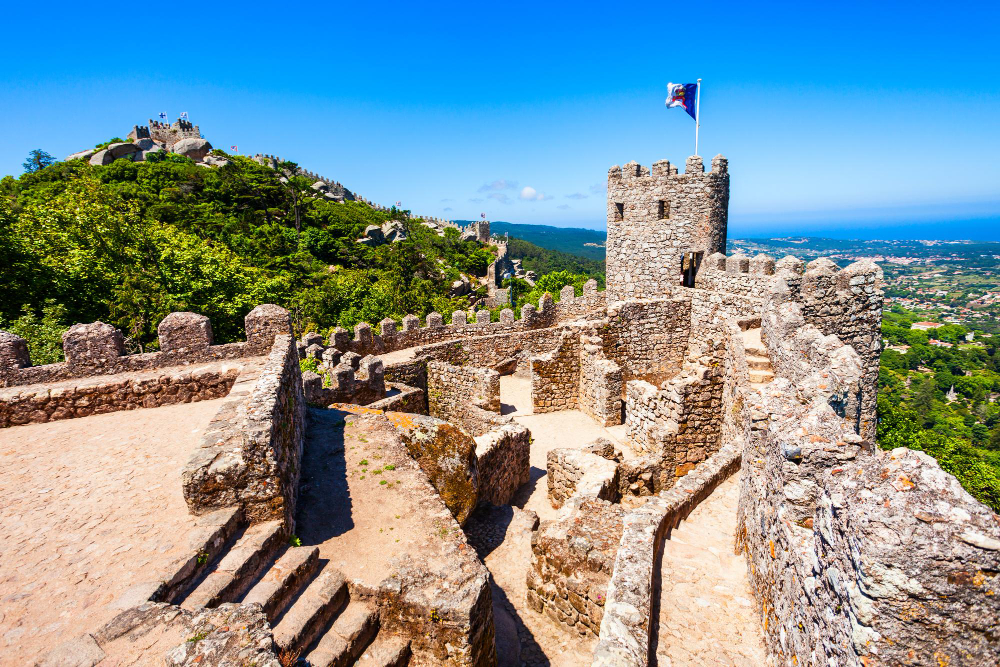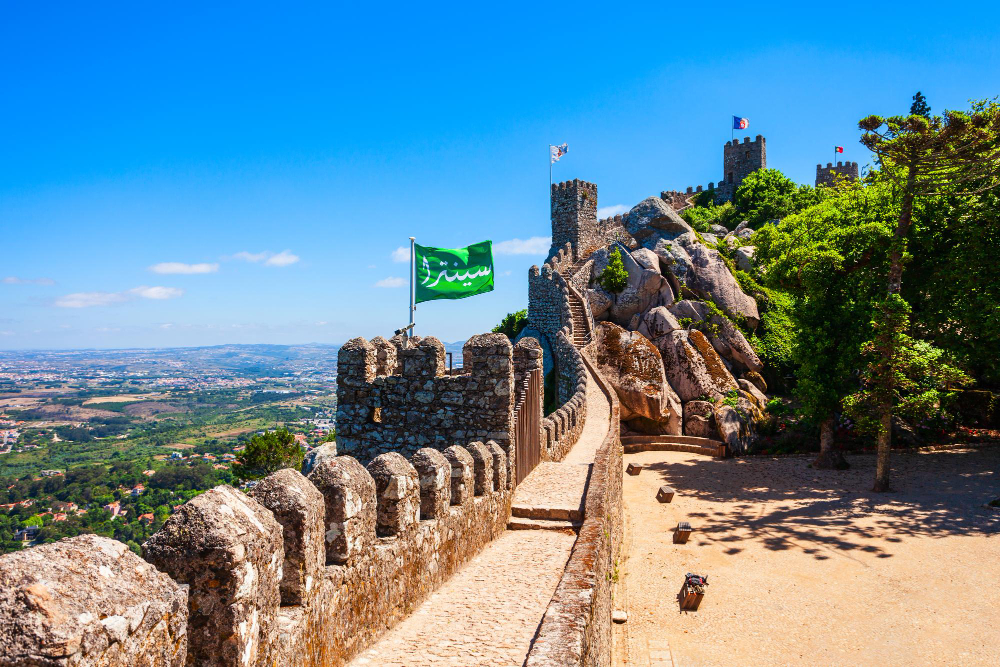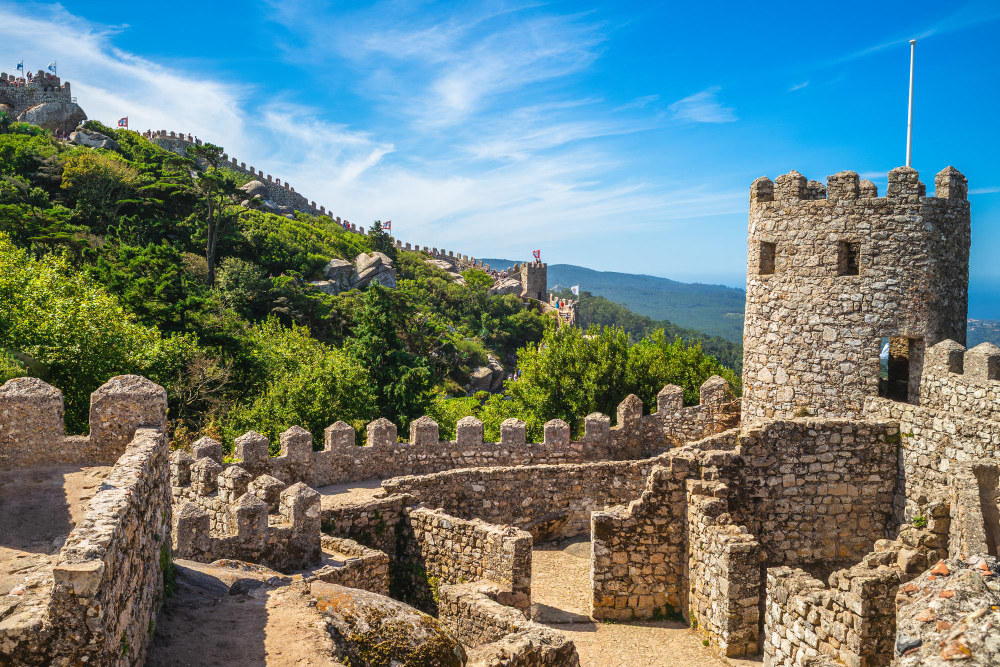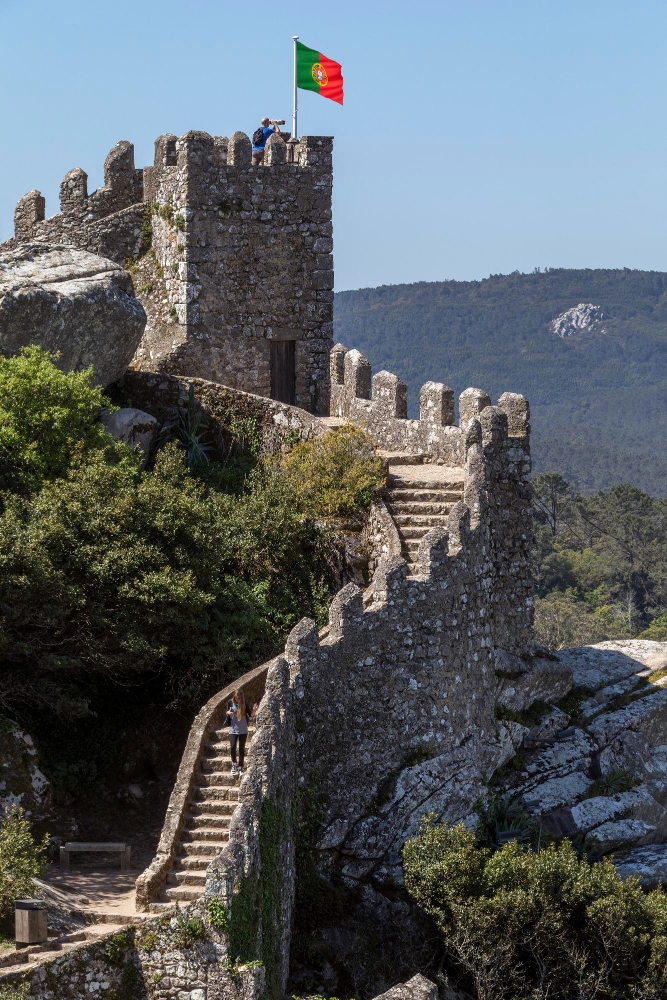

In the heart of the breathtaking Sintra Mountains, just some 25 kilometres north-west of Lisbon, the Castelo dos Mouros – the Moorish Castle – stands majestically on a ridge. This medieval fortress is not only a fascinating testament to centuries of history, but also a symbol of Portugal’s cultural richness. Nestled in a mystical landscape and surrounded by dense vegetation, the castle not only offers spectacular views over the Sintra Valley, but also tells the story of the turbulent times of the Reconquista and Arab rule on the Iberian Peninsula. In this article, we take you on a journey through the eventful past, architectural features and legends surrounding the Castelo dos Mouros – a hidden gem within the Sintra Mountain Range UNESCO World Heritage Site.
From Moorish structure to Christian fortress – The origins of the Castelo dos Mouros date back to the 8th and 9th centuries, when the Iberian Peninsula was under Muslim rule. The castle was built by the Moors as a strategically important outpost to protect the surrounding agricultural land. Its location high up in the Sintra Mountains served to control the surrounding area and to protect the population from attacks and uprisings. With the decline of Córdoba and the expansion of Almoravid power towards the end of the 11th century, the region once again became the scene of fierce fighting. This led to significant shifts in power in 1031, when the King of Badajoz ceded various territories, including Sintra, to Alfonso VI of León and Castile in order to form an alliance with the Christian forces. Yet this alliance brought little security: the castle once again fell to the Almoravids. It was only after the decisive conquest of Lisbon by the troops of Afonso Henriques in 1147 that the Castelo dos Mouros surrendered to the Christians. Subsequently, the castle was given a new role: the young Portuguese king commissioned 30 residents to guard the castle and granted them privileges in a so-called ‘Foral’ (town charter) of 1154, in order to promote the settlement and security of the surrounding area.
Change and Decline – Royal Building Projects and the Decline – From the second half of the 12th century, a chapel was built within the castle walls, which soon served as a parish church. Under King Sancho I, the castle underwent further alterations and reinforcements, which consolidated its importance as a military stronghold. In the 14th century, King Ferdinand I had the structure extensively renovated on the advice of João Annes de Almada – yet despite its solid fortifications, the Castelo dos Mouros gradually lost its military relevance as many residents moved to the neighbouring village of Sintra. An interesting episode took place at the beginning of the 15th century: the church, which had once been used as a chapel, was adapted by the Jewish community – a testament to the region’s multicultural history. However, under King Manuel I, the Jewish inhabitants were expelled, which also heralded the gradual abandonment of the castle. The devastating Lisbon earthquake of 1755 damaged the chapel, which was already in a state of disrepair, and significantly weakened the stability of the walls. By the early 19th century, the towers and battlements were in ruins. It was not until the mid-19th century that King Ferdinand II of Portugal recognised the site’s historical value and initiated extensive restoration work. In doing so, he not only had the walls reinforced, but also laid out gardens, created niches and ensured that the castle ruins were maintained for the first time in the Romantic style. His measures, overseen by the geologist Wilhelm Ludwig von Eschwege, played a key role in preserving the Castelo dos Mouros – although some of the construction work did affect the archaeological layers.
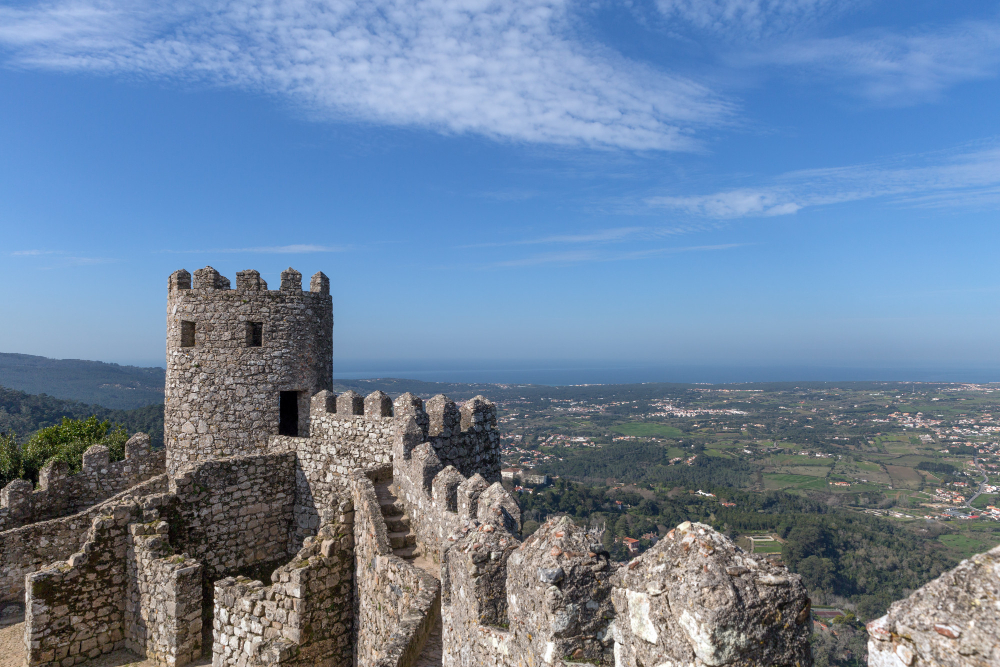
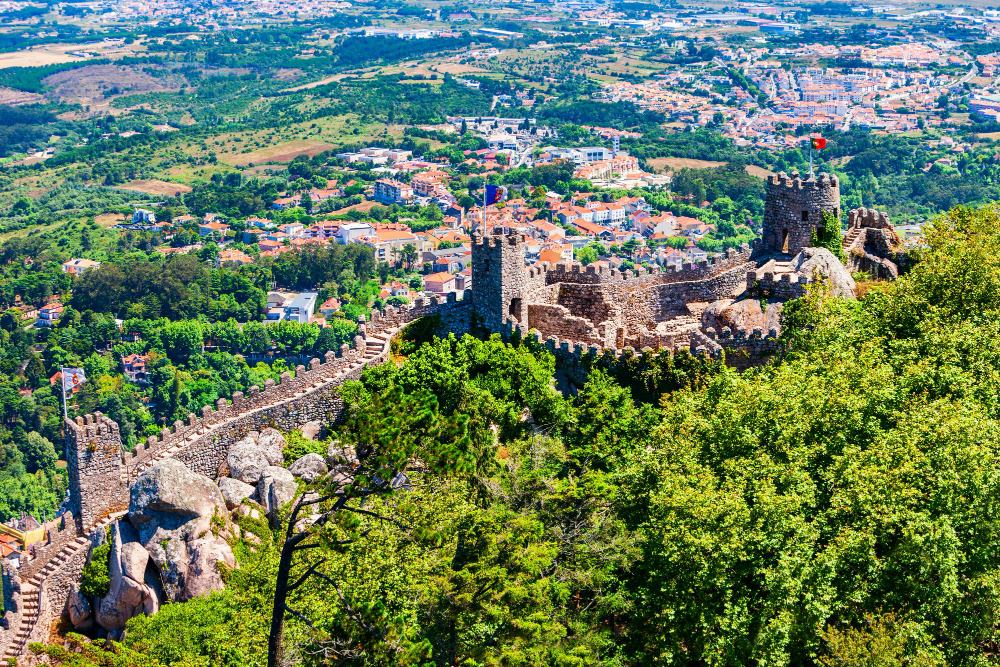
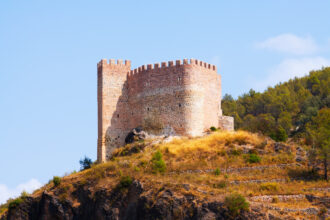
Castle hill with panoramic views and natural splendour – The Castelo dos Mouros stands at an altitude of around 400 metres and offers spectacular views which, on a clear day, stretch as far as the coast of Mafra and Ericeira. The castle is nestled within the Sintra-Cascais Natural Park, a region featuring unique geological formations of granite, syenite and other volcanic rocks. The mild, oceanic climate fosters lush vegetation – a mixture of native and exotic plants that have been cultivated since the 16th century. Numerous historic estates stretch out around the castle, such as Pena Park, the Quinta da Regaleira and the Monserrate estate, which, together with the Castelo, form part of the exceptional Sintra Cultural Landscape and are listed as a UNESCO World Heritage Site. This combination of historic architecture, natural diversity and a magical atmosphere makes Sintra – and the Castelo dos Mouros in particular – a magnet for tourists and culture enthusiasts.
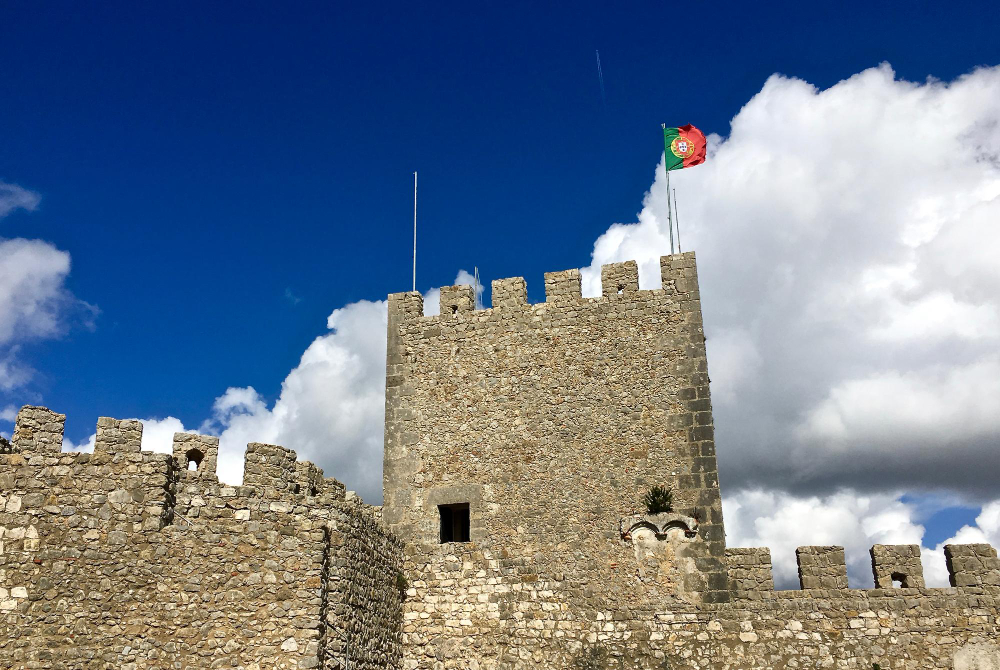
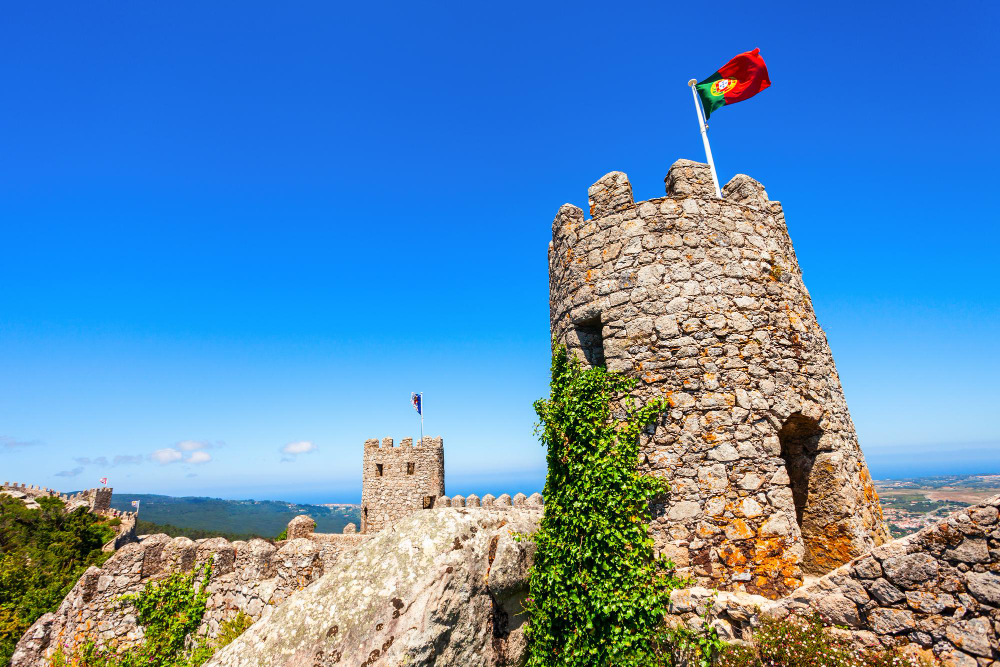
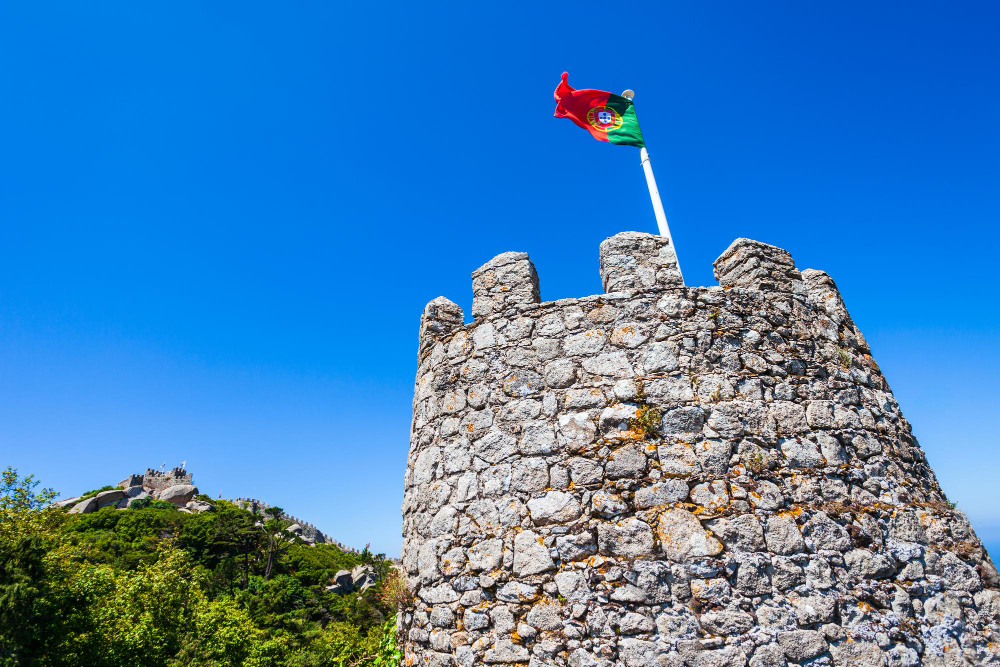
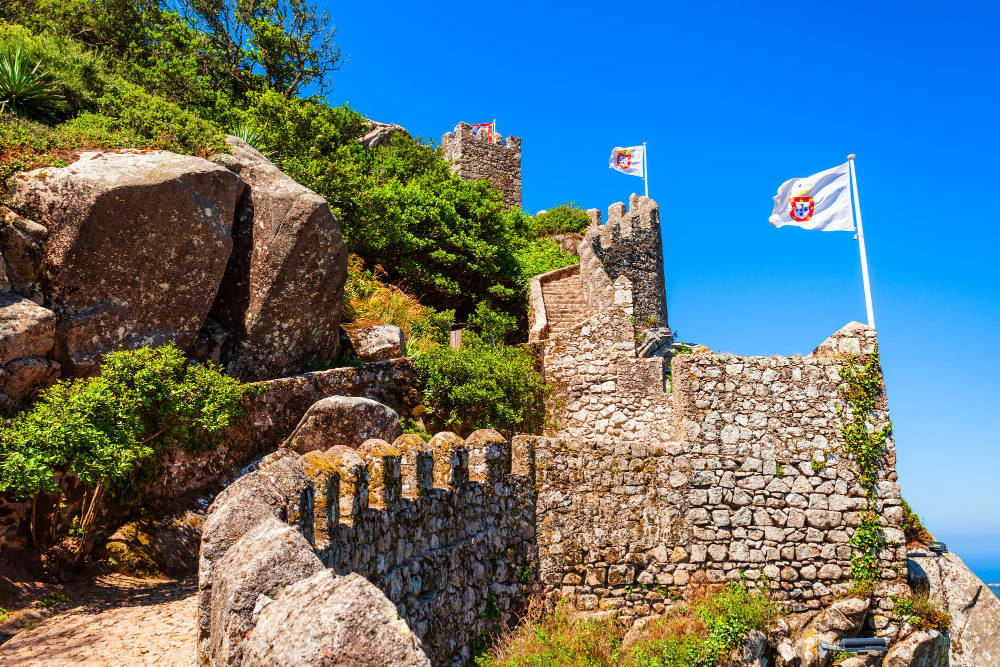
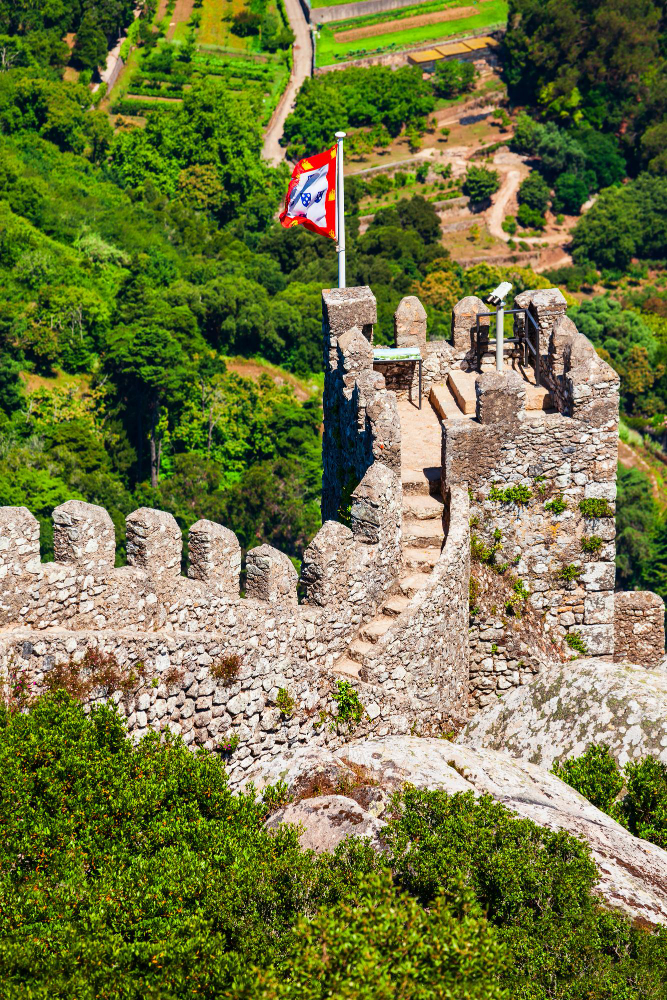
Architecture and Functionality: A Castle Between Power and Romance – The fortress itself follows an irregular perimeter, approximately 450 metres long, along the rocky ridge. The double curtain wall, featuring battlements, crenellated towers and defensive structures, winds its way across the site, which was originally difficult to access due to its location. Particularly impressive is the large underground cistern, which holds water reserves up to six metres deep and was once fed by light wells. Within the walls are five rectangular and one round tower, whose simple yet strategically important positioning remains well preserved to this day. An architectural highlight is the so-called ‘Traitor’s Gate’ on the north side, which presumably allowed secret access. The tallest tower, also known as the ‘King’s Tower’, rises at the south-west corner and gave the castle its imposing character during its heyday.
The Chapel of São Pedro: a religious site and artistic gem – Not far from the main entrance stand the ruins of the Chapel of São Pedro, which once served as the religious centre of the castle complex. The architecture combines classic Romanesque elements with delicate details: the southern entrance door is flanked by capitals adorned with scrollwork featuring botanical and fantastical motifs – including mythical creatures such as griffins and basilisks, which symbolise protection and power. The interior of the chapel holds a surprise in the form of the remains of a ceiling painting depicting the patron saint, São Pedro, within a celestial circle, surrounded by floral patterns and ornamental friezes – a rare example of medieval art in an otherwise strictly military setting. There is an intriguing legend that the chapel was built on the site of a mosque, though no conclusive archaeological evidence of this has yet been found.
Historical Significance and Contemporary Importance – The Castelo dos Mouros played a key role in the defence and administration of the Muslim-controlled region of Belata and later formed part of the defence system of the newly founded Portuguese Kingdom. Although its importance waned over time, the castle remained a symbol of historical change and cultural fusion on the Iberian Peninsula. After centuries of neglect, the restoration work carried out in the 19th and 20th centuries not only saved the Castelo dos Mouros but also gave it a new lease of life as a tourist attraction. Today, the castle forms part of a carefully preserved cultural landscape park and attracts thousands of visitors every year, who are enchanted by the combination of history, nature and myth.
A place full of stories and magic – The Castelo dos Mouros is far more than just a castle ruin on a hill. It is a living monument to Portugal’s eventful history – from the Moorish conquest, through Christianisation, to the Romanticism of the 19th century. Its walls tell tales of wars, faith, cultural change and the passage of time. Together with the enchanting landscape of Sintra, the castle invites visitors to immerse themselves in a world where reality and legend merge. Anyone visiting Portugal should not miss this slice of living history – for the Castelo dos Mouros is a window into the past as well as a symbol of the cultural diversity of this fascinating region.