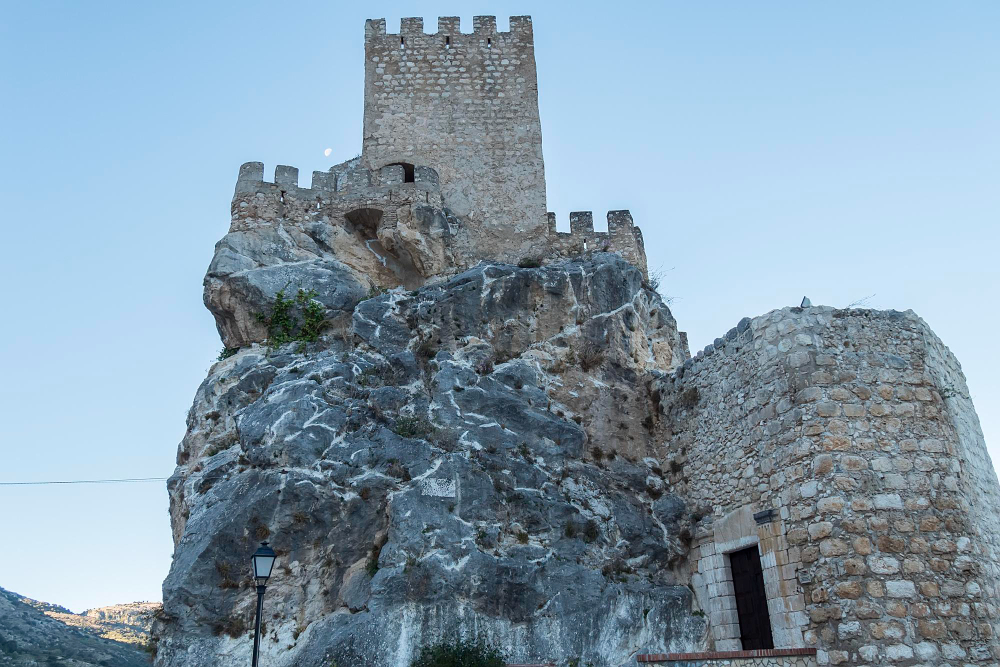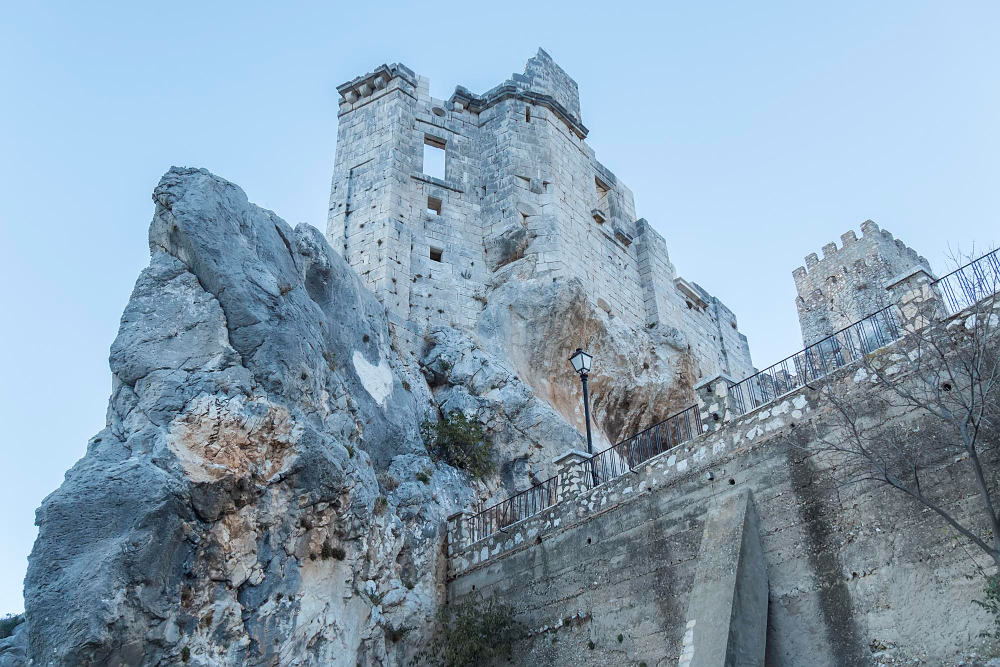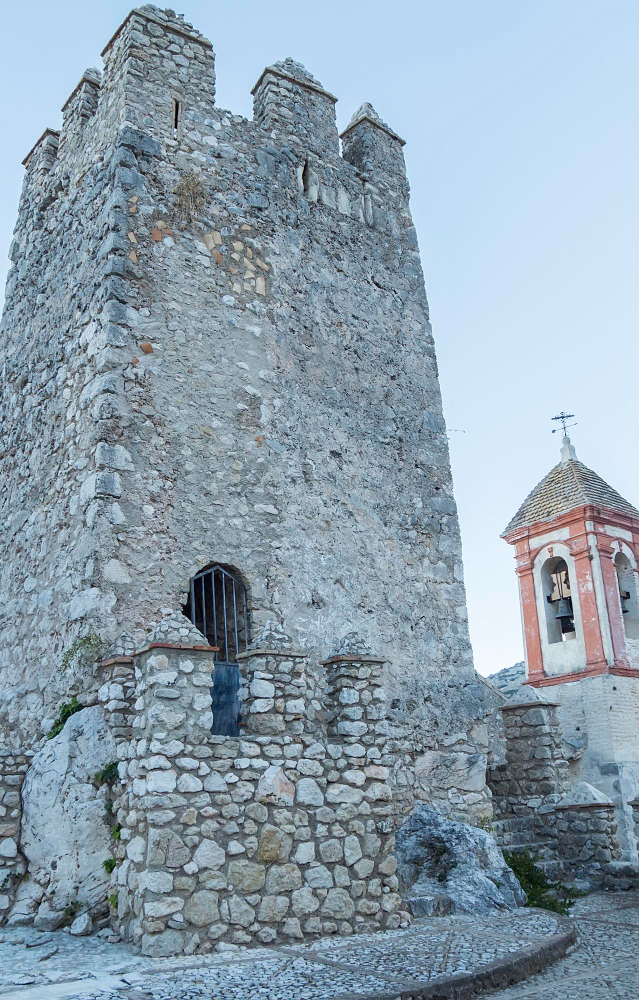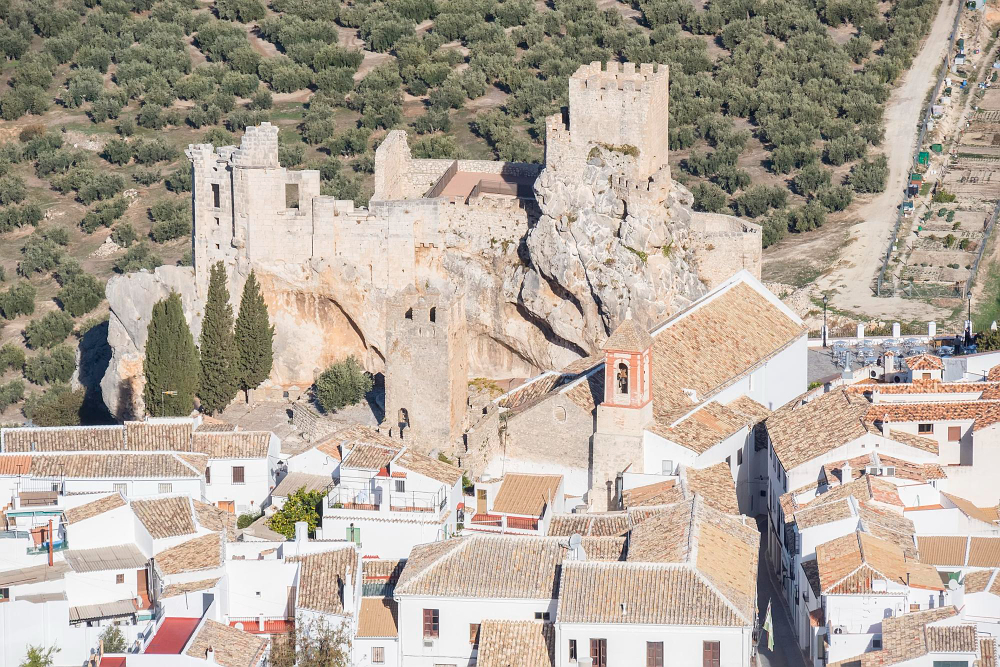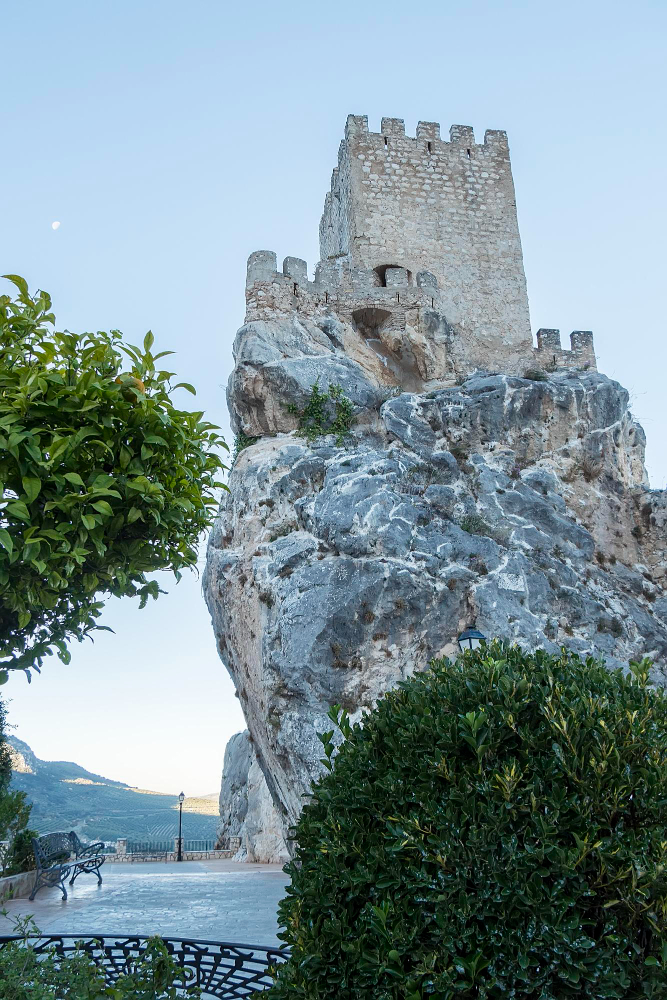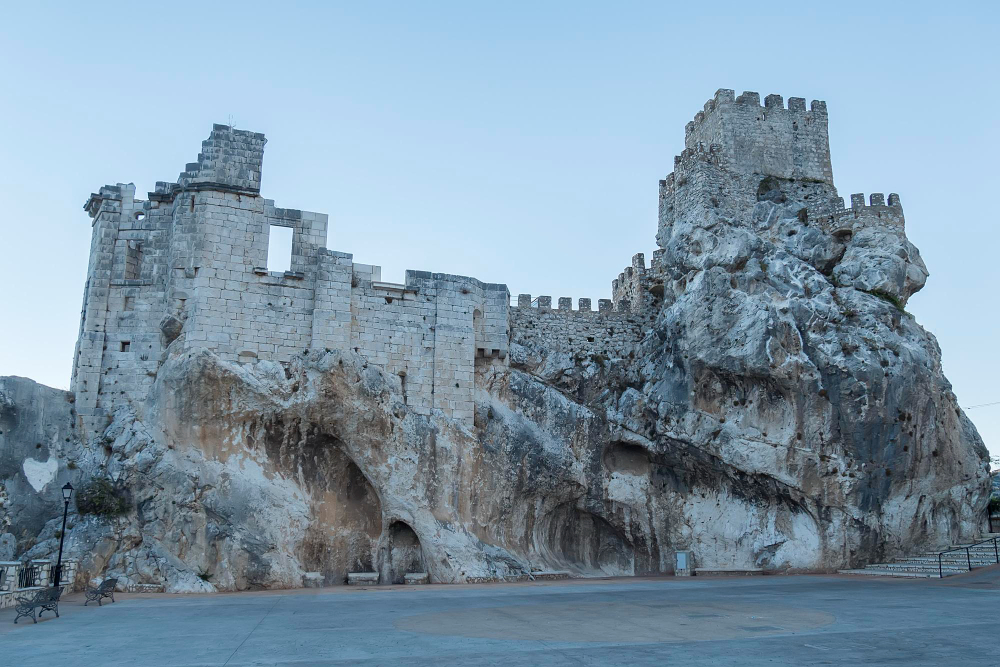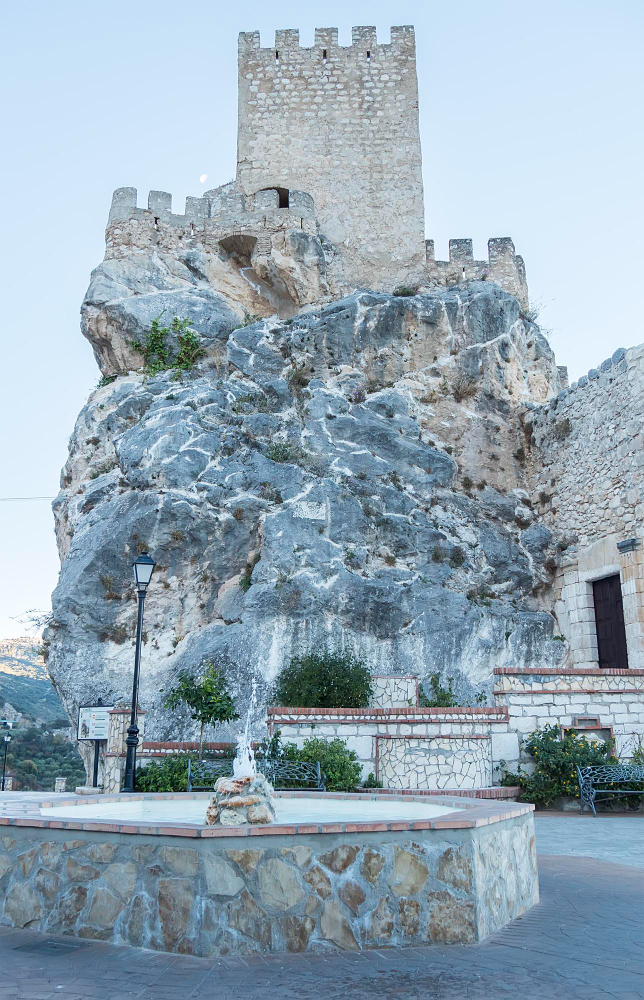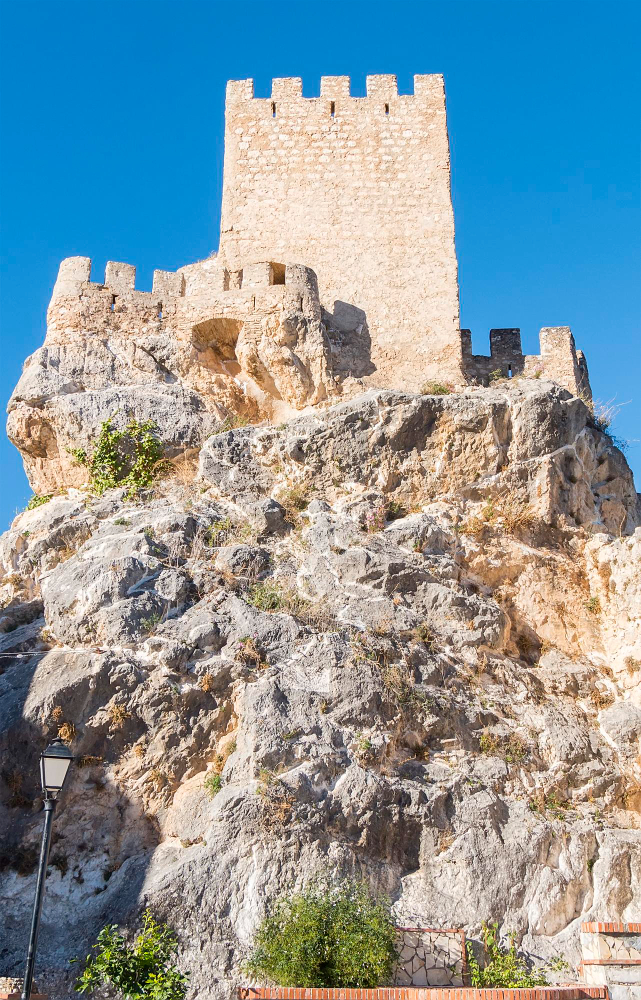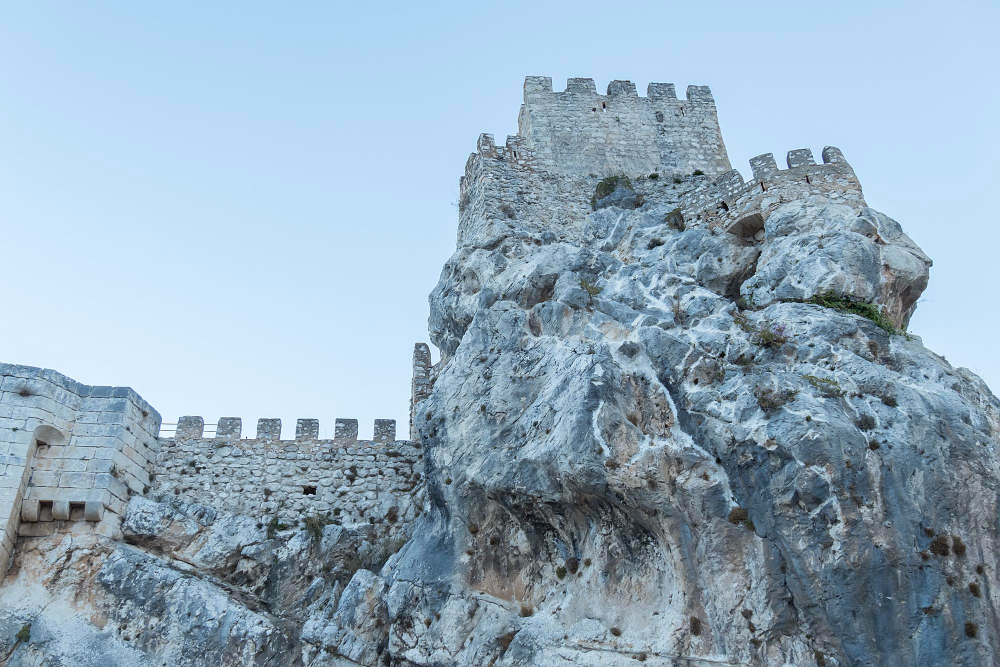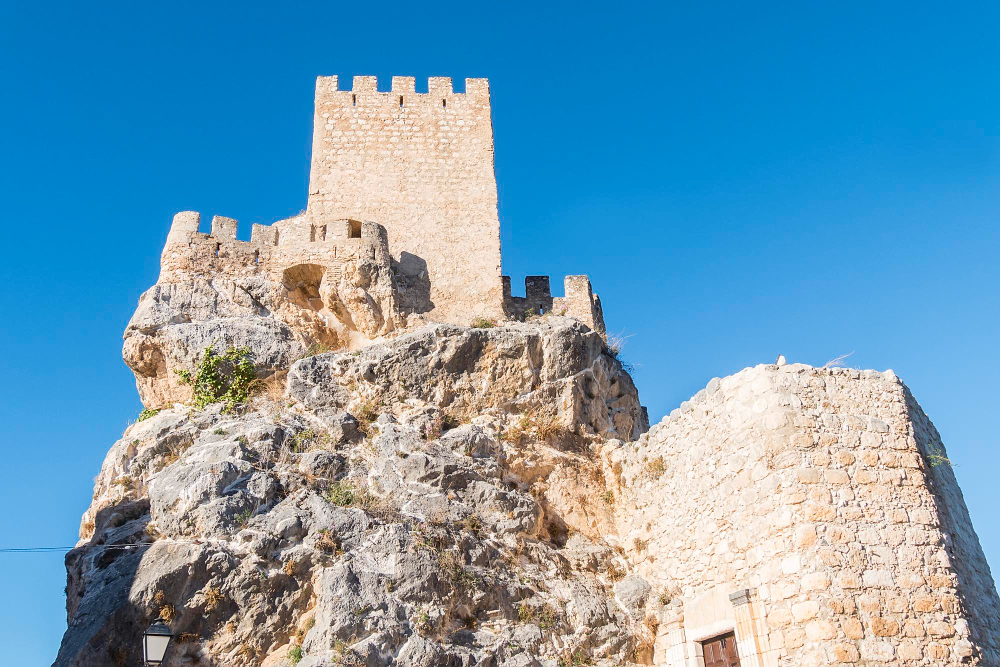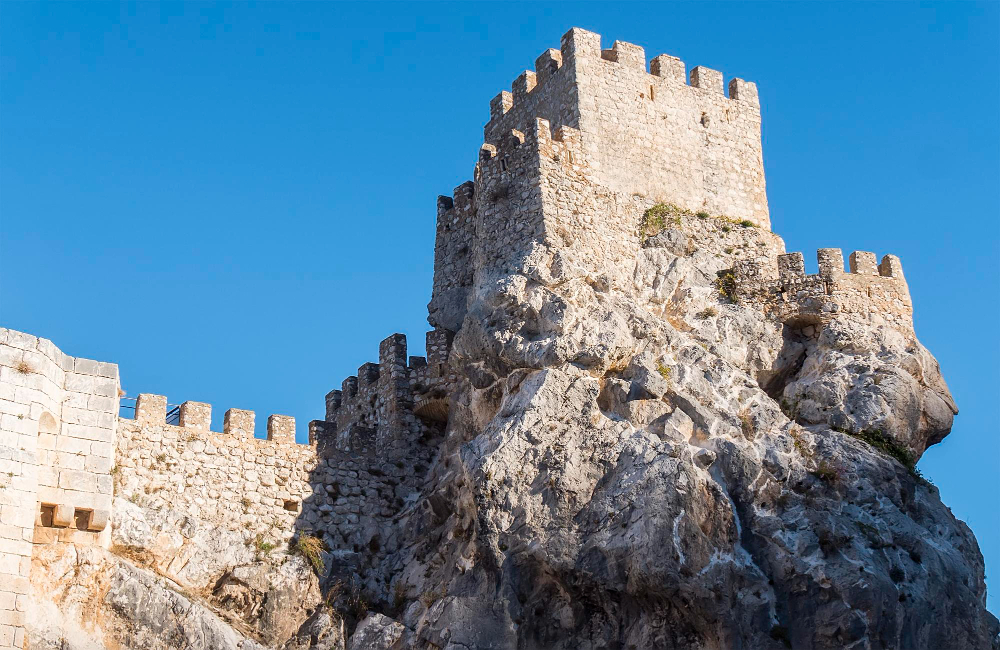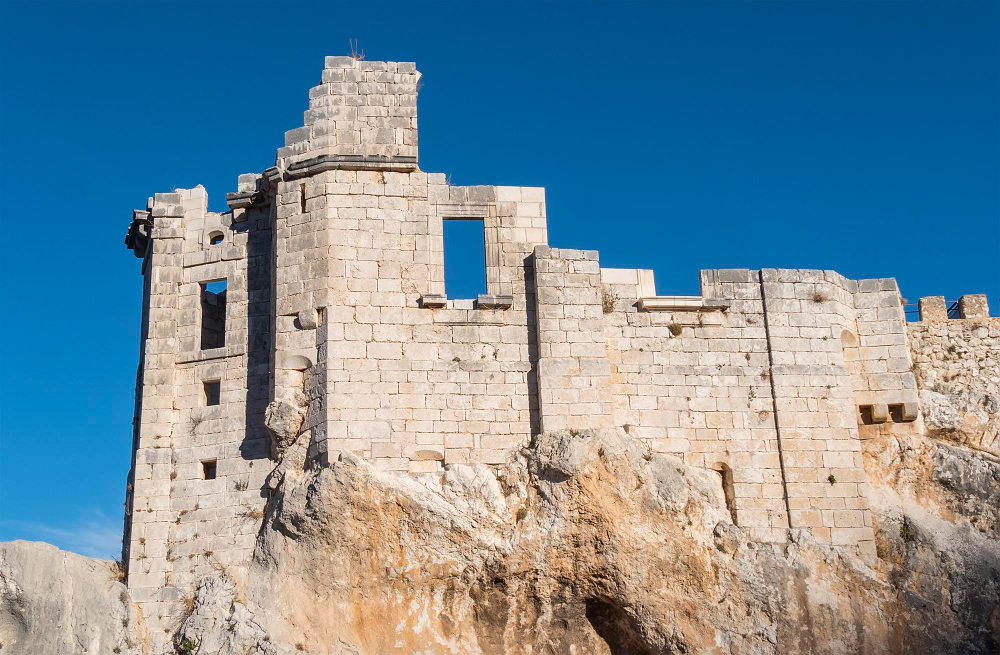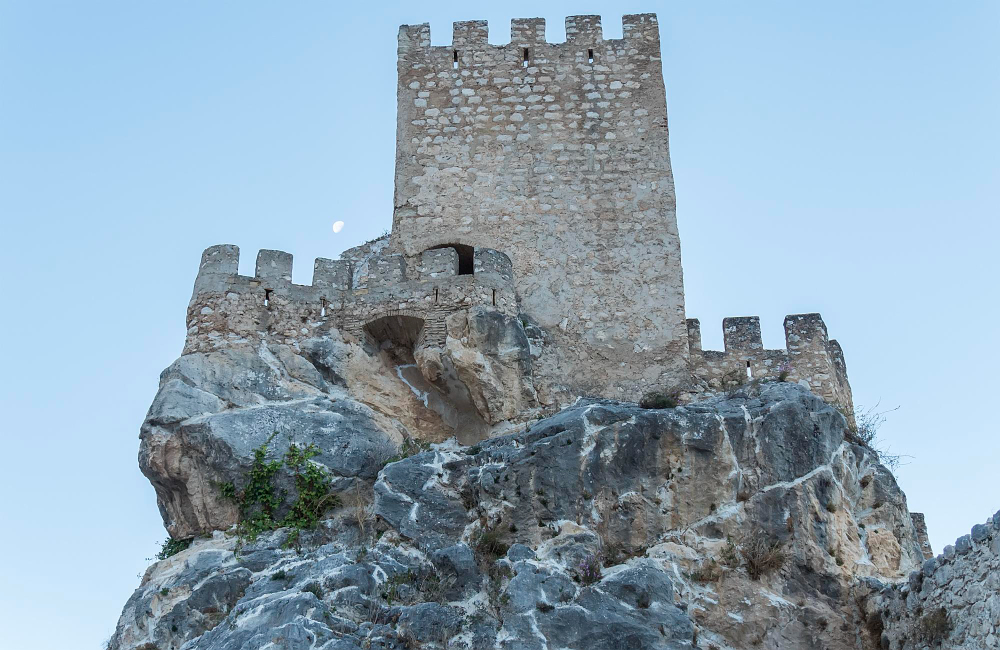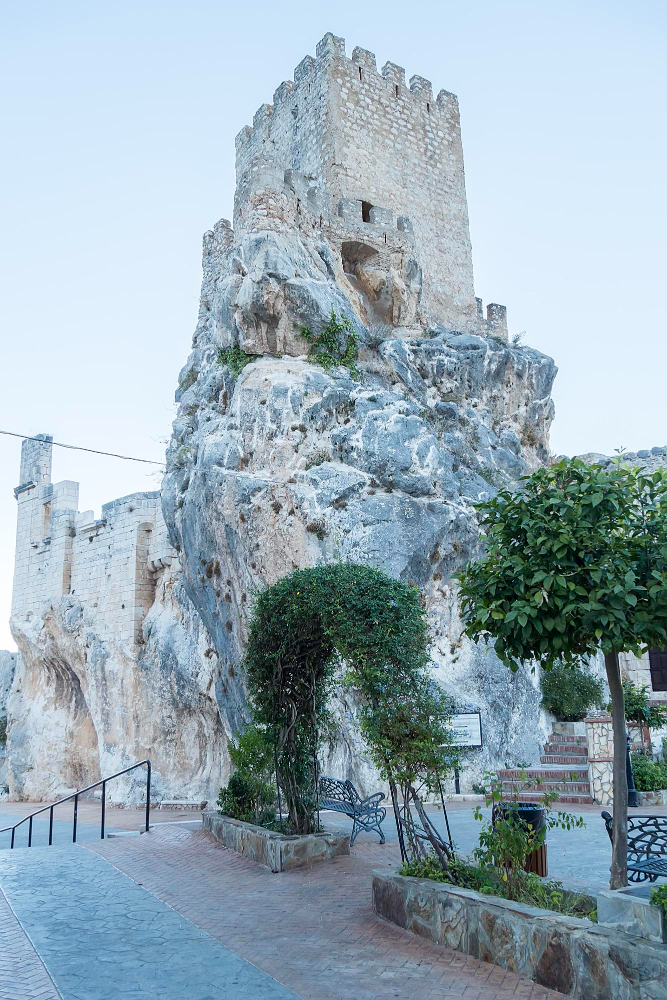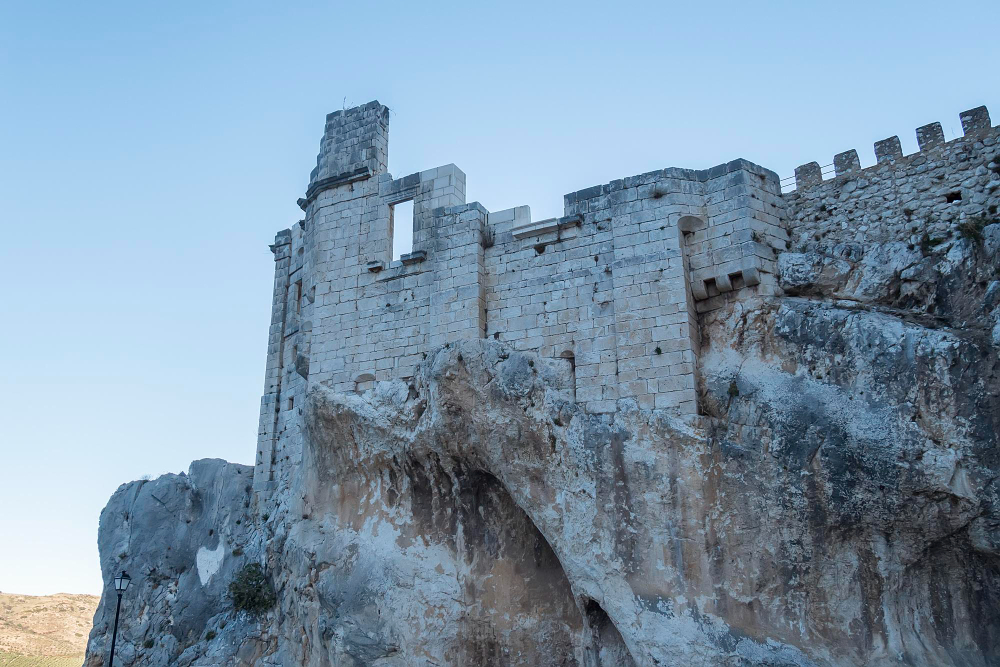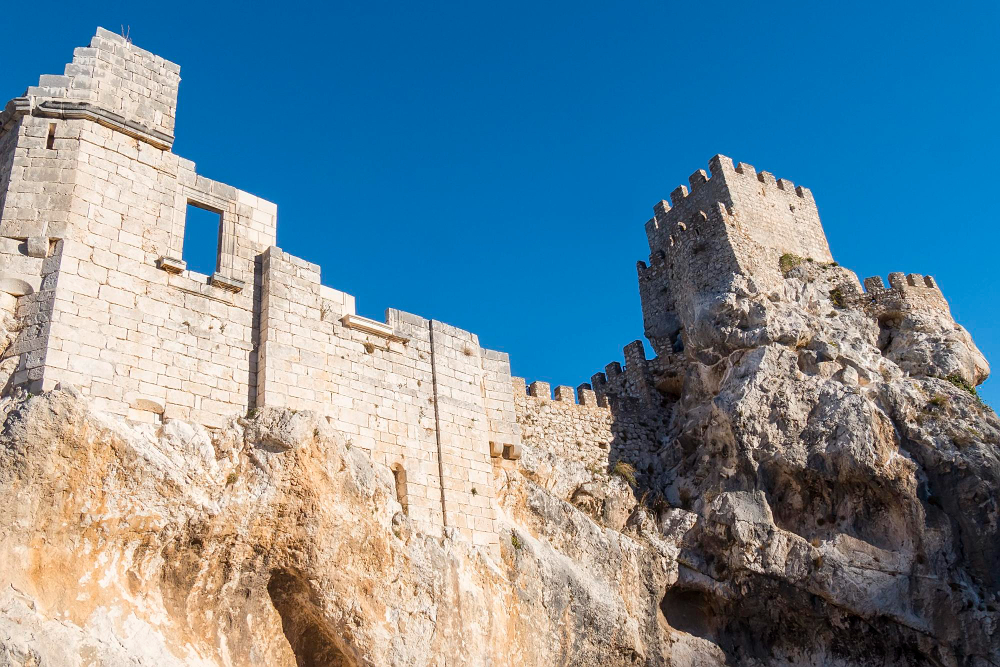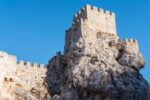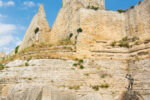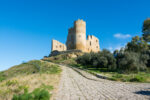

In the heart of the picturesque Andalusian village of Zuheros, perched high upon a steep cliff, stands the Castillo de Zuheros as an imposing relic of a rich and eventful history. The fortress not only offers spectacular views over the expansive landscape of the Comarca de la Subbética (province of Córdoba), but also tells the story of the diverse periods of rule and cultural influences that have shaped this region in southern Spain. From its presumed origins in the Islamic period of the 9th century to its use as a noble residence and subsequent decline, the castle reflects the eventful history of Andalusia.
Location and architectural appearance – The castle is strategically situated above the centre of Zuheros, a small village renowned for its charming old town and natural beauty. From here, it offers an impressive panoramic view over the Subbética mountain range – a range that forms part of the Sierras Subbéticas Natural Park and is prized for its limestone formations and diverse flora and fauna. The castle is also visible from the well-known ‘Vía Verde de la Subbética’, a cycle path built on a former railway line that runs through the region and attracts many walkers and cyclists.
Origins in the Muslim era – The exact origins of the Castillo de Zuheros are difficult to pinpoint, but historians believe that the first fortification here was built during the Arab-Muslim rule in Al-Ándalus in the 9th century. The name ‘Sujayra’ appears in Islamic writings and is thought to form the basis for the present-day place name Zuheros. The initially simple fortification was rebuilt and extended over time by various conquerors and ruling powers. A notable feature dating from that early phase is the preserved ‘aljibe’, a cistern-like water reservoir typical of Islamic architecture, which was later reused by the Almohads. During the Almohad period, when they held power in southern Spain in the 12th and 13th centuries, the castle complex was augmented by a distinctive prismatic defence tower. In addition, the fortified walls were constructed, which form the core of the fortress and still define the castle’s appearance today. These walls were not only a defensive feature but also symbolised the power of the rulers of the time over the region.
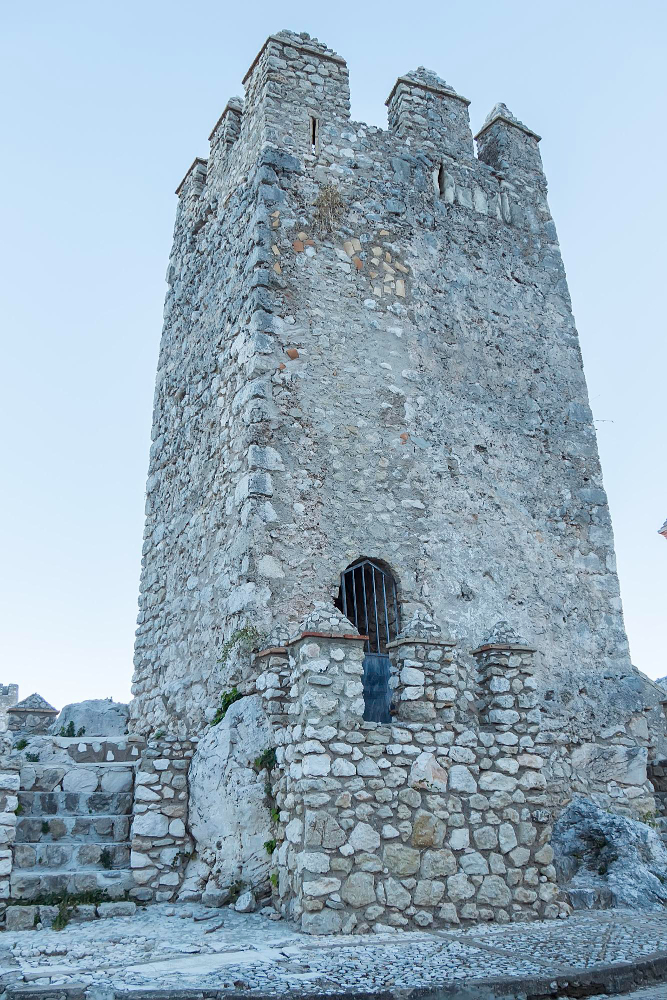
Transition to Christian rule – A decisive turning point in the history of the Castillo was its capture by Ferdinand III, ‘the Saint’, King of Castile, in 1240 as part of the so-called Reconquista, the Christian reconquest of Spain. This marked the castle’s transition from Muslim to Christian territory, bringing about far-reaching changes. Fernando III gifted the castle to his wife, Juana de Ponthieu, who in 1252 transferred it to the Military Order of Calatrava – a significant Christian military organisation determined to secure and administer the conquered territories. Artistically and architecturally, the Castillo is a prime example of 12th-century medieval fortifications. The surviving main keep, which dates from this period, displays the typical architectural style of a castle that served both military defence and residential purposes. The castle’s affiliation with the Order of Calatrava brought new impetus to the design and administration of the complex, which was to be reflected in its later use and expansion. In the late 13th century, the castle changed hands several times: Alfonso X handed it over to his son, the Infante Juan de Castilla, whilst Sancho IV eventually ceded it to the city of Córdoba in 1293. These frequent changes of ownership highlight the castle’s strategic importance in the territorial politics of the time.
The Casa de los Donceles and other historical events – In the 15th century, the castle came into the possession of the Casa de los Donceles family, who played an important role in regional history. They established a primogeniture, which served to secure the dynasty, and whose members actively participated in historically significant events, including the Battle of Lucena and the final conquest of the Nasrid city of Granada. These events marked the final phase of the Reconquista and consolidated Castile’s political dominance on the Iberian Peninsula. During this period, the castle gradually evolved from a purely military fortification into a residential palace. The alterations reflected the need for more comfortable living quarters and stately architecture.
Renaissance renovation and later use – In the 16th century, once the Muslim threat had been virtually eliminated, the castle underwent a fundamental redesign. Under the influence of the Renaissance architect Hernán Ruiz, it was transformed from a mere fortress into a palace that met the new requirements of the nobility. As part of this, the entrance to the castle was redesigned and parts of the structure were altered to emphasise its ceremonial character. This transformation illustrates the social changes of that era, when military defence took a back seat to prestige and residential comfort. In the 18th century, the castle changed hands once again – this time passing to the Margraves of Algarinejo. However, unlike in earlier times, when the castle was a bustling aristocratic residence, these new owners rarely lived there. As a result, the building began to fall into disrepair. The once-mighty walls and towers crumbled, and the castle’s stone was increasingly used as a source of material for new building projects in the village, with the Castillo effectively serving as a quarry. This was a common practice in many Spanish villages, where old castles served as sources of building materials. An interesting development from this period is the conversion of the main tower in 1760 into a clock tower (‘Torre del Reloj’). This repurposing saved it, at least in part, from complete ruin. Later, in the 20th century, the tower was restored in the 1960s, which helped to preserve its historical heritage.
Historical Significance and Contemporary Relevance – The Castillo de Zuheros embodies the multi-layered history of Andalusia, in which Islamic, Christian and aristocratic influences intertwine. It stands as a symbol of the upheavals of the Reconquista, the shifts in power between different forms of rule, and the gradual transformation of military architecture into representative structures. Today, the castle is one of the region’s most important attractions, drawing numerous visitors who come to enjoy not only its fascinating history but also the breathtaking views. The castle is also a significant part of Córdoba’s cultural heritage and is maintained through various local initiatives.
The history of the Castillo de Zuheros is a fascinating chapter in Andalusian history, bearing witness to cultural exchange, military conflicts and dynastic developments. Its location, architectural style and changing ownership tell the story of a region that, over the centuries, found itself caught between different cultures. Today, the castle invites visitors to travel back in time and experience the vestiges of a turbulent era at first hand. Anyone visiting Zuheros should take the opportunity to explore this historic monument and immerse themselves in the stories that the stones of these ancient walls have preserved for centuries.