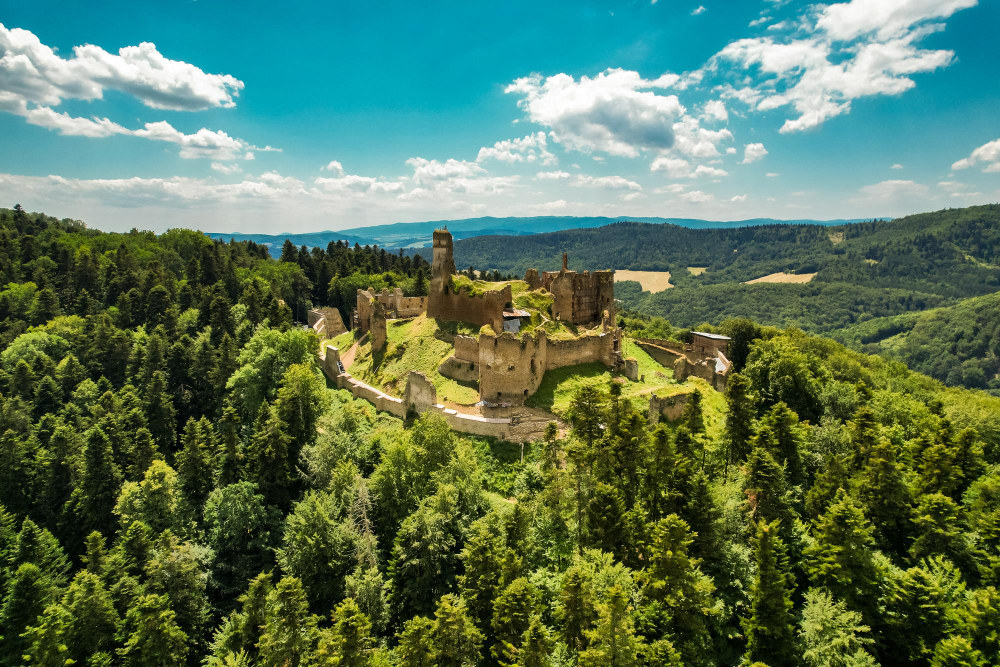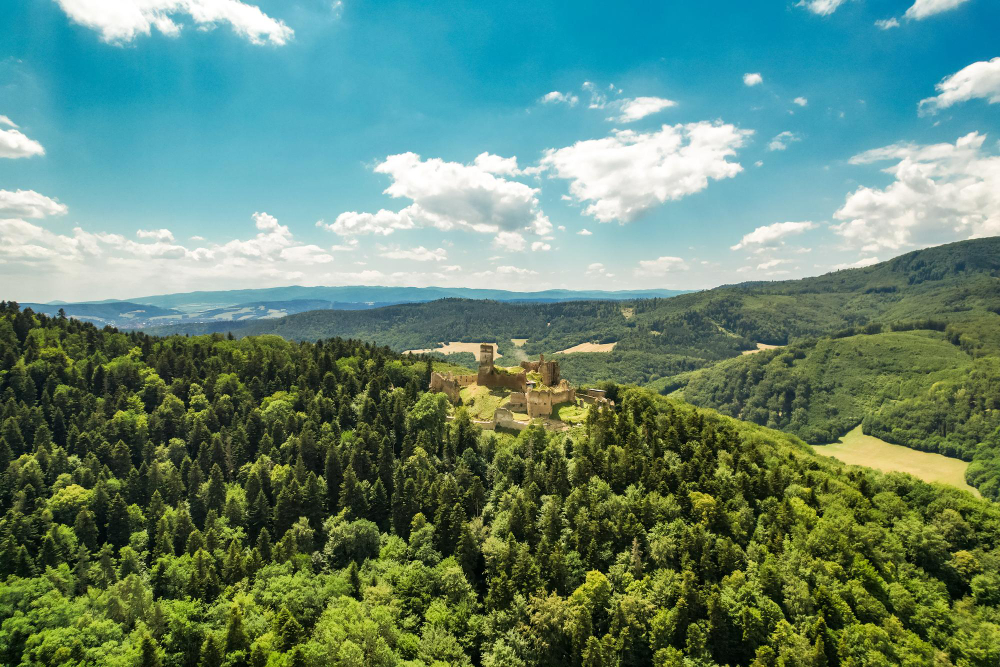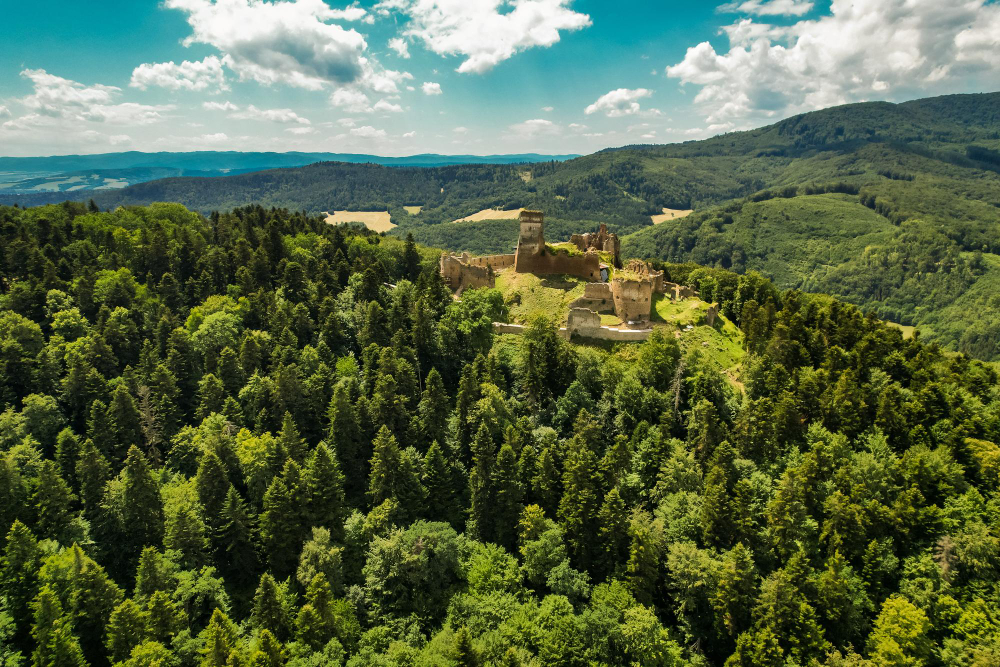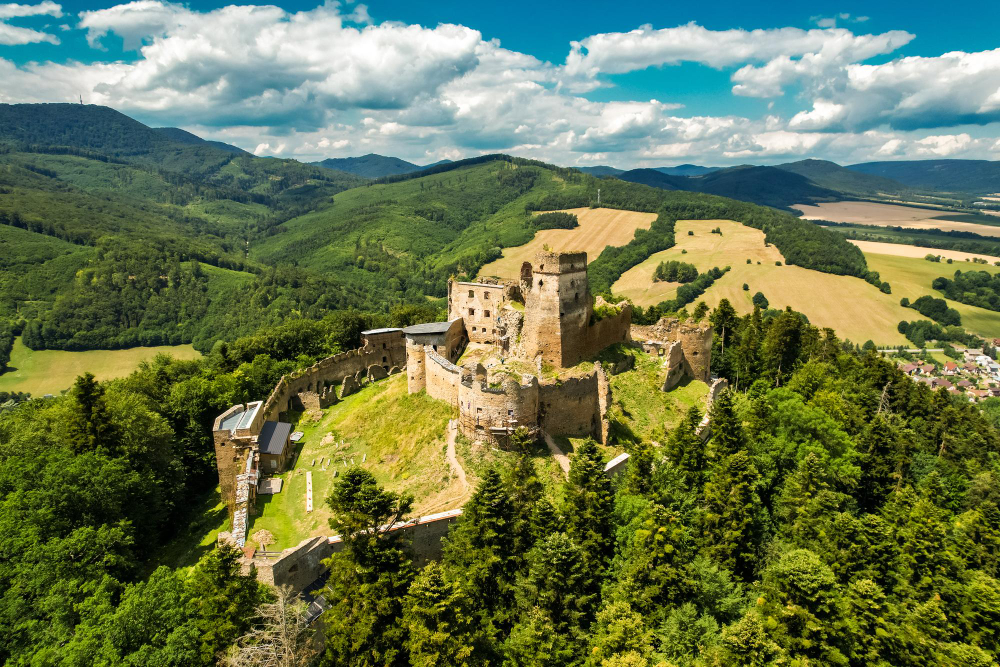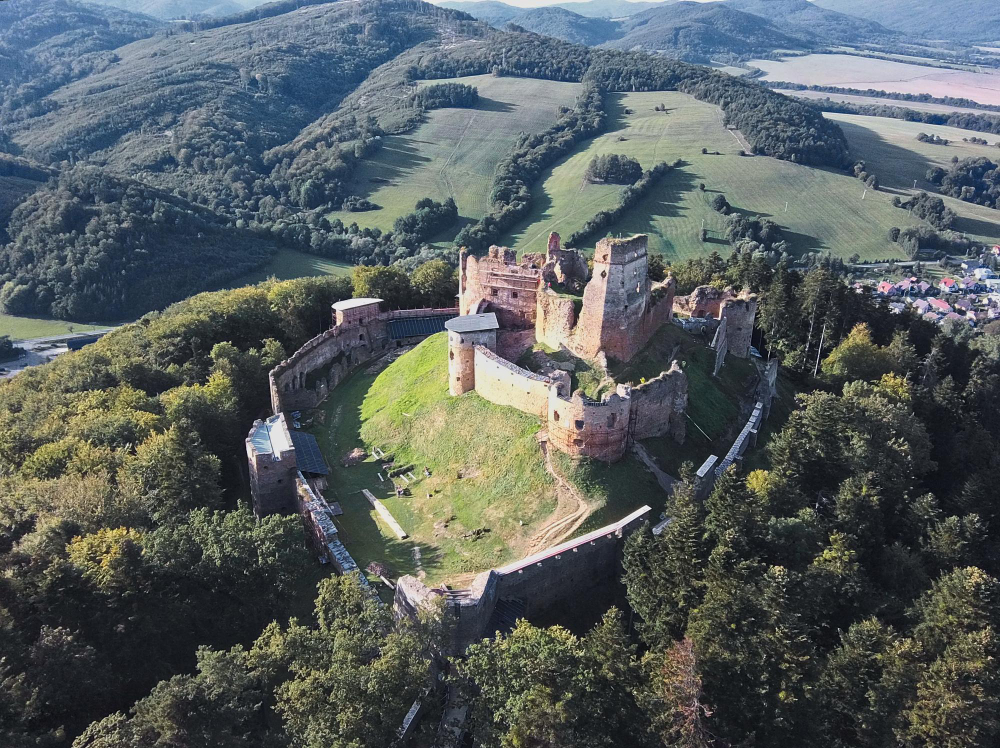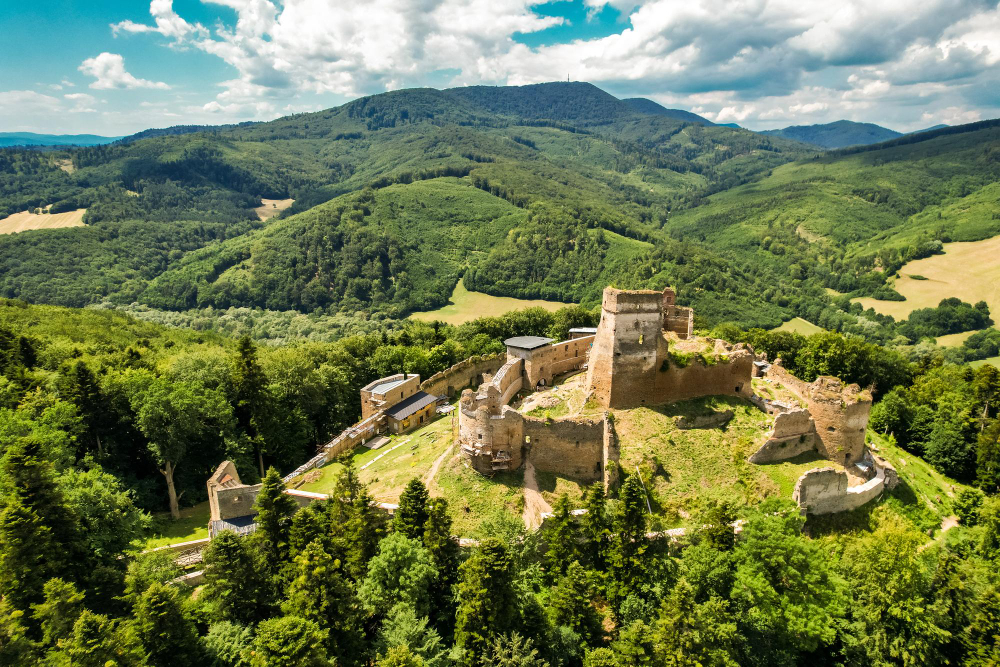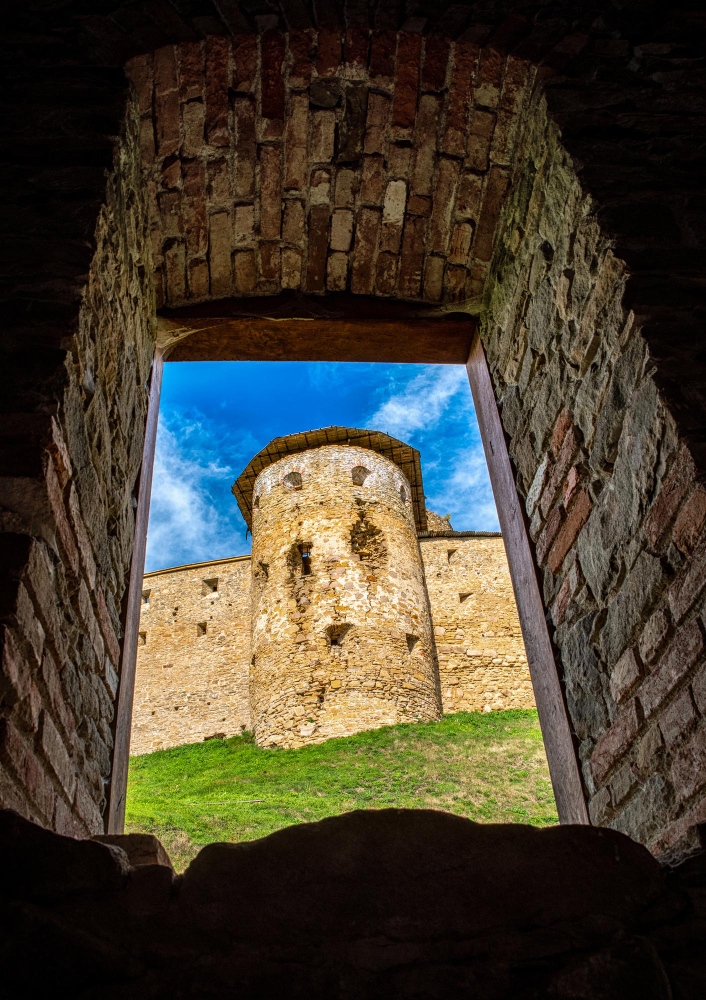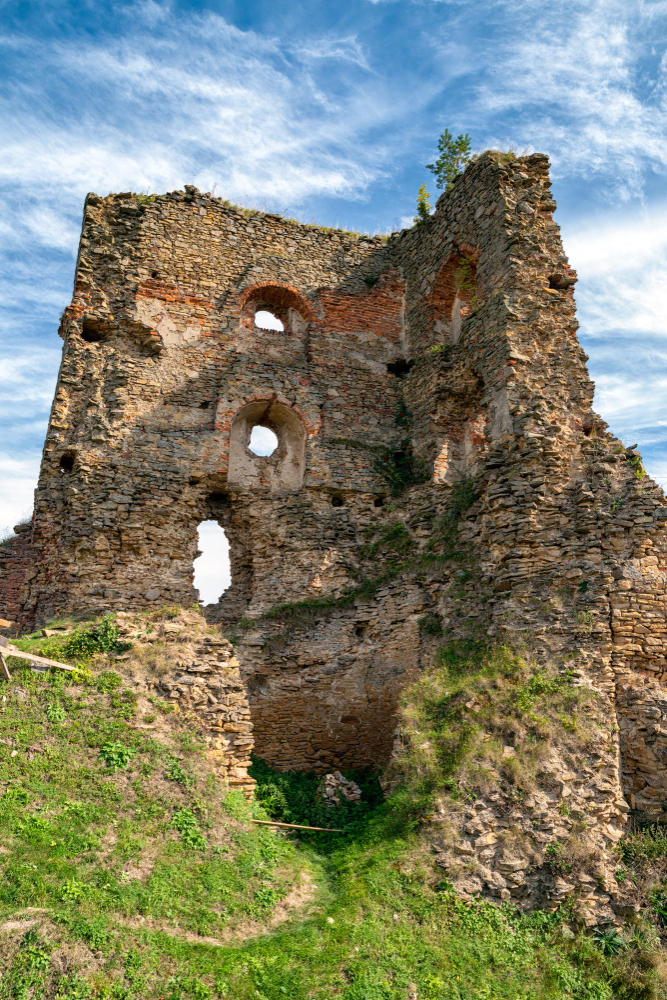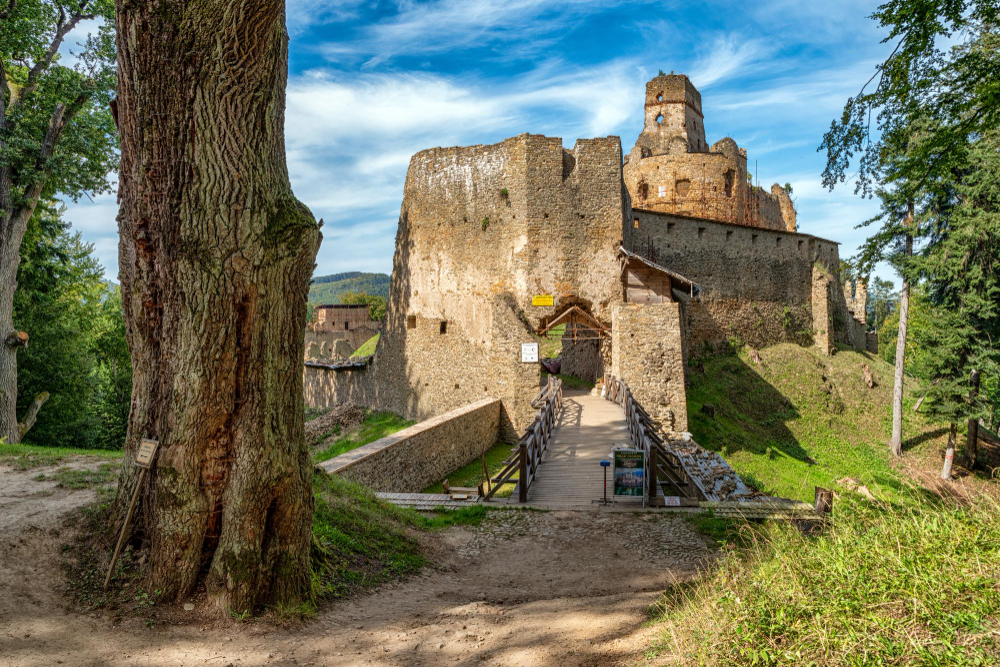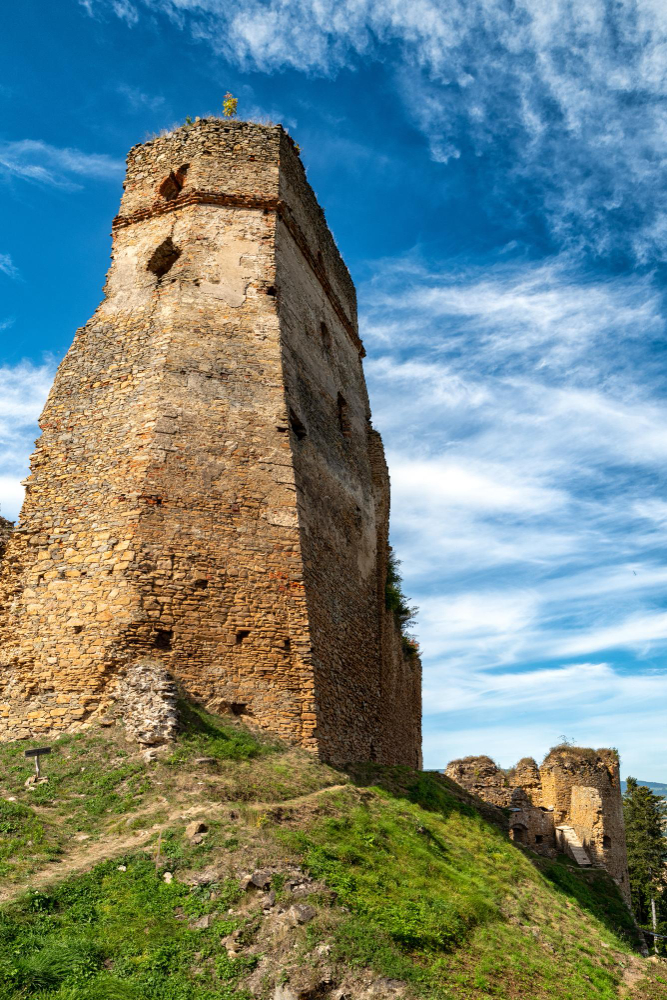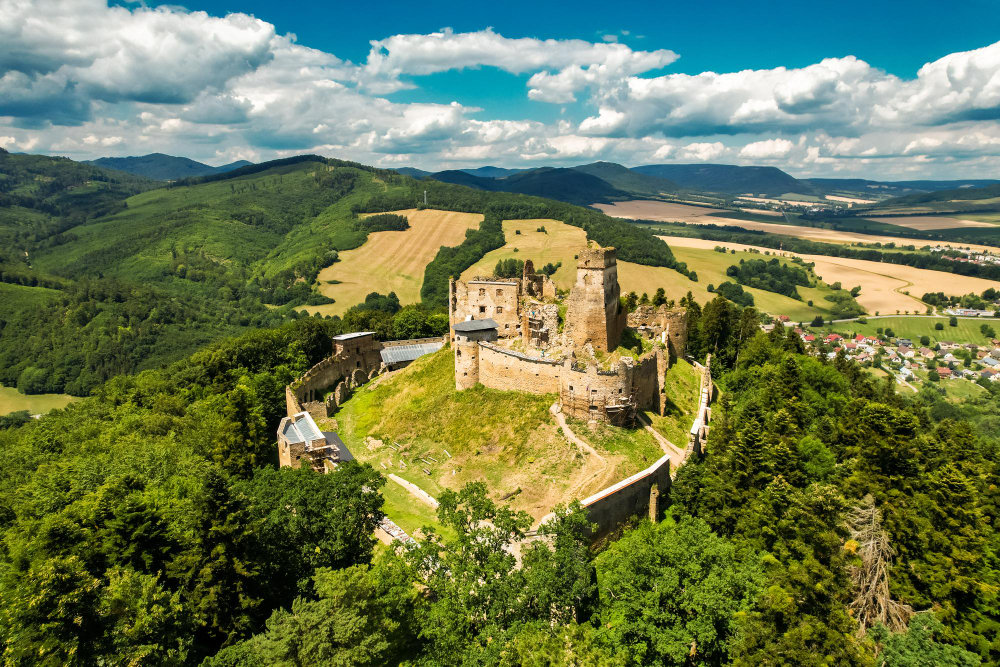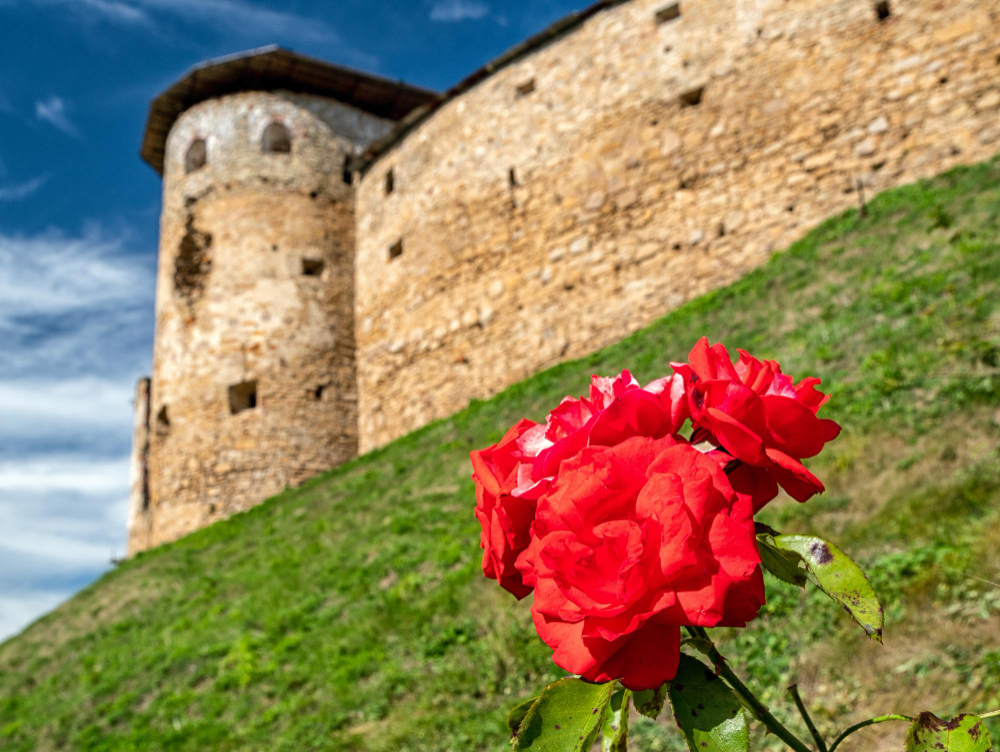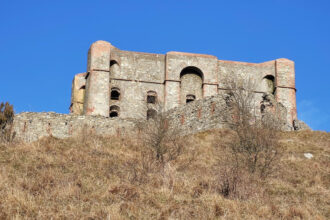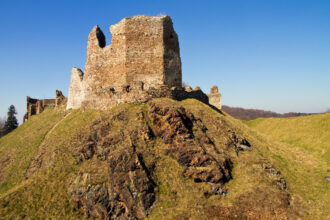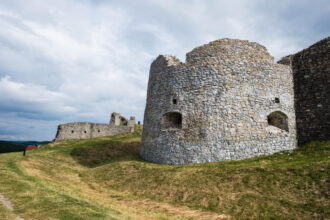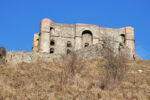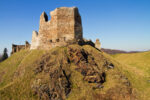

In the heart of the traditional Šariš region, towering high above the tranquil village of Zborov in the Bardejov district, stand the impressive ruins of Zborovský hrad – also known as Makovica. This medieval fortress, which bears architectural traces from the Gothic, Renaissance and Baroque periods, is today one of Slovakia’s most significant cultural monuments and is protected by the National Monuments Board. Its eventful history, embedded in historical power struggles and shrouded in mysterious legends, makes it a fascinating destination for history buffs and ramblers alike.
Historical Development: From Royal Gratitude to Siege – The exact origins of Zborov Castle remain a subject of academic debate to this day. According to a popular legend, the village of Zborov was founded by a vassal of the Hungarian King Béla IV, named Makó. It is said that, following the devastating Mongol invasion in the 13th century, he was granted the land as a token of gratitude for his loyalty and subsequently built the castle. Historical sources, however, tend to point to Otto Biberstein as the original builder, with construction likely having taken place around the year 1270. Other records even date its foundation to the early 14th century. The first documented mention of the castle dates from 1347 in a charter issued by King Lajos I of Hungary. Shortly afterwards, in 1364, Peter Ónodi Czudar received the village and its surrounding lands as a royal grant. Under his rule, Zborov developed into the centre of a vast estate, which was systematically settled. However, political strife was inevitable: during the conflicts between Queen Elizabeth of Poland and King Albert, Hussite armies invaded the area and laid it waste. With the extinction of the Czudar family in 1470, the land reverted to the King’s possession. A year later, King Matthias Corvinus transferred the castle to the Rozgonyi family. During this period, the region became the scene of further military conflicts, such as when Polish troops attacked and ravaged the area in 1471 and again in 1491–92 during disputes over the throne. The following decades brought a succession of owners and even more upheavals: following the Battle of Mohács (1526), which marked the end of the medieval Kingdom of Hungary, the castle passed to János Szapolyai. The village’s first church was probably built during this period, although exact dates are unknown. In the early 17th century, the castle was the scene of grand celebrations: in 1666, for instance, Ferenc Rákóczi I and Ilona Zrínyi were married here, both of whose families played a significant role in Hungarian-Slovak history. Due to the constant threat from Ottoman troops and political unrest, the owners – in particular Gáspár Serédy – began reinforcing the fortifications from the mid-16th century onwards with the help of Italian master builders. However, the castle was ultimately unable to withstand the onslaught of the imperial troops under General Schlutz in 1684 and was captured and destroyed following a fierce siege. Owned by the Aspermont family and later the Erdődy family, the complex gradually fell into disrepair until it was further damaged by fire in the 19th century. During the First World War, it suffered severe damage from artillery fire – ever since, the walls have lain in ruins, preserved as an impressive testament to times gone by.
The Church of Zborov: A Symbol of Religious Continuity -An important part of the village’s history is the church, which is dedicated to Saint Margaret of Antioch. The present-day stone church was built in the early 17th century, after an older wooden church had been handed over to a neighbouring parish. The church itself was consecrated on 5 December 1655 by Bishop Benedict Kisdy. Despite repeated fires, particularly in 1876, and severe damage caused by the First World War, it remained a spiritual centre for the people of Zborov.
Mysterious Stories and Legends: Devilish Stones and Hidden Creatures – Alongside the historical facts, Zborov Castle is shrouded in a realm of mysterious tales that have been passed down orally for generations and which fuel the ruin’s mystical charm. One of the best-known legends concerns the original plan to build the castle on a nearby, higher hill called Hradske. According to this legend, all the stones brought there during the day would inexplicably disappear again every night, or even be moved to the castle’s current location. It was rumoured that Hradske was a gateway to hell, and that demons prevented this entrance from being blocked by carrying the building materials downhill. Eventually, the builders gave up and began constructing the castle on the lower hill, where work progressed without any mysterious disruptions. Another legend recounts that the demon responsible for these nocturnal activities was captured and walled up in the highest towers – where, it is said, his horns are still visible in the walls to this day. Historians and local experts, however, tend to favour a more pragmatic explanation: the workers simply wanted to avoid the arduous task of carrying the stones up the steep path to the summit. In the darkness, they therefore secretly moved the materials to the more easily accessible hill and subsequently spread stories of eerie forces to justify their actions and change the situation.
Today: Visiting the site and its cultural significance – The ruins of Zborovský hrad are now a popular destination for walkers and culture lovers. Situated just a few minutes’ walk from the village centre, above the Bardejov–Zborov road, the site offers deep insights into medieval architecture and the eventful history of eastern Slovakia.
A living monument to Slovak history – The ruins of Zborovský hrad symbolise the eventful history of Central and Eastern Europe – shaped by dynasties, armed conflicts, cultural influences and mythical tales. As a listed monument, it preserves the cultural heritage of the Šariš region whilst inviting visitors to bring the past to life by strolling along its paths and immersing themselves in its legends. More than just a ruin, Zborovský hrad is a symbol of the enduring connection between people, nature and history; its rich narrative and historical significance will continue to inspire visitors for years to come.