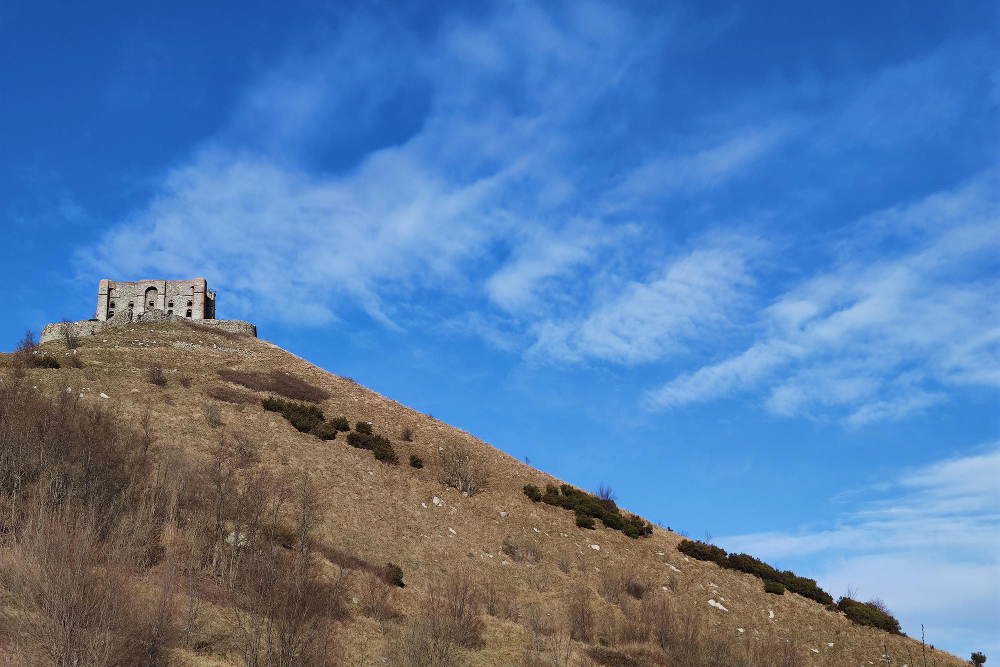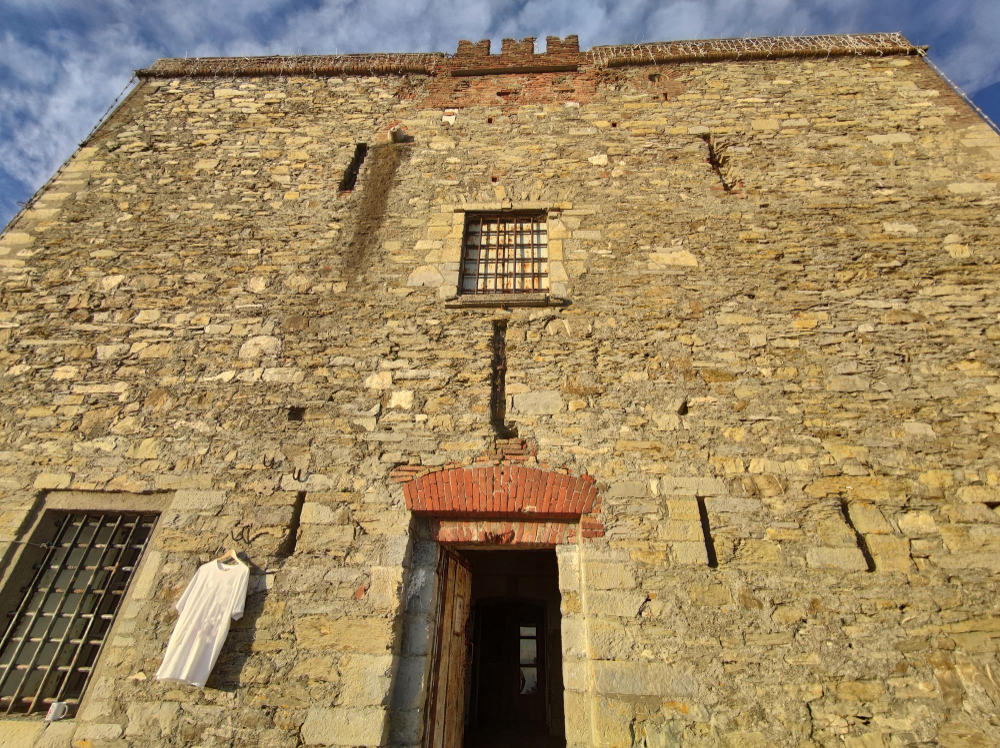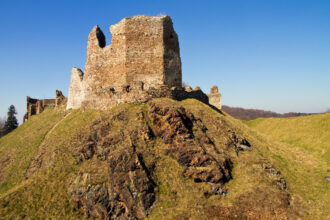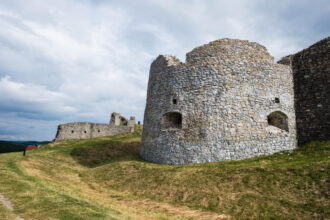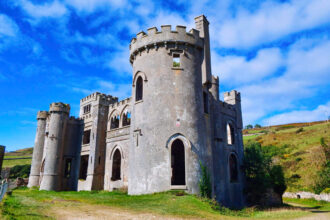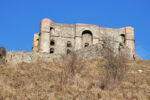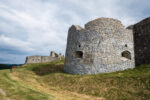

Perched on the wooded heights between the Val Polcevera and the Val Bisagno, Forte Diamante stands at 667 metres above sea level. This mighty fortress, whose origins date back to the late Middle Ages, is an impressive testament to military engineering and bears witness to its centuries-long strategic importance for the region around Genoa. Built between 1756 and 1758 on Monte Diamante, from which it takes its name, the fort was part of a sophisticated defence system designed to reinforce the city’s so-called Mura Nuove – the ‘New Walls’. In this article, we take you on a fascinating journey through time, exploring the history of Forte Diamante, its architectural features and its role in the region’s decisive conflicts.
Historical Origins: From the Bastia del Pino to the Star-shaped Fort – Documents dating as far back as 1395 attest to the existence of military installations at the summit of Monte Diamante. The ‘Bastia del Pino’ is mentioned, though its exact layout has been lost in the mists of time. During the Austrian siege attempt of 1747, the position regained strategic importance: a star-shaped palisade ridotte was erected, serving as an observation post for potential Austrian advances into the valleys. However, the decisive impetus for the construction of Forte Diamante came in 1756 from the Magistrato delle Fortificazioni of the Republic of Genoa. Under the leadership of the Spanish engineer Jacques De Sicre, and with technical advice from Robert de Cotte and Marshal Antonio Federico Flobert, planning began for a massive fort on the summit of Monte Diamante. In particular, the Marchese Giacomo Filippo Durazzo, an influential senator and champion of the town’s security, was strongly committed to the project and played a key role in financing it. On 2 June 1756, the building plans were approved, but delays arose due to disputes over the expropriation of the building site. Nevertheless, Durazzo’s unwavering commitment meant that the fort was completed as early as 1758. A plaque once stood at the entrance gate bearing the inscription ‘Forte dedicato ai Divi Giacomo e Filippo, costruito l’anno 1758 a spese di Giacomo e Filippo Durazzo amantissimi della Patria’ (Fort dedicated to the Divine Giacomo and Filippo, built in the year 1758 at the expense of Giacomo and Filippo Durazzo, most devoted to their homeland), which unfortunately no longer survives today.
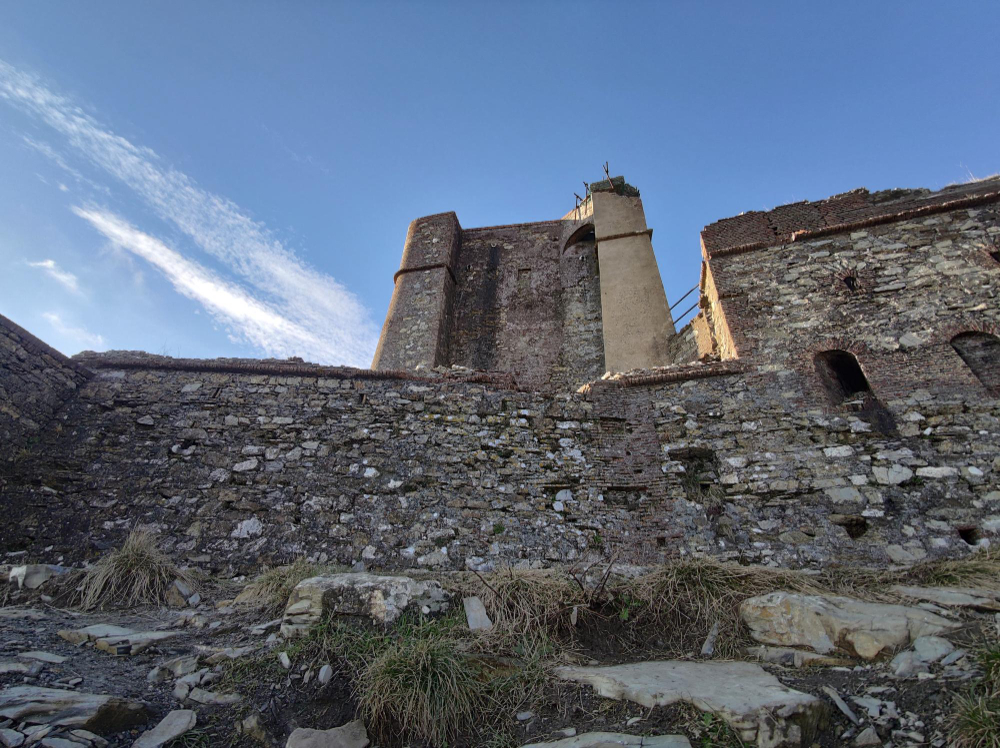
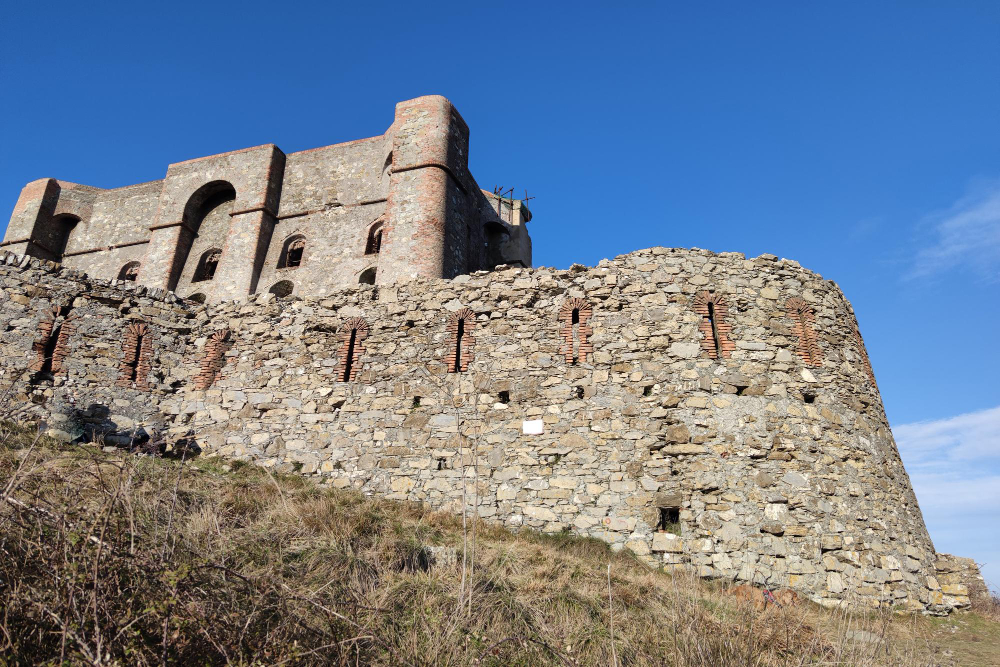
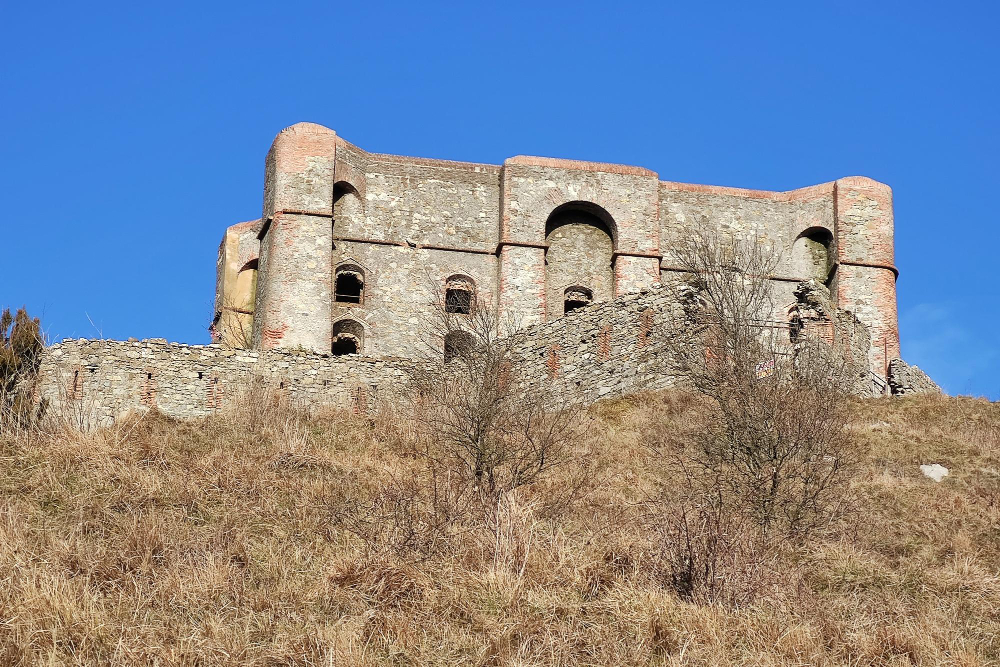
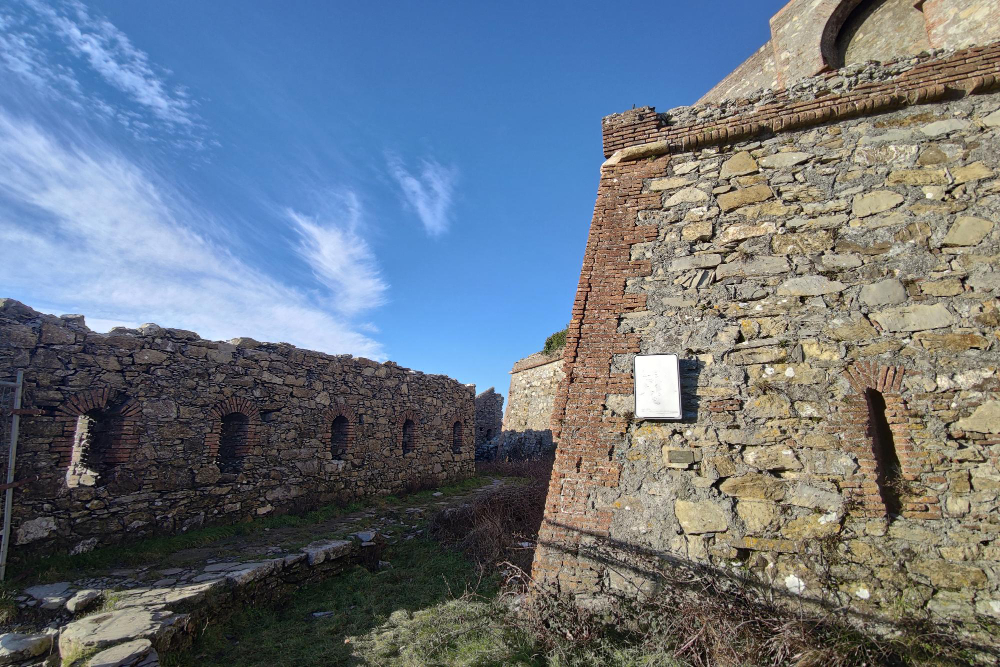
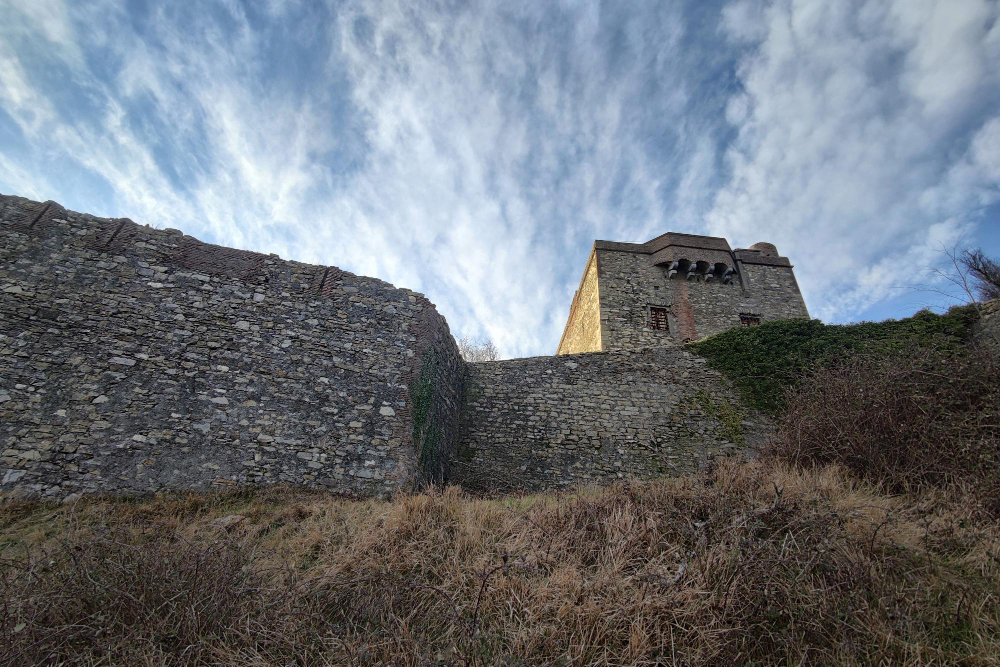
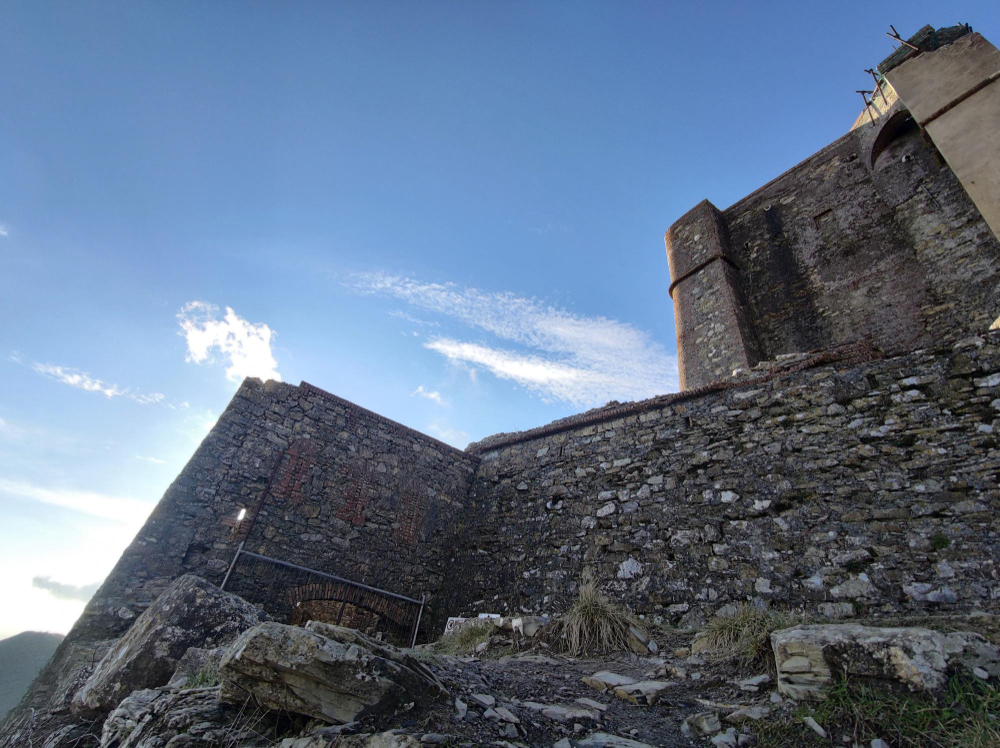
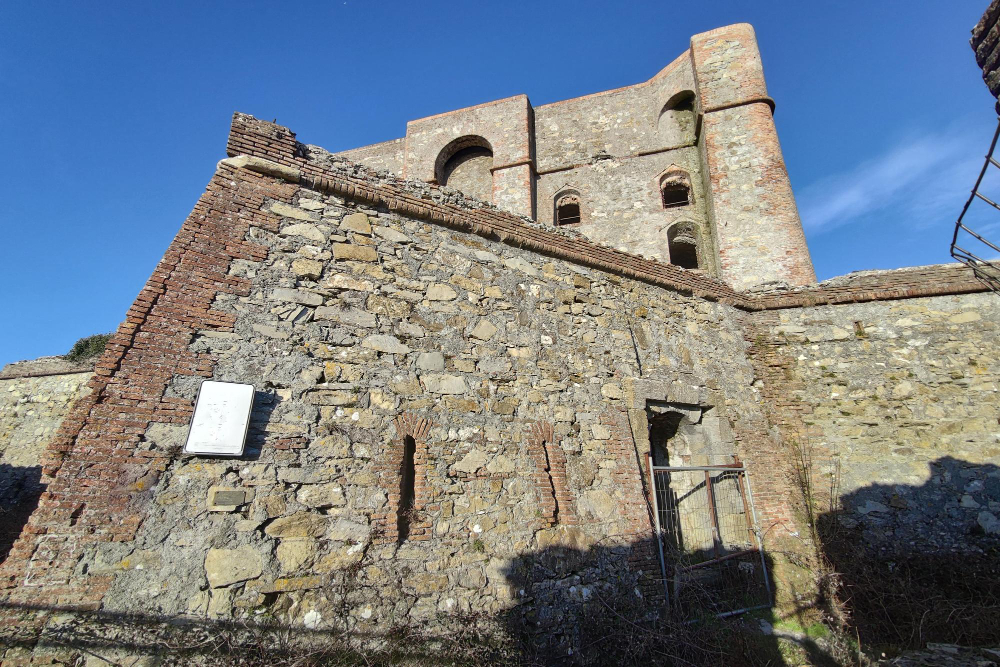
Architectural Design: A Stronghold Through the Ages – The architectural concept of Forte Diamante followed the military doctrine of the so-called ‘campo trincerato’ – a systematic network of forts and redoubts that communicated with one another, thereby protecting the town and its surroundings. Together with other fortifications such as Fratello Maggiore, Fratello Minore and Puin, it formed a chain that monitored the areas of particular strategic vulnerability, especially the terrain known as the ‘Sperone’. Originally, the fort had a pitched roof made of slate slabs, as documented in early drawings from the ‘Mappe e Disegni’ collection at the Genoa State Archives. However, due to its exposed location and strong winds, this roof required constant maintenance. During the Napoleonic era, it was replaced by an open terrace with embrasures, which provided protection whilst also serving an expanded defensive function. It was not until the 1820s that the striking semi-circular tower structure was added, featuring a spiral staircase that provided access to the raised platform behind the main building. Inside, the fort features a three-storey barracks block that served multiple purposes: alongside living quarters and storage rooms, one room functioned as a chapel for the garrison, which could number between 40 and 100 soldiers depending on the situation. The terracotta flooring of the terrace and the hinged grilles of the embrasures are further architectural details that emphasise the military purpose of the structure. An 80-cubic-metre cistern demonstrated the planners’ meticulous attention to water supplies during prolonged sieges. The armament consisted of five large howitzers, aimed northwards against approaching enemies, as well as two smaller cannons which defended the entrance area.
Assault and Siege: Forte Diamante in Military Conflicts – Forte Diamante witnessed particularly dramatic fighting in the spring of 1800. During the French occupation, when the fortress was held by the 41st Demi-Brigade under Commander Bertrand (not to be confused with Henri Gatien Bertrand), Austrian troops under Lieutenant General and Count von Hohenzollern laid siege to the complex. On 30 April, the Austrians succeeded in capturing the nearby ridges of the ‘Due Fratelli’ and putting pressure on the Forte Diamante. In a famous confrontation, Hohenzollern demanded surrender by means of an ultimatum: ‘I order you, Commander, to surrender your fort immediately; otherwise, I shall storm it and cut down all soldiers who offer resistance. You may still be granted an honourable surrender.’ To this, Bertrand replied with great resolve: “General, honour – the highest virtue of a true soldier – forbids my valiant garrison from surrendering the fort merely in response to a threat. Only the impossibility of continuing the defence can compel me to surrender.” The French defenders held their ground, and at the decisive moment, General Nicolas Jean-de-Dieu Soult, arriving with reinforcements from Forte Sperone, was able to drive back the besiegers. Following the annexation of Liguria by the Kingdom of Sardinia in 1814, the fort underwent a series of improvements: new embrasures were fitted, the barracks were extended and the semi-circular tower structure was added, thereby enhancing the fort’s functionality. During the uprisings of 1849, there were minor skirmishes around the fort, but it was not until 1857 that the situation once again reached a critical stage. A group of Mazzinian insurgents attempted to seize the fort after killing a sergeant. However, the uprising quickly failed, partly because the parallel uprisings planned in Genoa were unsuccessful.
From bulwark to oblivion: Decay and current condition – Following its military use, Forte Diamante was finally abandoned in 1914 and left to decay. Today, the fort lies within the municipal boundaries of Sant’Olcese, the only one of Genoa’s historic forts situated outside the city limits. Although the local council has undertaken a few conservation measures, the site is currently not open to the public and the interior is locked. Nevertheless, the Forte stands on its hill as a silent witness to an eventful history and, during a walk through the magnificent Ligurian hinterland, offers impressive views of the surrounding valleys and the city of Genoa.
How to reach Forte Diamante: A journey into the past – Access to the forte is exclusively on foot via a walking trail that begins at Forte Sperone and passes by the forts of Puin and Due Fratelli. Hikers can enjoy not only the historical atmosphere but also the diverse natural beauty of the Ligurian hills. An alternative way to get there is via the picturesque Trenino di Casella, a historic rack-and-pinion railway that departs from Piazza Manin in Genoa and runs to the Trensasco stop in the municipality of Sant’Olcese. From there, a steep but rewarding path leads to the summit of Monte Diamante – and thus to the fort – in around 40 minutes.
A historical gem brimming with stories and legends – Forte Diamante is far more than just an abandoned military installation. It reflects the military thinking of the 18th and 19th centuries, stands as a testament to the dramatic conflicts in the turbulent history of northern Italy, and embodies the architectural style of that era. Despite being inaccessible at present, it offers walkers and history enthusiasts a fascinating place full of thrilling stories that tell of bravery, strategy and the tireless quest for security. Anyone setting out to discover this ancient fortification follows in the footsteps of great figures such as Giacomo Filippo Durazzo, brave soldiers and ingenious engineers, and delves into a chapter of Ligurian history that was significant far beyond Genoa.