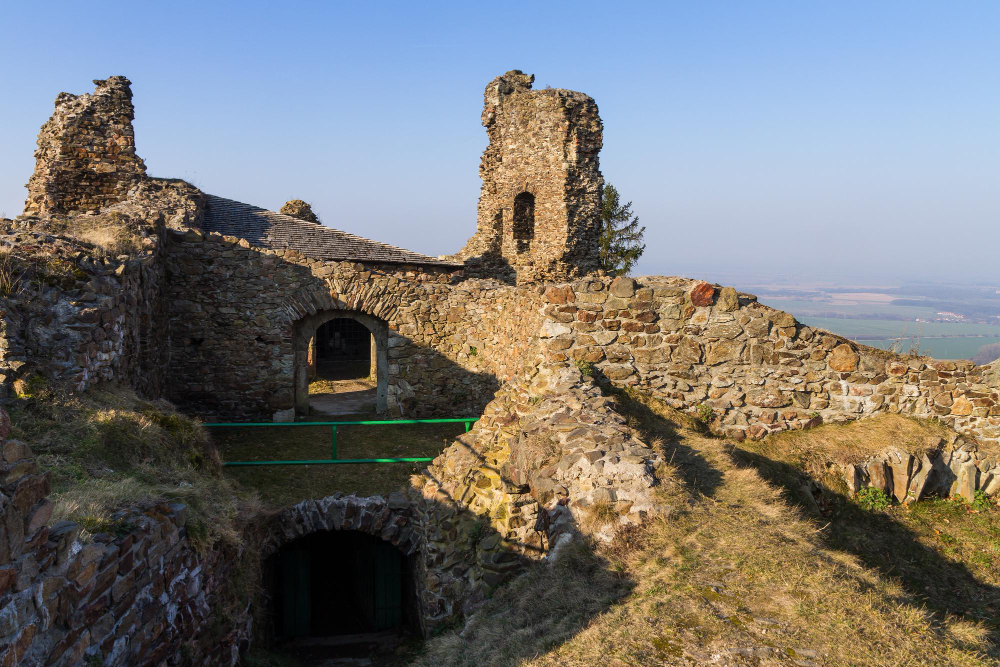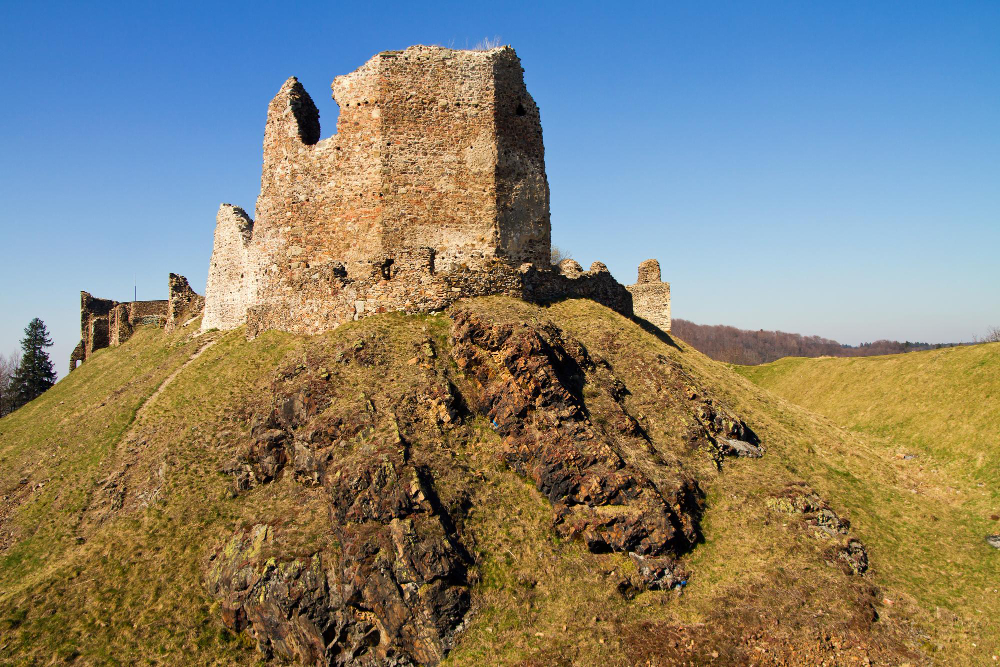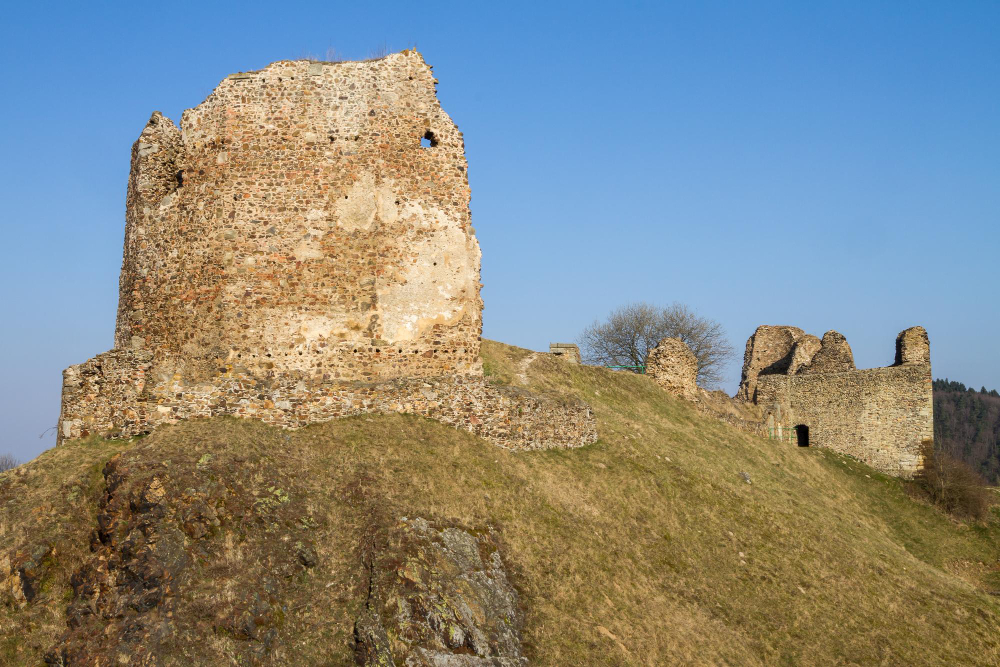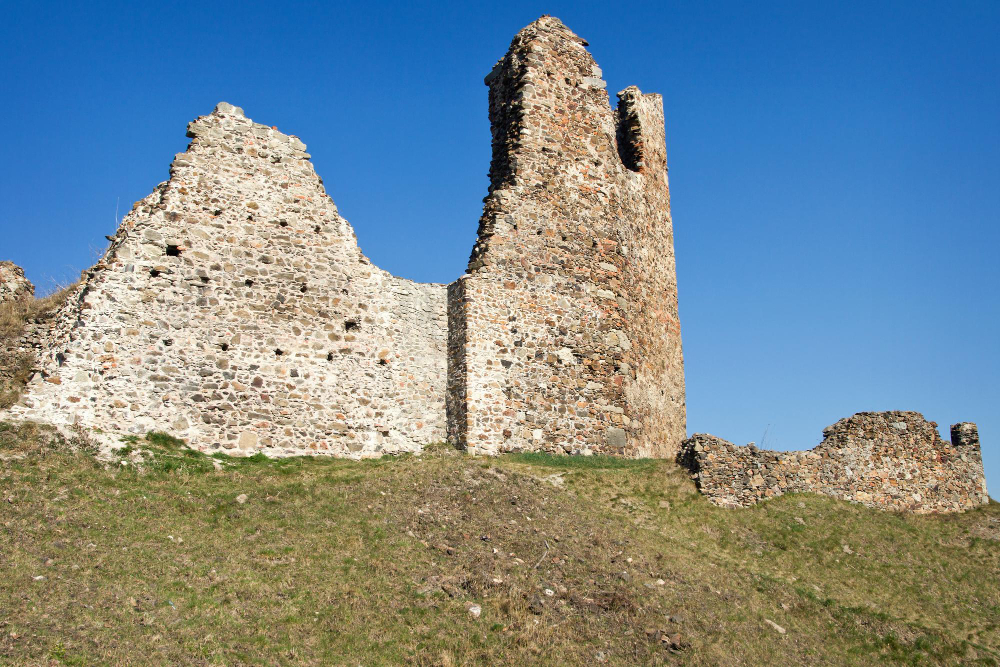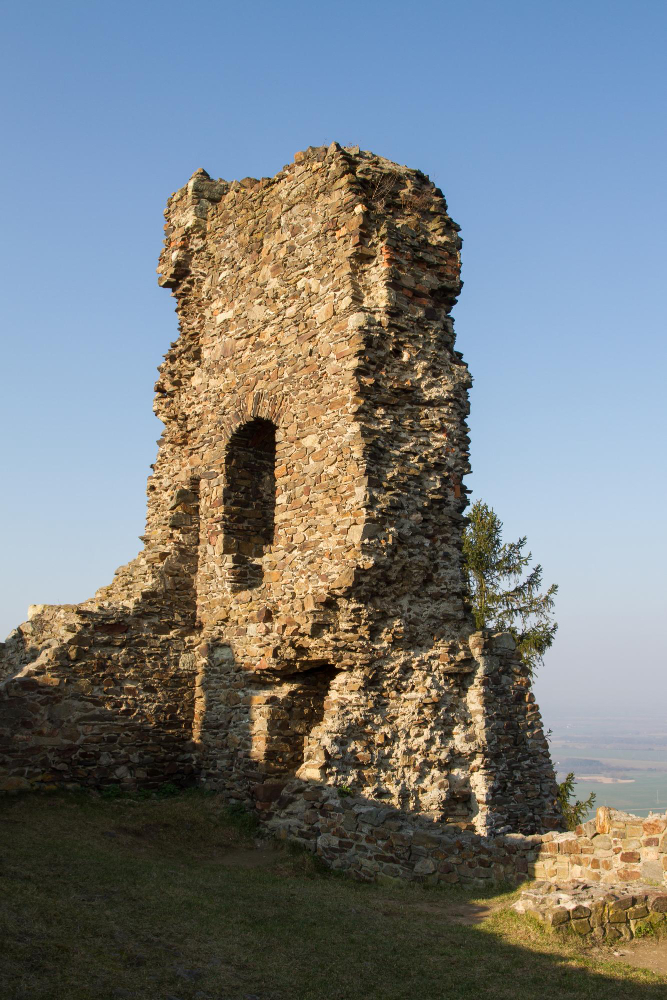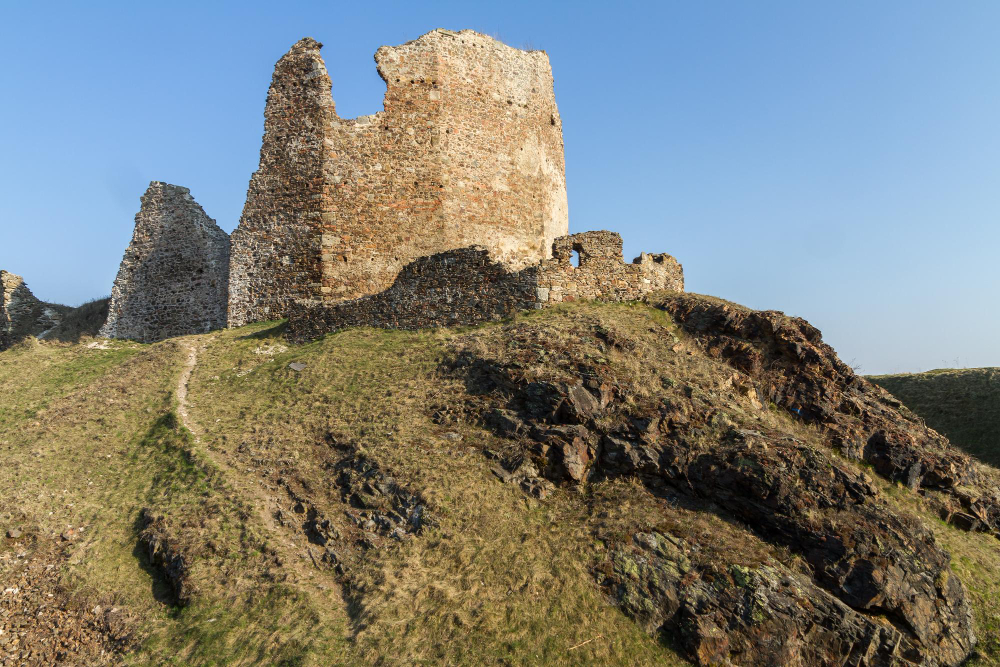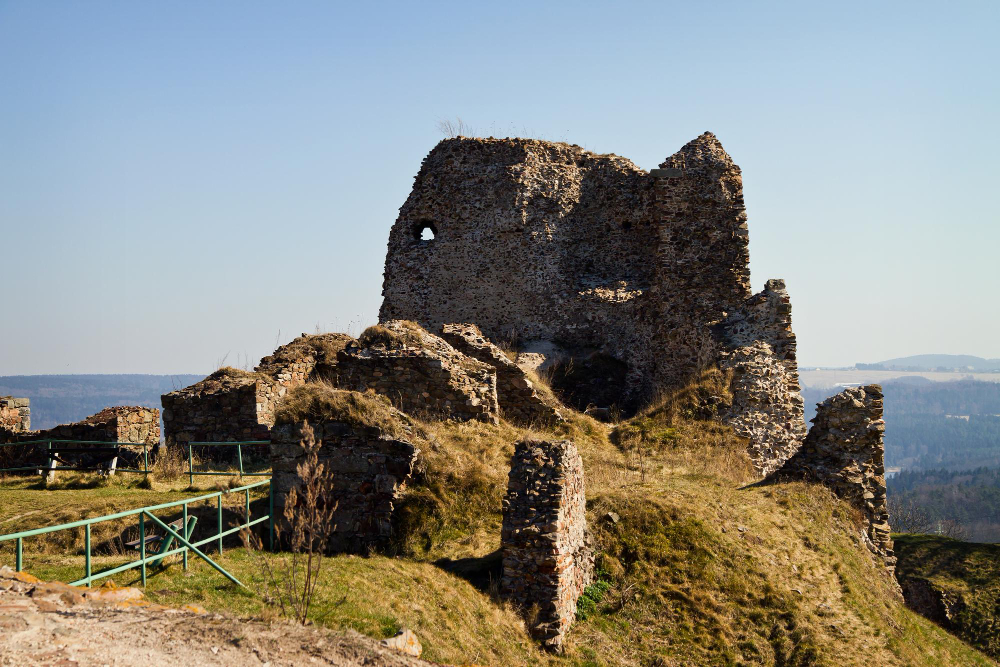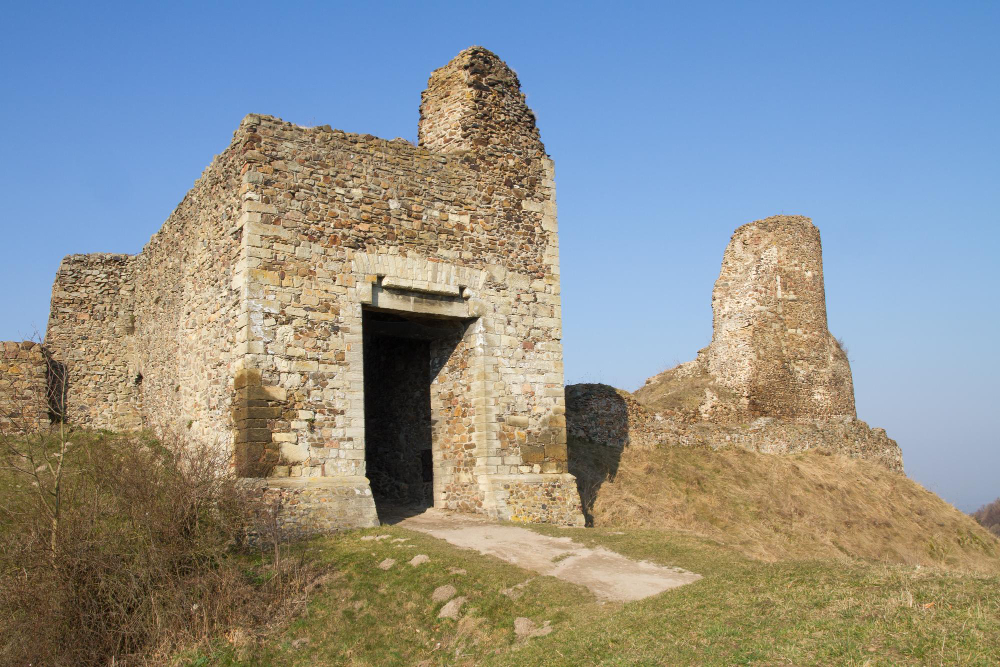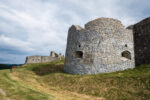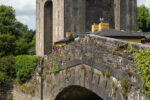

On the edge of the picturesque Iron Mountains, not far from the small village of Podhradí near Třemošnice, stands an imposing testament to times gone by – the ruins of Lichnice Castle. Located just 15 kilometres east of Čáslav, this historic site has captivated visitors and researchers alike for centuries. The castle, originally known as ‘Lichtenburg’, is not only a symbol of medieval architecture but also a reflection of an eventful history, myths and legends. Since 1958, the castle has been protected as a cultural monument, preserving the memory of an era full of power struggles, upheavals and mysterious tales.
From a royal foundation to a mighty fortress – The origins of Lichnice Castle probably date back to the first half of the 13th century, a time when Bohemia was characterised by intrigue, territorial claims and political upheavals. It is believed that the castle was a royal foundation, built to secure strategically important regions and demonstrate power. The first written mention dates from 1261, when Smil von Ronow, a prominent nobleman, claimed the castle as his property. From then on, he took the name ‘von Lichtenburg’ after his new seat, thereby founding a separate branch of his family. Lichnice was originally built with an unusual triangular ground plan, which was rather rare for the architectural style of the time. This shape gave the castle particular tactical strength, as it was easy to defend. Two imposing residential towers characterised its appearance and symbolised the status of its lords. Its location on the edge of the glacially shaped mountains not only offered a superb view but also made the castle a fortress that was difficult to attack.
Alterations in the Middle Ages and the Hussite Wars – Extensive alterations took place in the 14th century. The castle was modernised to meet changing military requirements and to improve the quality of life within it. Yet Lichnice was at the centre of historical events not only in architectural terms: from 1410 onwards, it once again became part of the royal domain and from then on played an important role in the political unrest in Bohemia. The Hussite Wars (1419–1434), one of the most defining periods of conflict in Czech history, did not leave Lichnice unscathed. In 1421, the castle was captured by the Hussites, underscoring its strategic importance. Further sieges followed, such as in 1428, when the revolutionary troops once again attempted to take the stronghold. These conflicts reflect the tensions between the Catholic nobility and the reformist forces that were shaking the country at the time.
The Trčka von Lípa family and the late-Gothic reconstruction – After the end of the Hussite Wars, the castle underwent further changes: in 1490, it came into the possession of the Trčka of Lípa family, one of Bohemia’s most influential noble families. They invested in the castle’s expansion and gave it a new look in the late Gothic style. The reconstruction was characterised by intricate stonework, window decorations and improved defences. Lichnice Castle thus became not only a defensive structure but also a stately residence that underscored the family’s social status. Despite its splendour, the castle complex began a slow decline during the 16th century. Several factors contributed to this: changing political structures, new military technologies that rendered old castles increasingly obsolete, and perhaps also the owners’ financial difficulties. In the 17th century, large sections of the fortifications were demolished, which accelerated the process of decay.
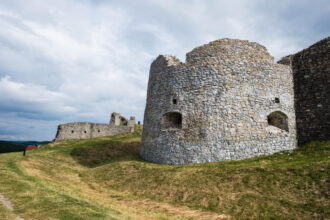
From a seat of power to an impressive ruin – By around 1700, Lichnice was already officially considered a ruin. Restoration efforts did not begin until centuries later. Nevertheless, the castle has lost none of its fascination to this day. The partially collapsed walls, the remains of the towers and the distinctive triangular layout tell a vivid story of political upheavals, armed conflicts and the lives of noble families.
Myths and legends surrounding Lichnice – As with many old castles, numerous myths surround Lichnice, passed down from generation to generation. One well-known tale speaks of a treasure said to lie hidden deep within the catacombs – behind thick stone doors that remain undiscovered to this day. Other legends speak of a ghost said to roam the ruins: a knight in full armour, whose sorrowful shadow is said to be visible on moonlit nights. These stories reflect the human longing for mysteries and hidden knowledge. They transform the ruins into a place where the past and the imagination merge, transporting visitors to a world beyond the present.
Archaeological research and current condition – Modern archaeological investigations are expanding our knowledge of Lichnice. Manuscript sources and excavations confirm the assumption that the castle initially served as a royal establishment and later passed into the hands of local noble families. Finds of weapon fragments, pottery and everyday objects provide insights into life in the Middle Ages and the harsh reality of sieges and battles. Today, Lichnice is a popular destination for walkers and history enthusiasts. The ruins lie nestled in the idyllic landscape of the Iron Mountains, surrounded by dense forests and hills that invite visitors to explore. Alongside the scenic beauty, it is above all the history that brings the place to life.
A landmark of Bohemian history – The ruins of Lichnice Castle are more than just a stone monument. They are a living testament to the balance of power, social developments and the turbulent history of Bohemia. Its walls tell of splendour and decline, of wars and peace, and of the people who lived and fought here. Anyone exploring the ruins today can not only discover architectural details but also immerse themselves in the fascinating world of medieval legends. Lichnice reminds us how closely history and myth are often intertwined, and how important it is to preserve and explore such places – for us and for future generations.