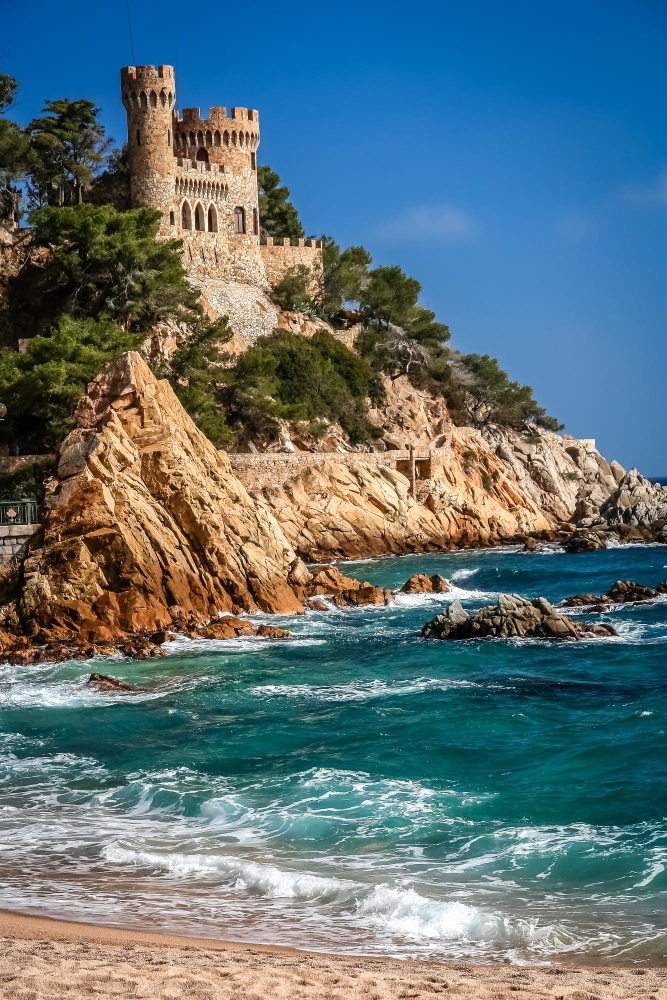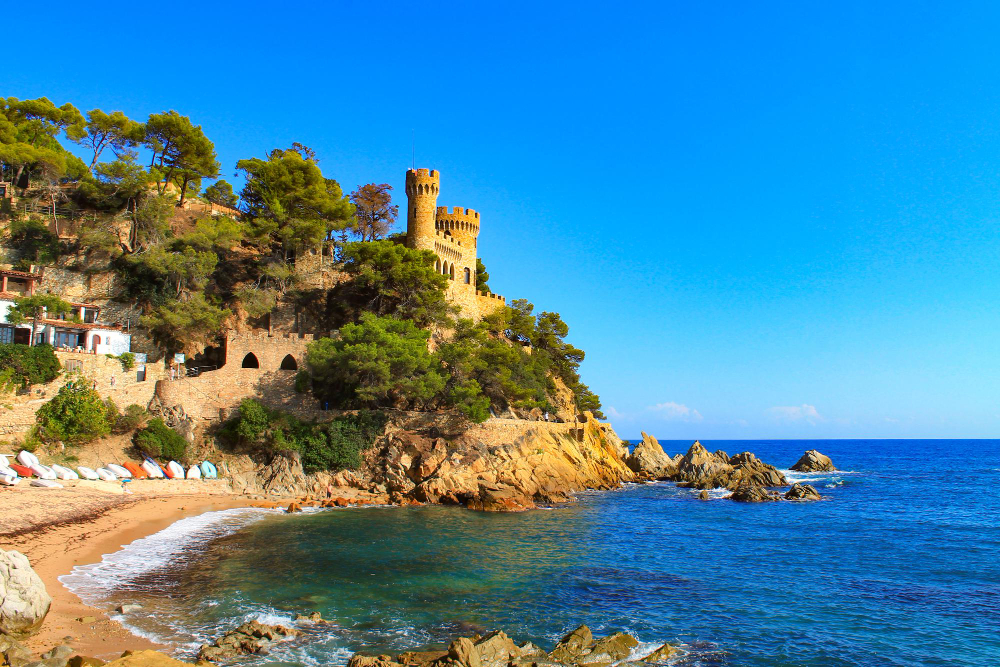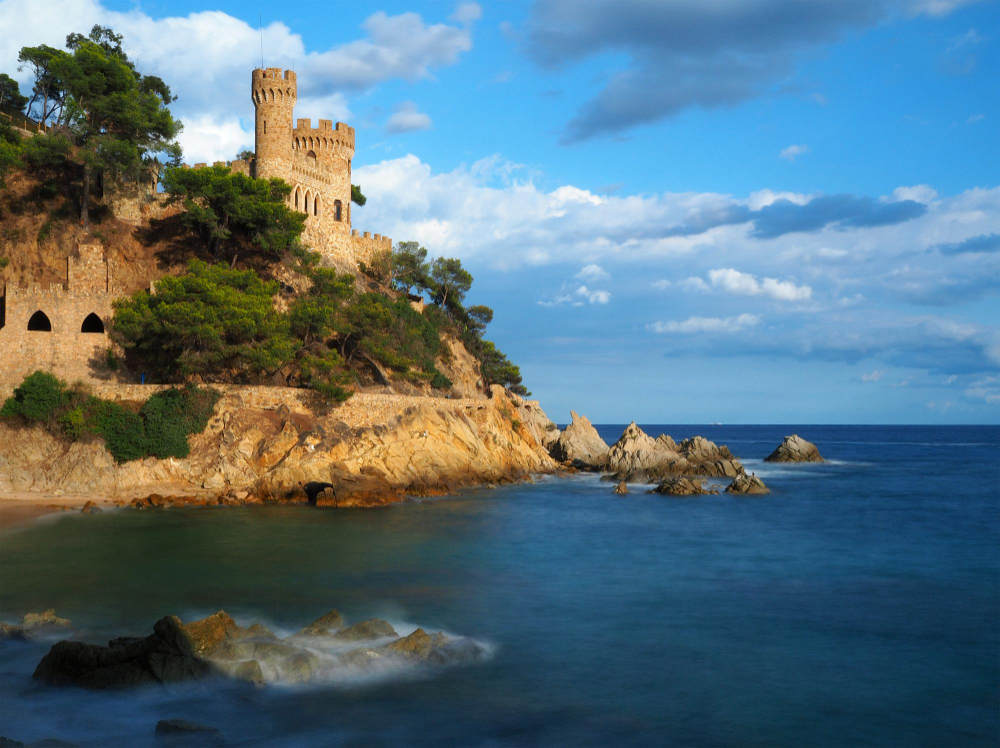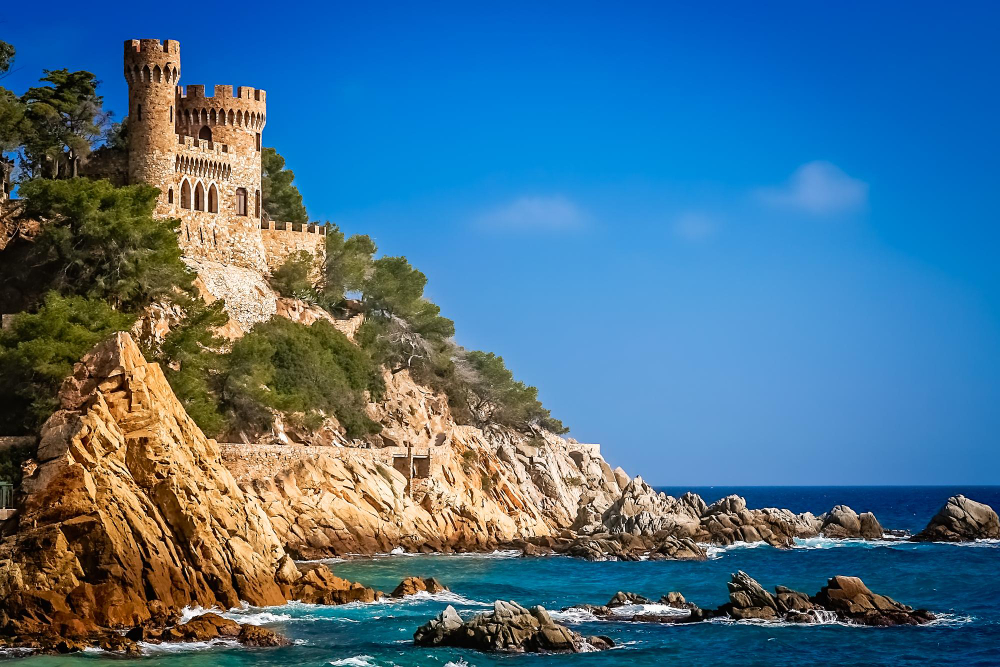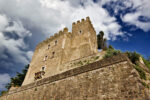

The imposing Castell d’en Plaja stands right on the picturesque beach of Sa Caleta in Lloret de Mar; its medieval appearance captivates many visitors and sparks the imagination. Yet behind the defensive walls, towers and battlements lies a story quite different from that told by legends and folklore. This striking structure, now one of the most famous landmarks of this coastal town on the Costa Brava, is a remarkable example of how architecture, history and myth intertwine – and how reality is sometimes more exciting than any fiction.
A glimpse into history: Not a medieval castle – Anyone seeing the Castell d’en Plaja for the first time might easily assume it is a centuries-old knight’s castle, a defensive structure against pirates or a former stately home harbouring tales of daring knights and pirates. In fact, however, the building does not date from the Middle Ages, but is a product of the 20th century. Construction began in 1935 on the initiative of the industrialist Narcís Plaja from Girona. Plaja was a successful entrepreneur in the biscuit-making industry who commissioned the castle as an impressive summer residence to demonstrate his wealth and social status. The design was entrusted to the Catalan architect Isidor Bosch, who drew inspiration from the Neo-Gothic architectural style, deliberately creating an appearance reminiscent of medieval castles. Completion of the building was delayed by the outbreak of the Spanish Civil War (1936–1939), meaning it was not finished until the early 1940s. The political turmoil of that period had a significant influence on the construction process – a fact one would hardly suspect given the massive stone walls.
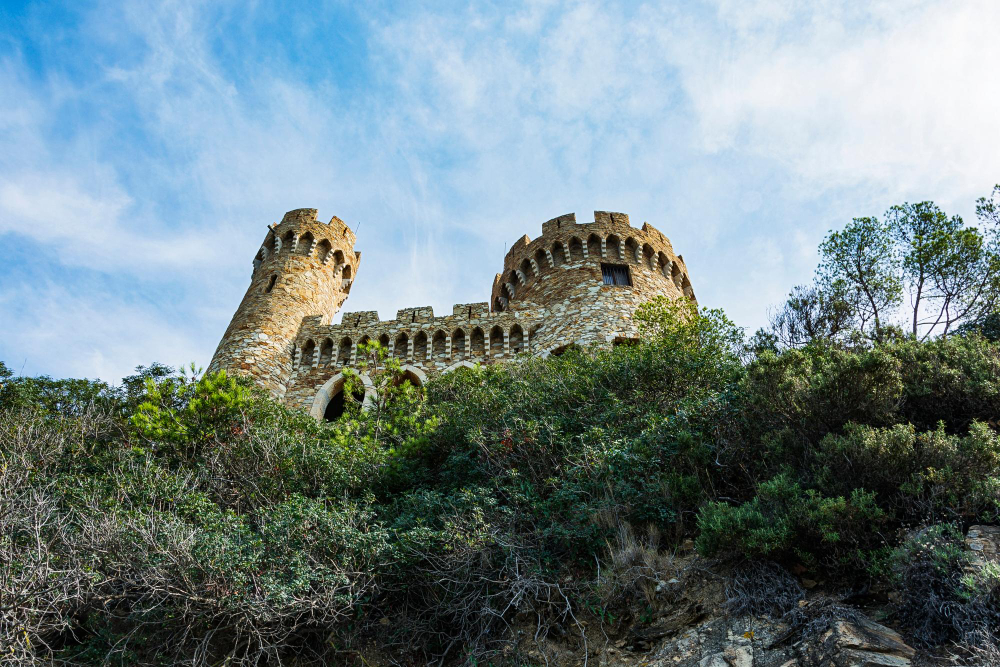
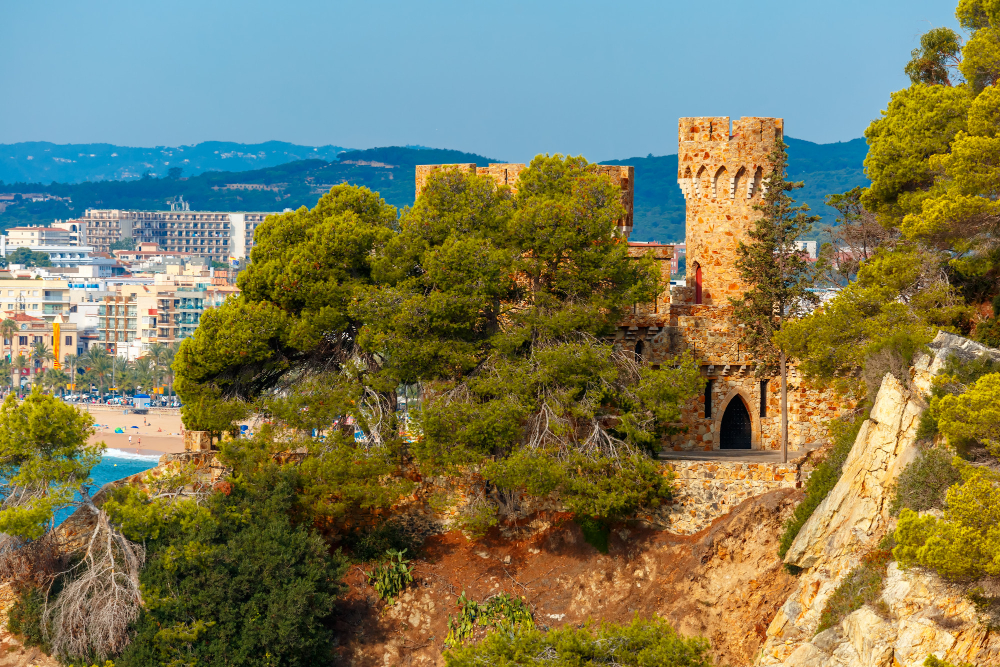
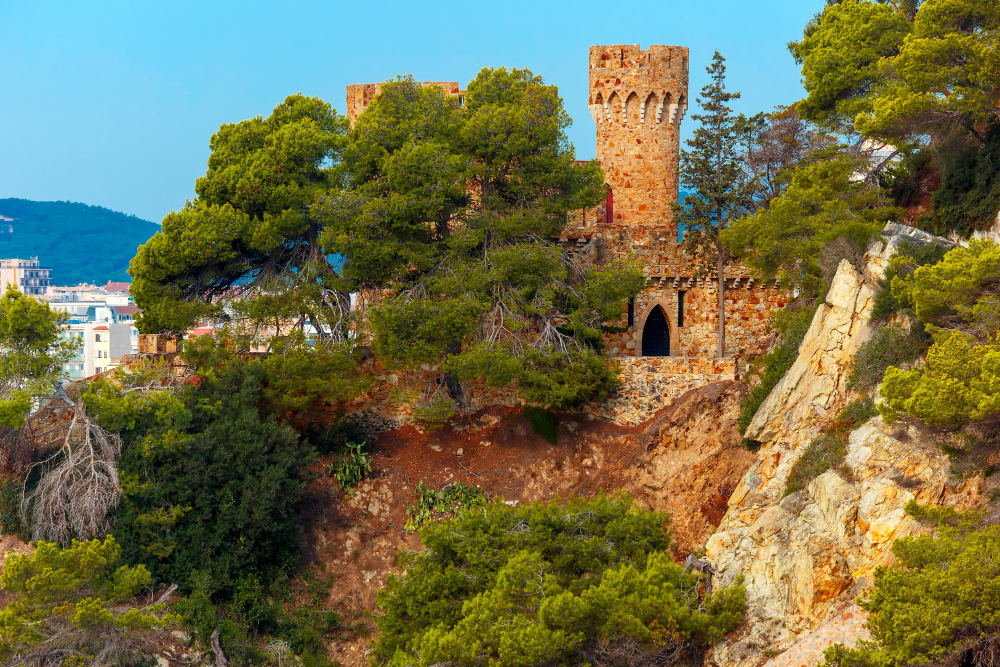
Architecture between tradition and modernity – The Castell d’en Plaja is striking for its rectangular layout, comprising several sections of the building, each two to three storeys high. Particularly striking are the two round towers of differing sizes that dominate the structure. One tower is taller and slimmer, the other broader and more squat, giving the building a striking silhouette. The walls feature openings that imitate pointed arches, bay windows and loopholes. The battlements on the wall copings resemble the ramparts of bygone eras, which could easily have come straight out of a history book, yet they were all built in modern times. Robust stones and cement were used as building materials, whilst the roof is covered with red tiles. The structure stands on a small hill near the cliffs of Sa Caleta, from where visitors can enjoy a breathtaking view of the Mediterranean Sea. A defensive wall with battlements runs around the main building, flanked by a small path leading to the edge of the cliffs, which is now used as a viewing point.
From a controversial showpiece to a tourist icon – The project initially met with fierce criticism from the people of Lloret de Mar. Many residents saw this ‘castle’ by the sea as nothing more than a ostentatious eyesore that would not fit in with the natural landscape and the tranquil town. A massive palace right on the beach – to the conservative community, this seemed excessive and jarring. Yet the passing years and decades fundamentally changed this perspective. The Castell increasingly became a popular photo opportunity, featured on postcards and in guidebooks, and evolved into an unofficial landmark of the town. Today, it is regarded as a symbol of Lloret’s tourist boom and its vibrant history.
Myths and legends surrounding the Castell d’en Plaja – Its impressive design and secluded location right on the cliffs have given rise to all manner of speculation and folk myths that persist to this day:
– The ‘medieval castle’ illusion: Many visitors still believe that the Castell was an original, preserved medieval castle that served as a defence against pirates. This notion is reinforced by the towers and battlements, which were in fact only built in modern times. Nevertheless, this romantic idea fits well with the northern Spanish coast, which was historically threatened by pirates on several occasions.
– Secret tunnels and hidden treasures: As the Castell remained in the private ownership of the Plaja family for decades and was not easily accessible, rumours developed about secret passages beneath the castle, priceless luxuries and prominent guests who resided there. These tales were fuelled in part by the building’s seclusion, which sparked visitors’ imaginations.
– Luxury residence and private retreat: In fact, the Plaja family used the castle primarily as a retreat and as a symbol of their wealth. The combination of architectural styles from different eras and its location made it an exclusive property that stood out from the typical villas on the Costa Brava.
Today: The Castell as a cultural meeting place – The function of the Castell d’en Plaja has since changed. Parts of the building have been opened to the public and given innovative new uses. Under the name ‘Castell de Lloret’, the building now not only offers a fascinating insight into architectural history but also combines historical elements with modern technology. Visitors can, for example, enjoy a virtual reality experience exploring the theme of climate change, and take in the view of the sea and the town from the panoramic terrace with its bar. In this way, the Castell d’en Plaja remains relevant to the present day whilst retaining its status as an authentic testament to its historical origins.
Architectural heritage and cultural significance – The Castell d’en Plaja is listed in the Catalogue of Architectural Heritage of Catalonia (‘Inventari del Patrimoni Arquitectònic de Catalunya’). This recognition underscores its significance as a cultural asset that is valuable not only aesthetically but also historically. It represents an era of Catalan industrial history and the influence of industrial capitalists on the region. The combination of the Neo-Gothic style, local building traditions and its unique location makes the building an outstanding example of early 20th-century architecture on the Mediterranean.
From a private summer residence to an icon of the Costa Brava – The Castell d’en Plaja impressively demonstrates how closely architecture can be interwoven with identity, history and myth. It is a building that has the power to tell stories and fuel myths through its appearance, whilst at the same time being rooted in true events. The building’s history – from its beginnings as a dream project of a biscuit manufacturer to its current use as a cultural venue – exemplifies the eventful history and vibrant spirit of the coastal region of Lloret de Mar. Anyone strolling along Sa Caleta beach today sees not only a fairytale castle, but a piece of living cultural landscape that preserves history whilst shaping the future.