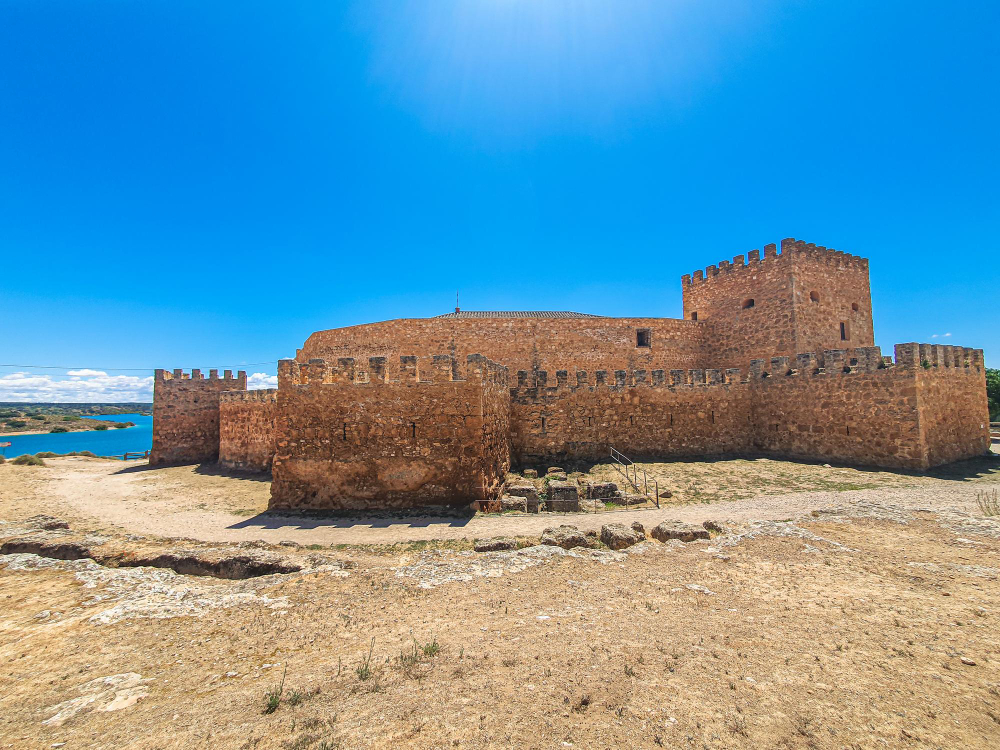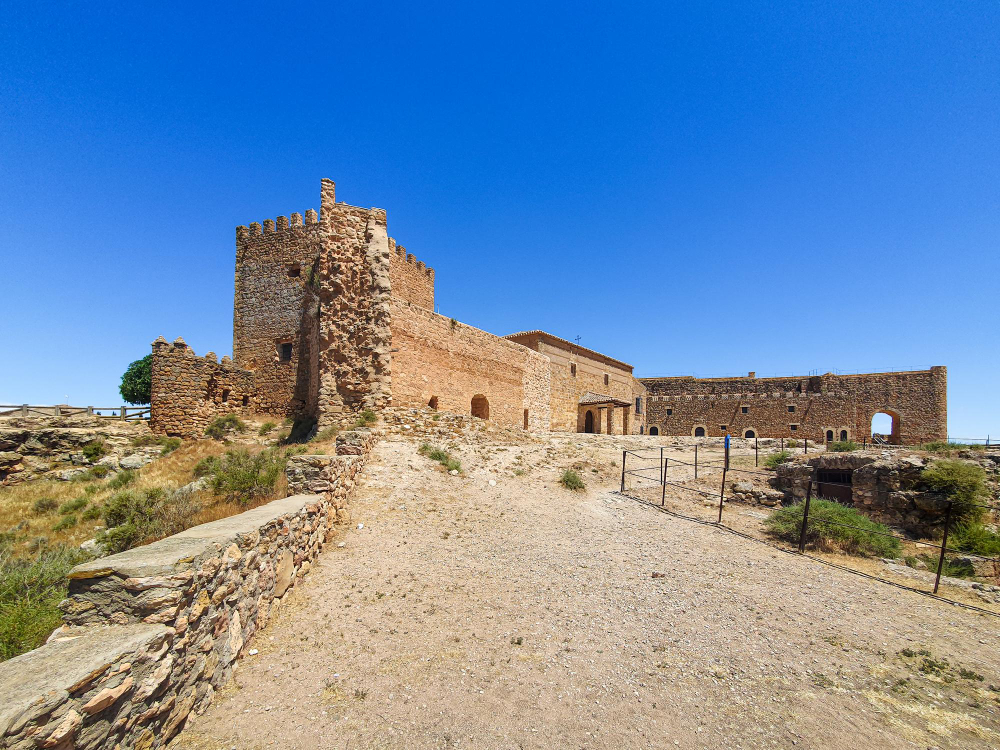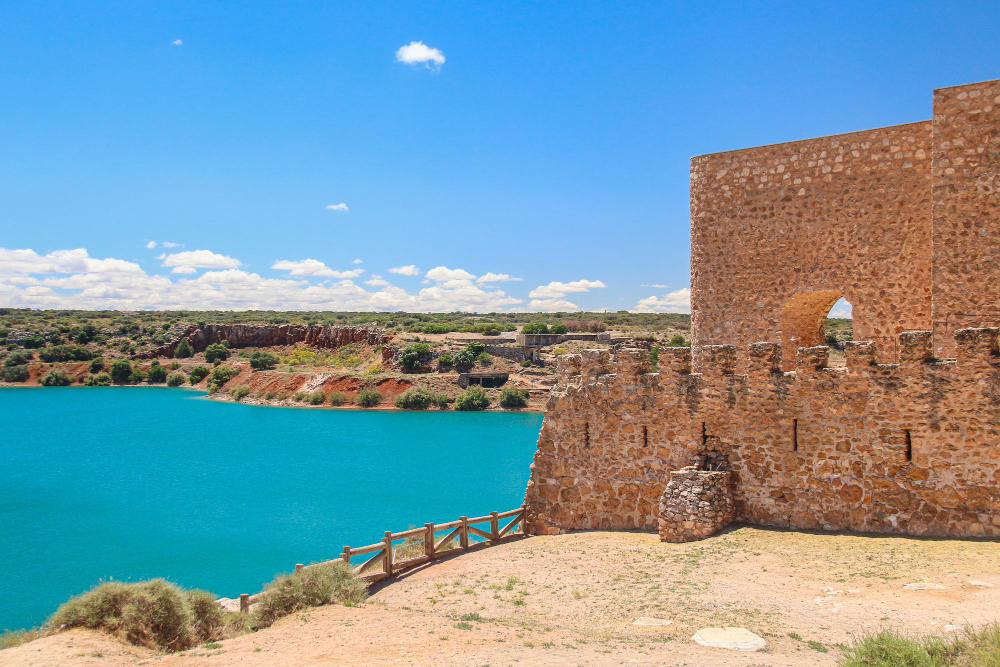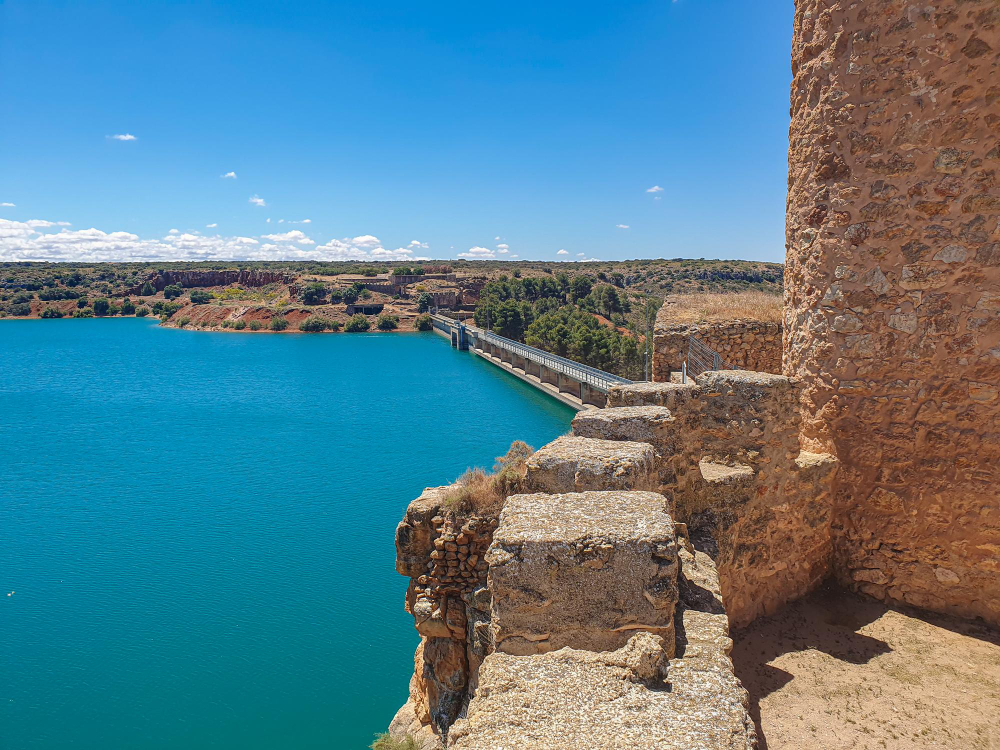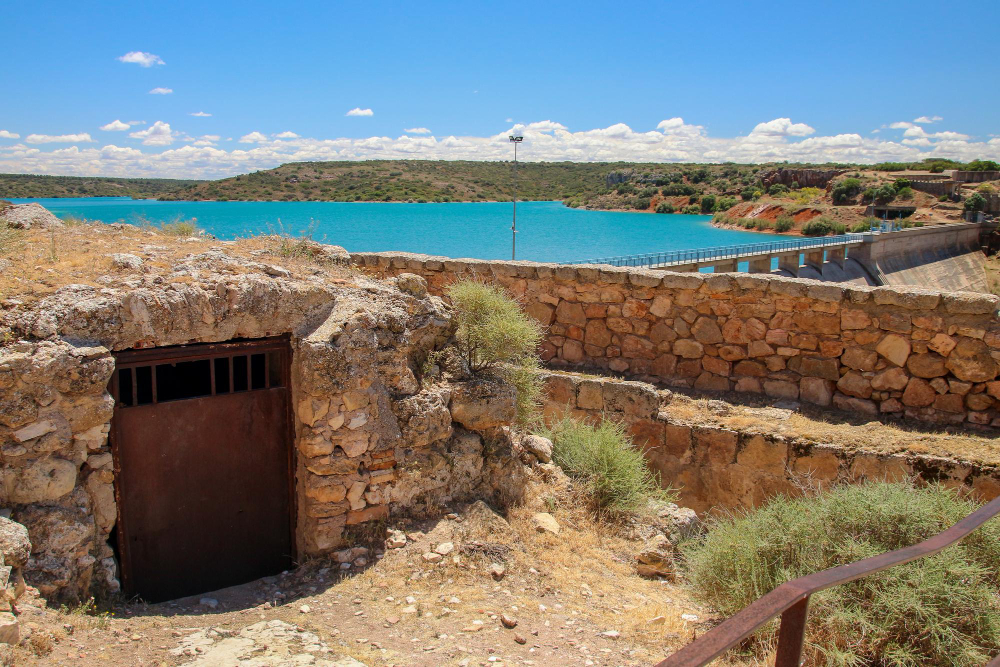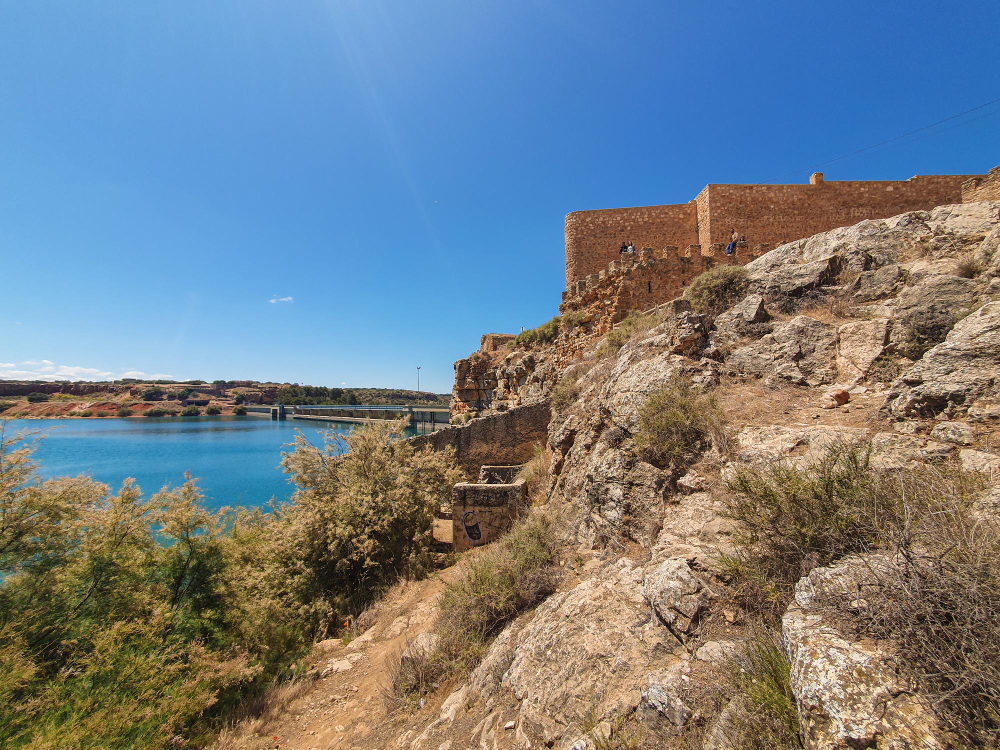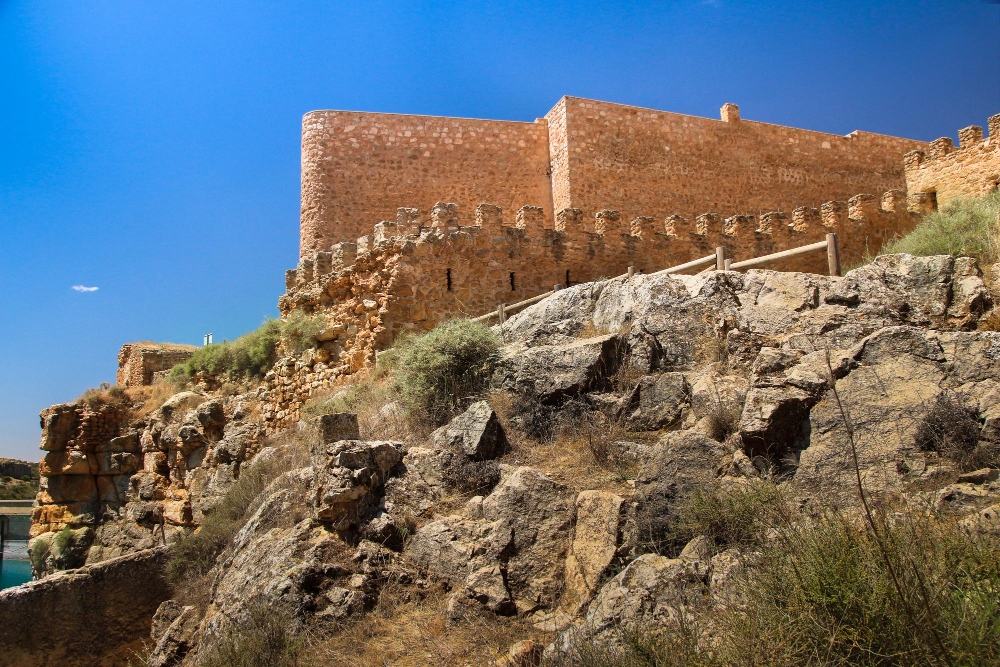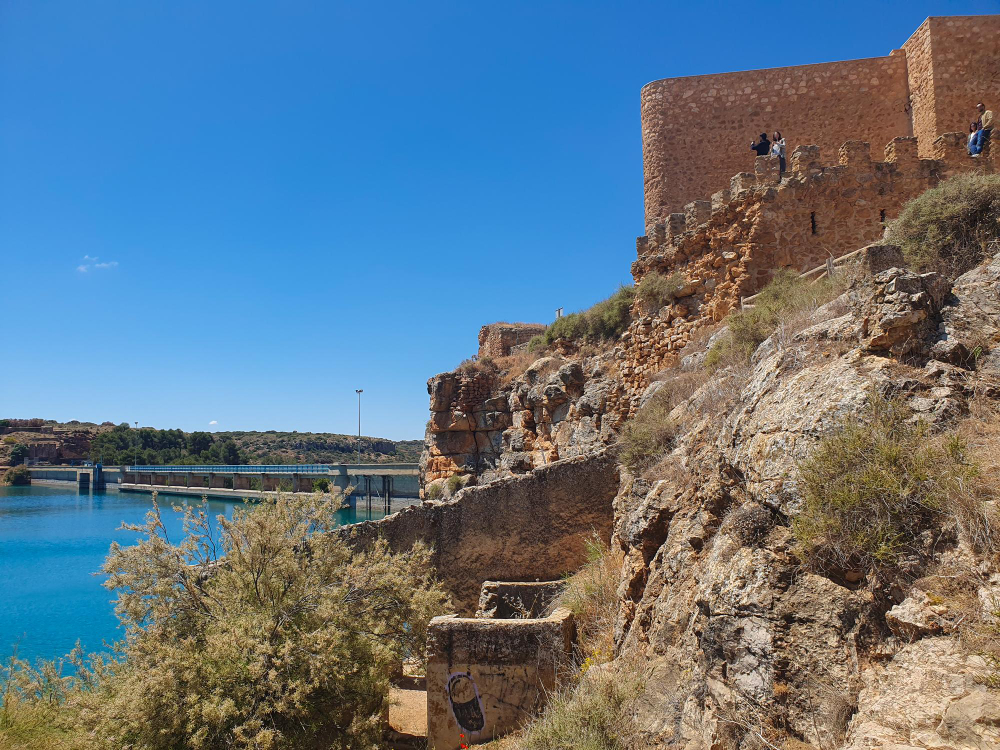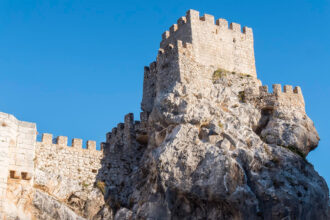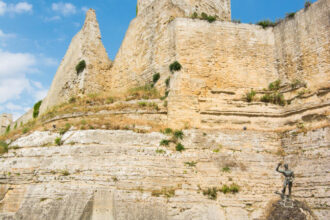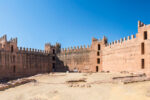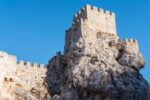

In the heart of Castilla-La Mancha, more specifically in the province of Ciudad Real, the Castillo de Peñarroya stands as an impressive testament to times gone by. This fortress towers majestically atop a striking rock formation, a so-called ‘peña’, which is known as ‘roya’ due to its reddish colour – a name that is thought to be the origin of the name ‘Peñarroya’. Strategically situated on a steep stretch of the River Guadiana, the castle offers magnificent views of the Embalse de Peñarroya reservoir and the picturesque lagoons of Ruidera, a protected nature reserve that stretches upstream.
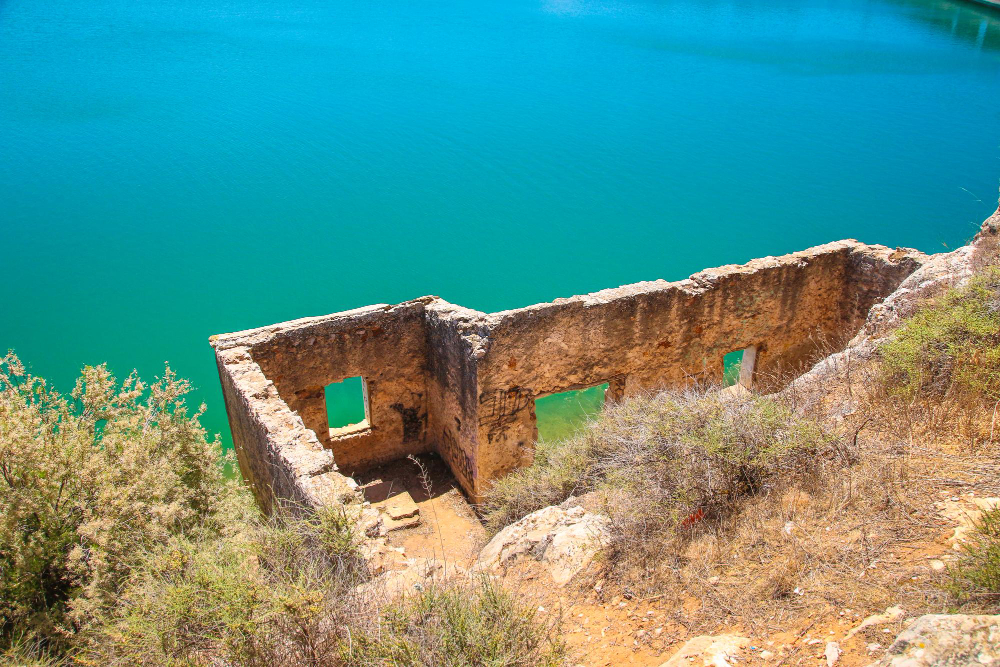
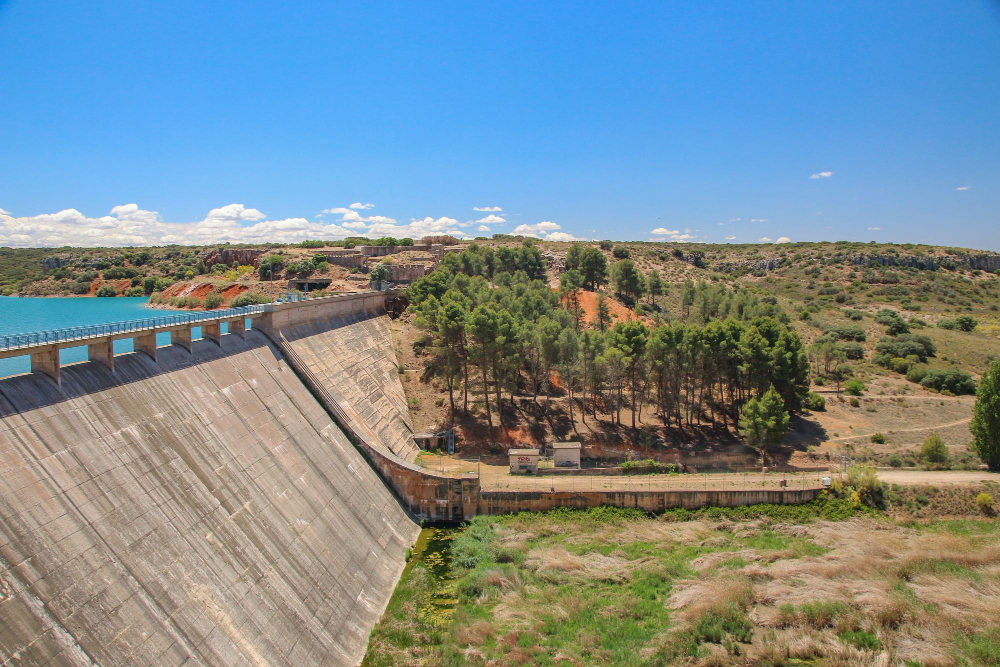
Geographical location and scenic significance – The Castillo de Peñarroya is situated in the municipality of Argamasilla de Alba, around twelve kilometres south of the town centre, along the CM-3115 country road towards Ruidera. The choice of location for the castle is by no means coincidental: the rock provides a natural defence, which made it possible to monitor the course of the Guadiana and control access to the surrounding land. The proximity to the river was not only strategically important but also economically significant, as the Guadiana was a vital lifeline and trade route. The site where the reservoir stands today was previously part of a natural river valley with lush wetlands and lagoons, which were home to numerous species of flora and fauna in the surrounding area. It was not until the 20th century that the Embalse de Peñarroya was constructed here; it now gives the impression of a vast inland sea and enriches the picturesque landscape with the beauty reflected in its waters.
Historical Roots and Conquest – The history of the Castillo de Peñarroya is closely linked to the tumultuous events of the Reconquista. According to research and historical chronicles, particularly the work *Juicio Analítico del Quijote* by Don Ramón Antequera Bellón, the decisive moment in the castle’s history can be dated to 8 September 1198. On that day, the Castilian captain Alonso Pérez de Sanabria succeeded in recapturing the fortress from Muslim rule, thereby securing a symbolic victory in the border region. This recapture was not only significant in military terms, but also carried a spiritual dimension. During the capture of the castle, the statue of ‘Nuestra Señora de Peñarroya’ was discovered; she has since been venerated as the patron saint of both the inhabitants of Argamasilla de Alba and the neighbouring municipality of La Solana. Devotion to her is deeply rooted in local traditions and reflects the fusion of history, faith and community. In 1215, the Castillo de Peñarroya was transferred to the military order of the Knights of St John (Orden de San Juan). From then on, the fortress developed into an important stronghold for the defence of Castilian territories. In the 14th century, Peñarroya was the Order of St John’s most economically significant commandery in this region, which underlines its great importance.
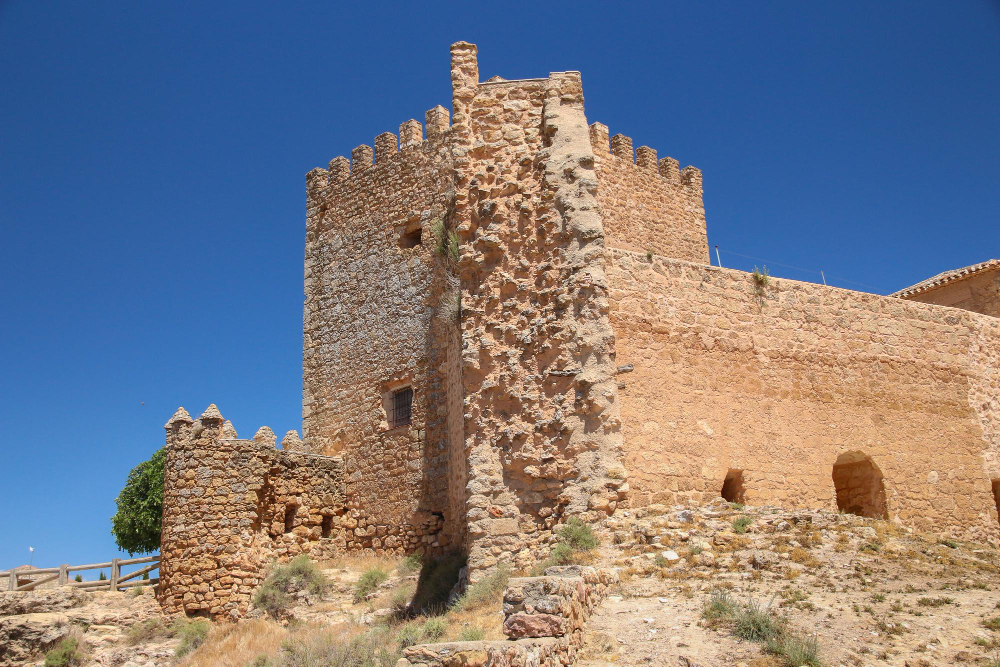
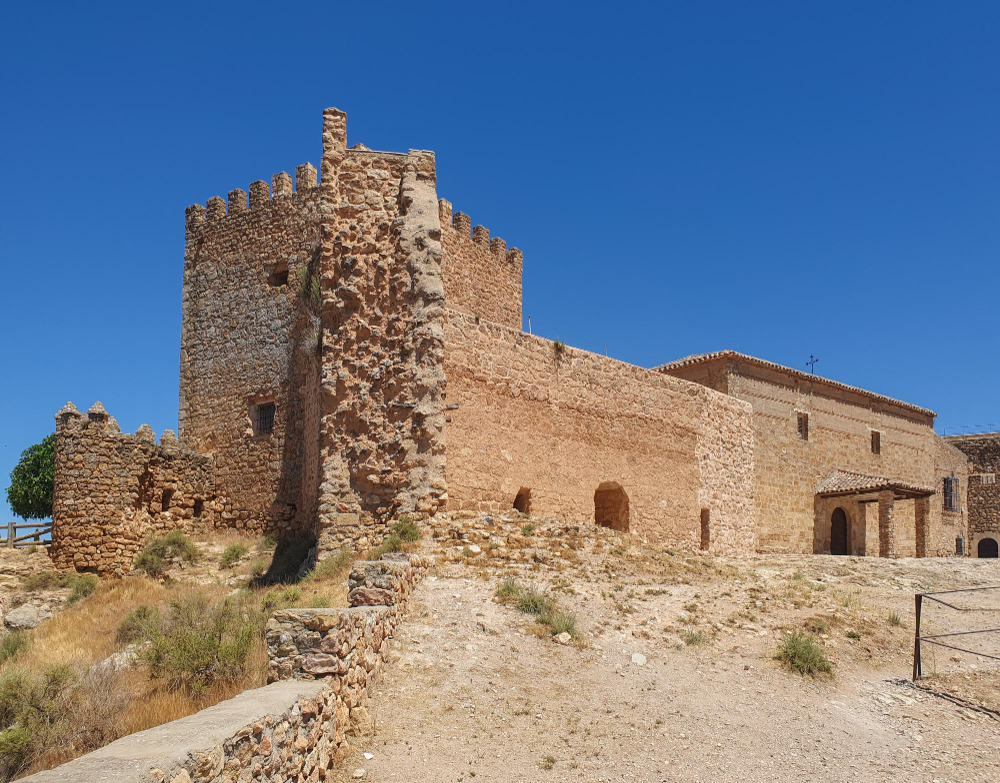
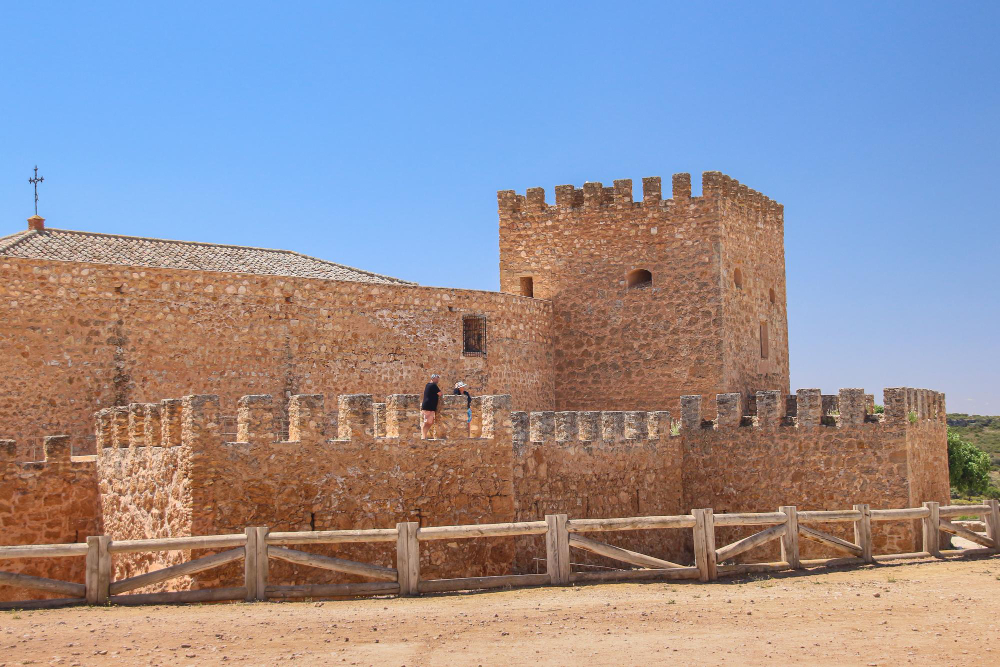
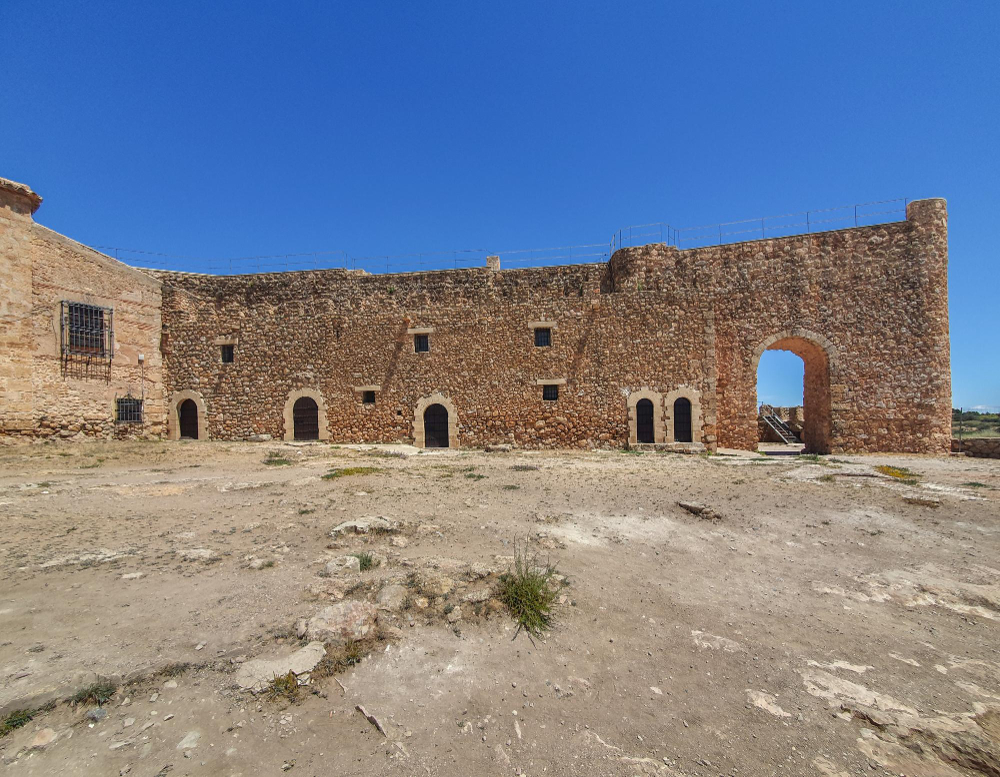
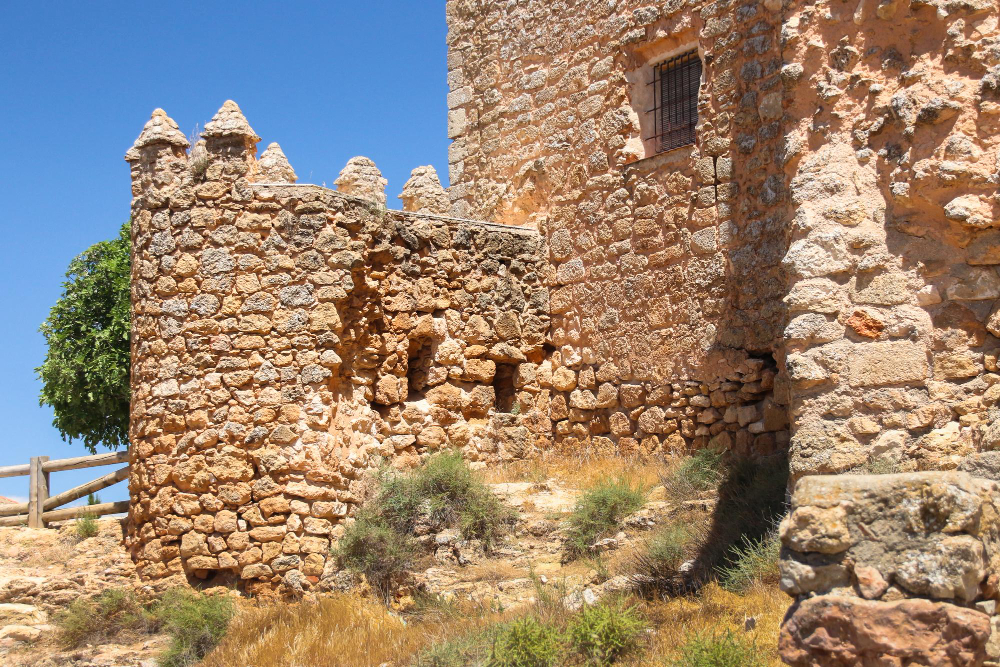
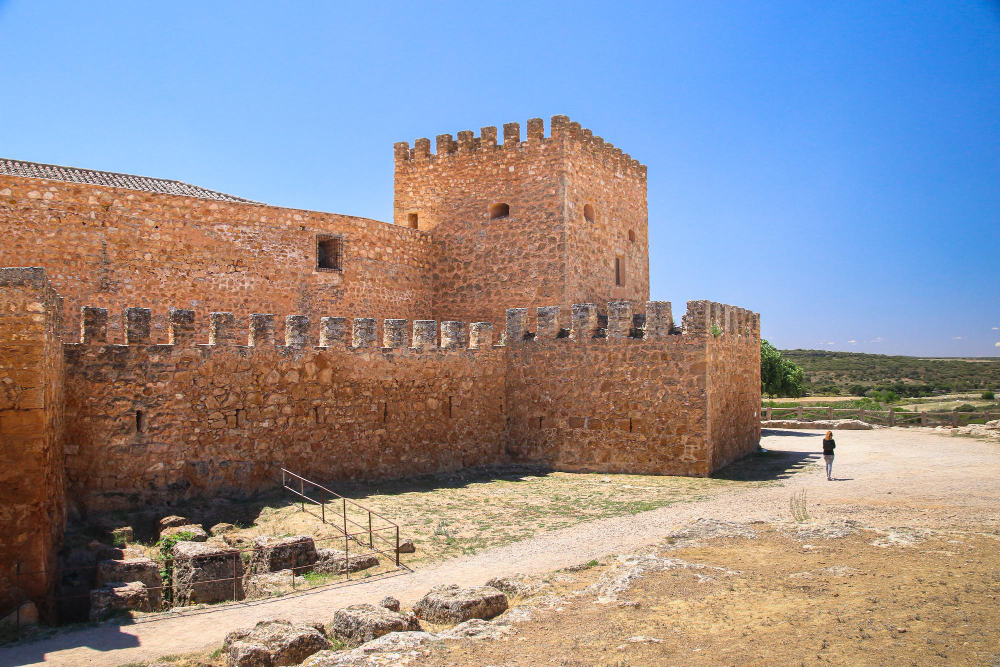
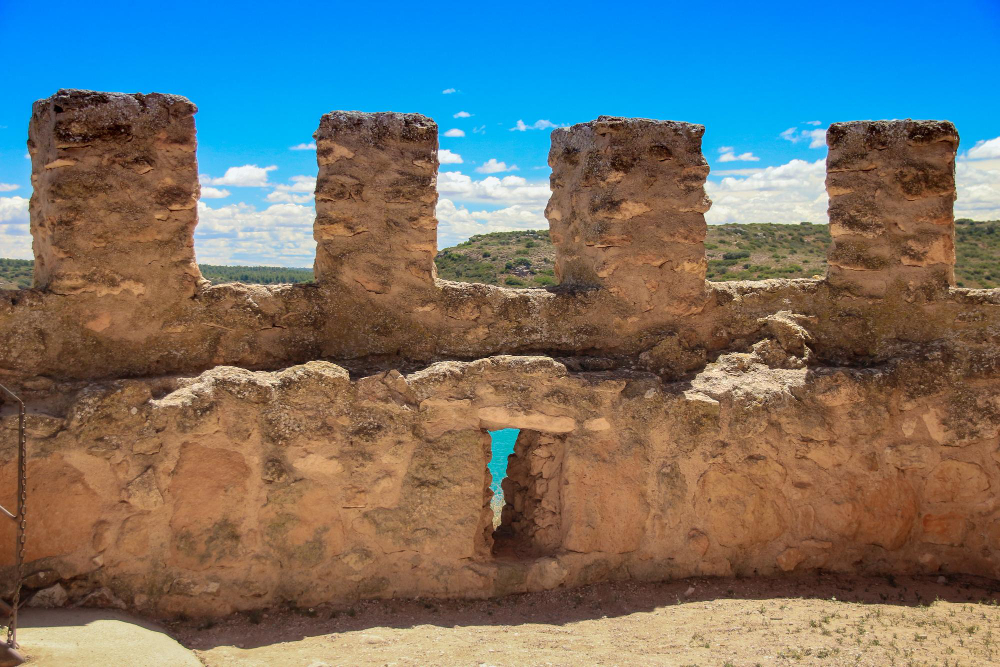
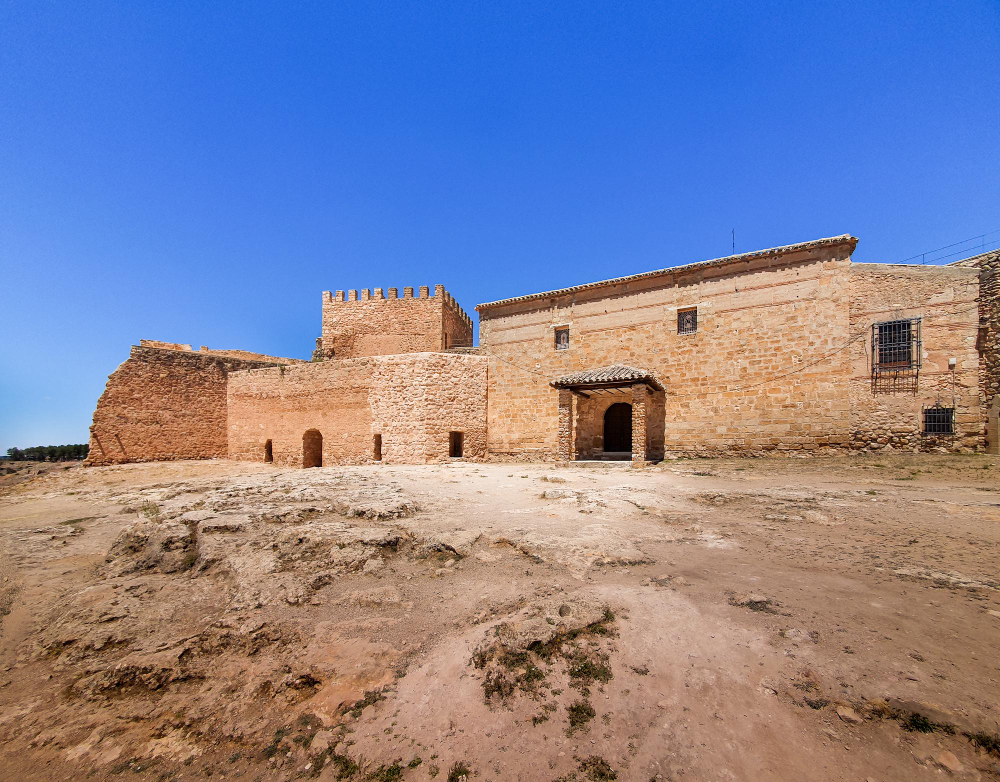
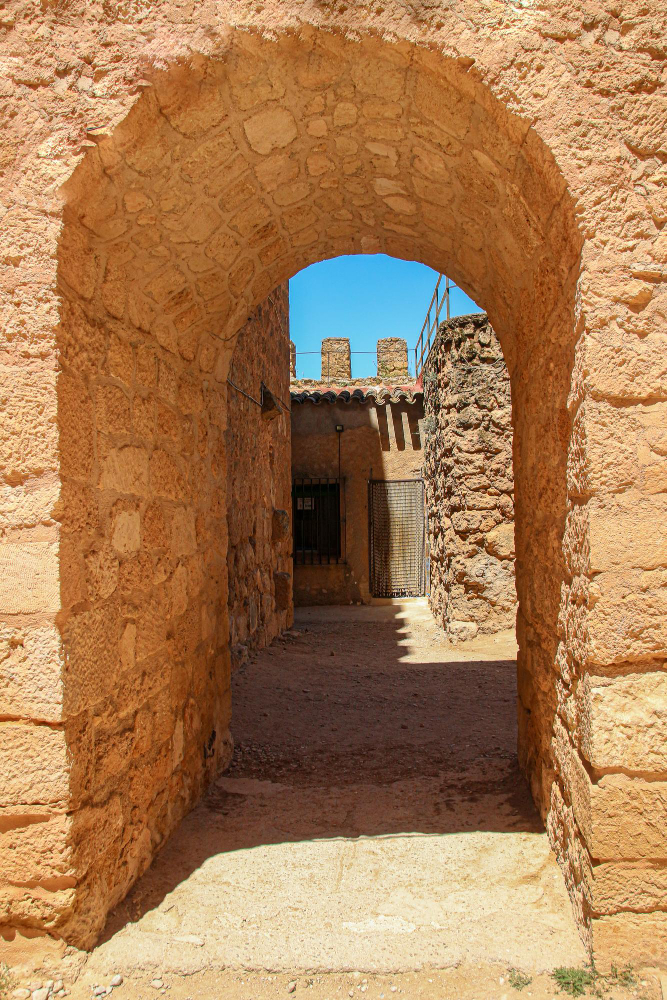
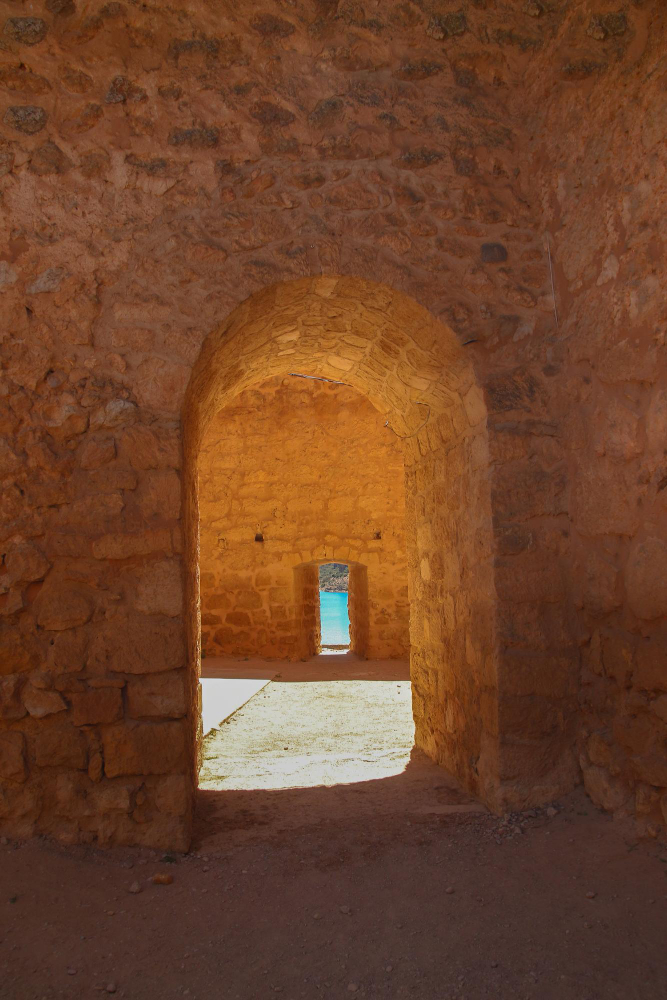
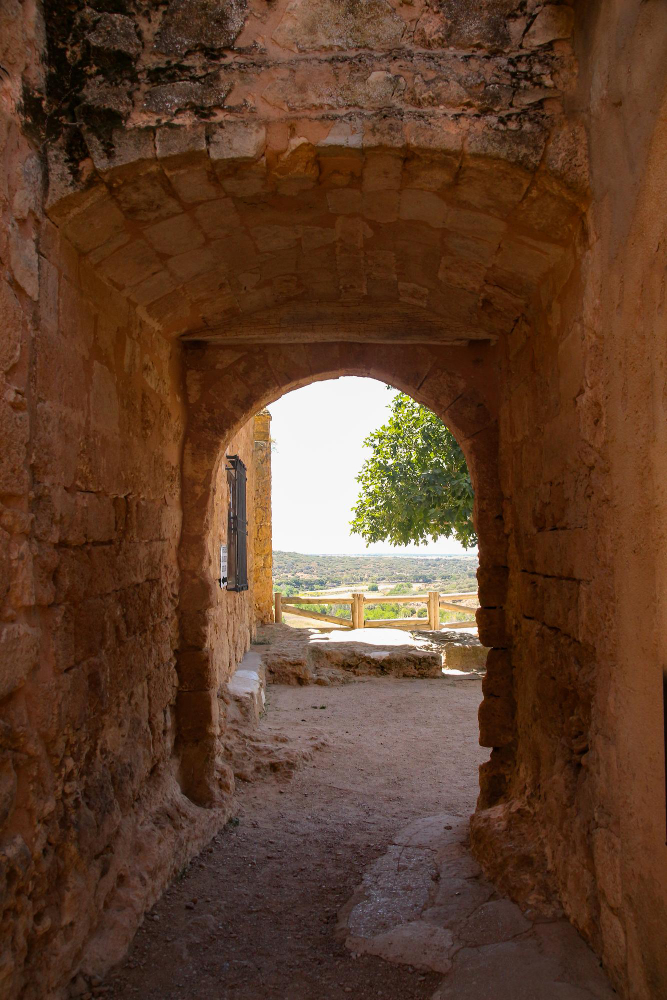
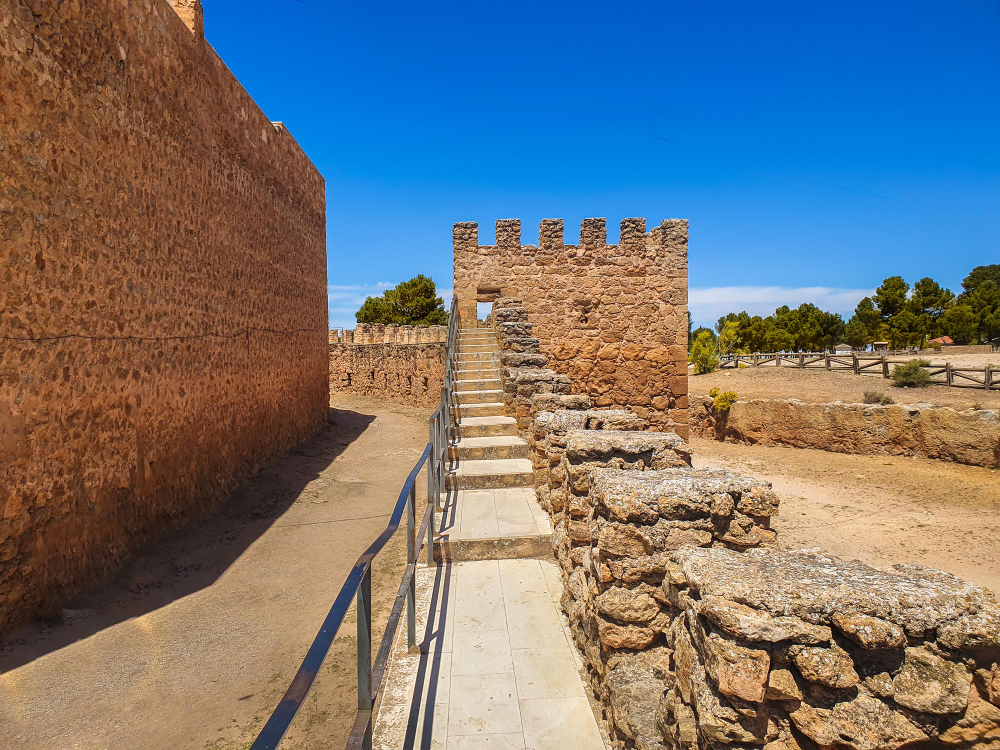
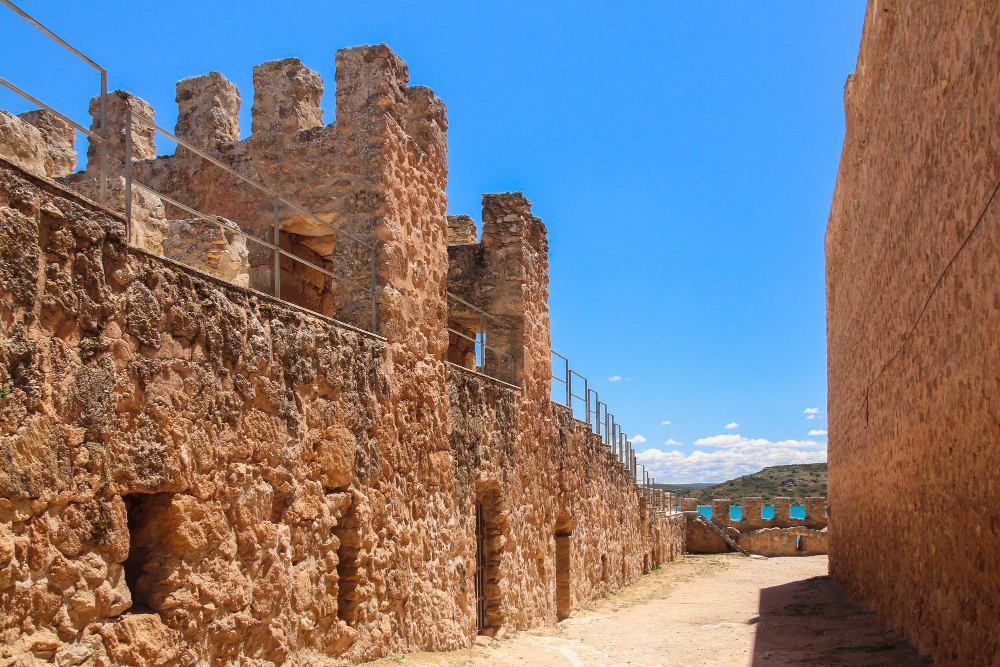
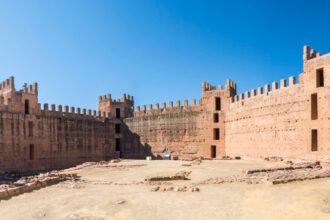
Architecture and structural features – The castle is characterised by its impressive architecture, in which masonry (mampostería) and carefully hewn stones (sillería) are harmoniously combined. Upon entering the castle, one is immediately struck by the medieval approach, flanked by a ‘humilladero’ (a simple wayside shrine) and a moat – typical elements of medieval fortifications that served both as a means of psychological intimidation and physical defence. The interior of the fortress is dominated by a spacious Patio de Armas, which, measuring 67 by 43 metres, played a central role in the castle’s layout. Various building complexes are arranged around this courtyard, including the church, originally built in the 12th century, and an ancient cistern for water supply. The architecture is both functional and imposing: An inner corridor, known as the ‘Liza’, separates the higher main wall from the outer fortifications, which are equipped with three towers and defensive walls. Particularly noteworthy is the so-called ‘Torre Albarrana’, a tower bastion situated in front of the outer wall, which is rounded at the front but has a rectangular ground plan overall. This type of tower served to better repel attacks on the main circular wall and provided defenders with optimal firing positions. The main keep, known as the ‘Torre del Homenaje’ (‘Tower of Homage’), is a massive square structure with a floor area of 113 square metres and comprises three storeys. Historically, this was the seat of the lord of the castle or the fortress steward; today, however, it hosts meetings of the ‘Cofradía de Nuestra Señora de Peñarroya’ brotherhood. The battlements bridge – the Adarve – leads to the terrace, which once served as a vantage point and the final line of defence. On the valley side, which slopes down towards the dam, stands a small 17th-century Baroque chapel, whose appearance reflects the ‘barroco decadente’ style – an art-historical movement describing the transitional phase from the opulent Baroque to the emerging Rococo in Spain. Inside, several valuable works of art are on display: paintings on either side of the high altar, a magnificently carved Churriguera-style altarpiece exemplifying the opulent style of the Spanish Baroque, and an exceptional 17th-century statue of a saint, which originally stood in the nearby Mercedarian monastery at Argamasilla de Alba. Historically, the small chapel served as a private retreat for the castle’s inhabitants and has acquired its present appearance over the years, whilst retaining its significance as a spiritual centre.
Archaeological finds and cultural heritage – Recent excavations in the vicinity of the Castillo have unearthed further evidence of its eventful history: archaeologists have discovered an Islamic necropolis, the exact dating of which remains to be determined, as well as a complex of silos. These finds attest to the long continuity of human settlement and use of the area – from the period prior to the Christian Reconquista right through to later centuries. The presence of the necropolis suggests that the area held significant importance under Muslim rule and may have served as a kind of administrative centre. The silos, in turn, point to an agrarian society that systematically stored provisions, which is not surprising given the castle’s strategic location.
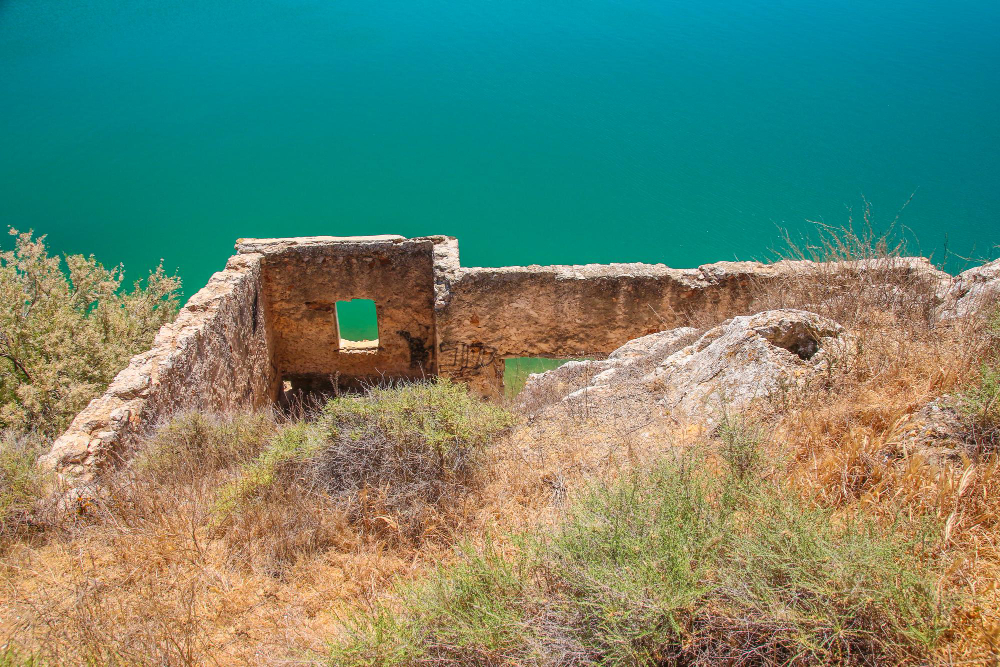
State of preservation and current use – Thanks to various restoration measures, the Castillo de Peñarroya is now in good condition. Viewed from above in particular – for example, from the castle terrace or the adjacent footpaths – the fortress is an imposing sight, set within a landscape of unrivalled beauty thanks to the reservoir and the surrounding wetlands. The site is owned by the municipality of Argamasilla de Alba and is freely accessible. As well as its role as a tourist attraction, the castle serves as a vibrant cultural venue where annual pilgrimages (romerías) are held in honour of ‘Nuestra Señora de Peñarroya’. These festivities take place in April and September and attract visitors from the wider area, particularly from Argamasilla de Alba and La Solana – the municipalities that venerate the Virgin as their patron saint.
A cultural and historical gem – The Castillo de Peñarroya is far more than a historical ruin – it is a living monument that reflects centuries of eventful Castilian history and illustrates the interplay of military ambition, religious faith and economic power. As a strategic outpost of an important commandery of a knightly order, as a site of deeply rooted popular devotion and as an architectural masterpiece of medieval architecture, this fortress occupies a prominent place in the cultural landscape of Castilla-La Mancha. For visitors, it offers not only a window into the past, but also a place of contemplation and admiration – a symbol of how history and nature can coexist in harmonious unity.