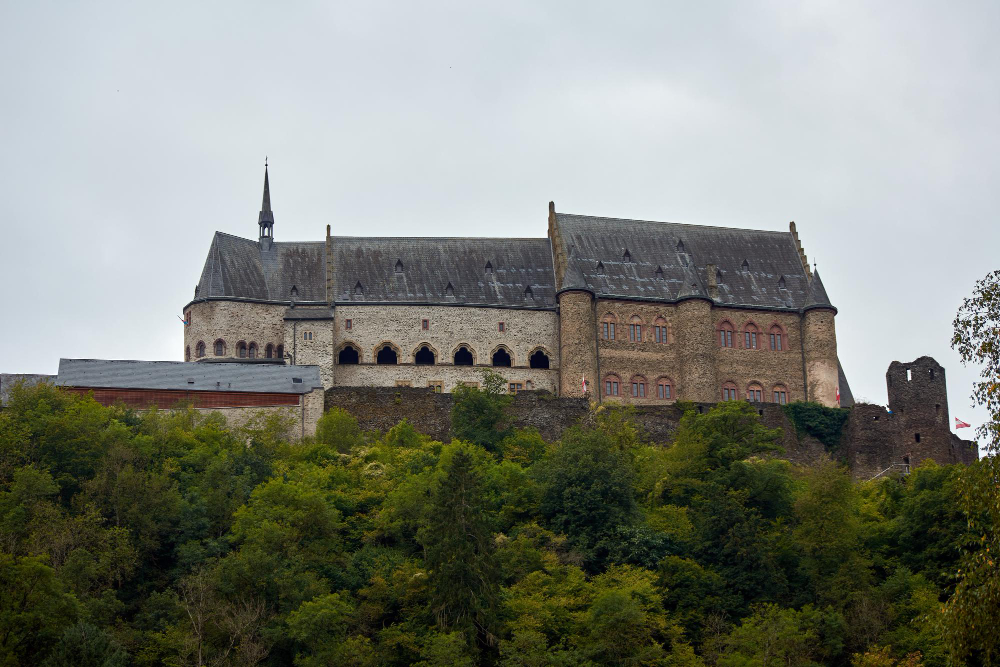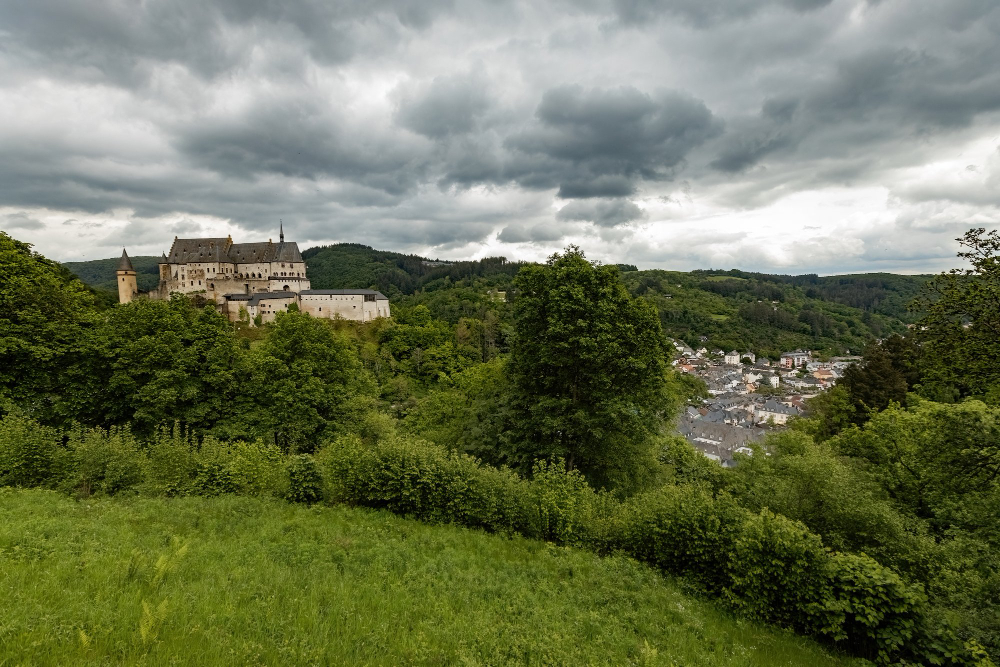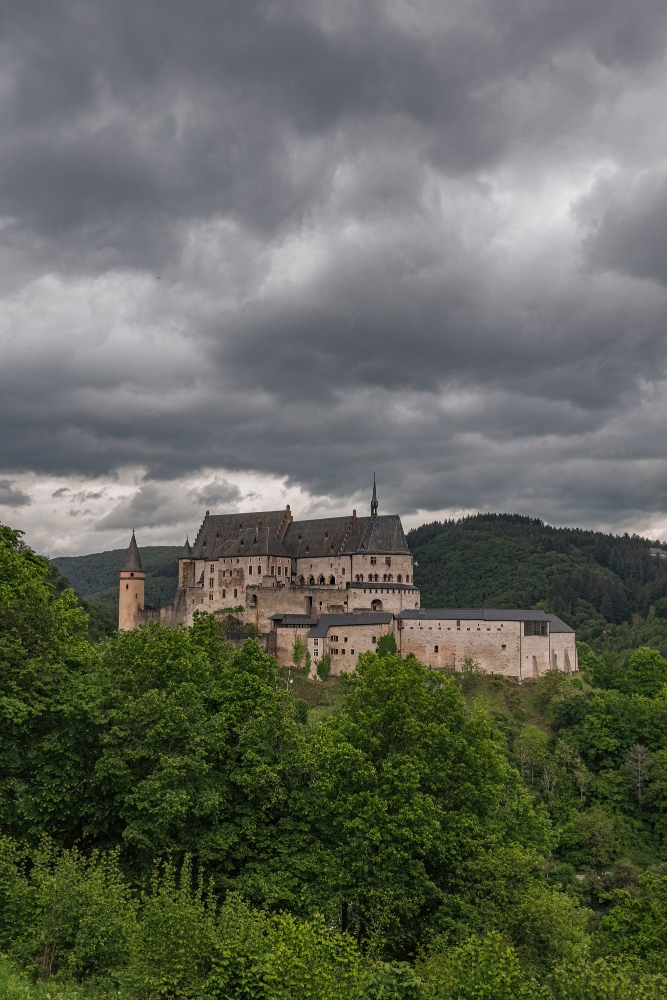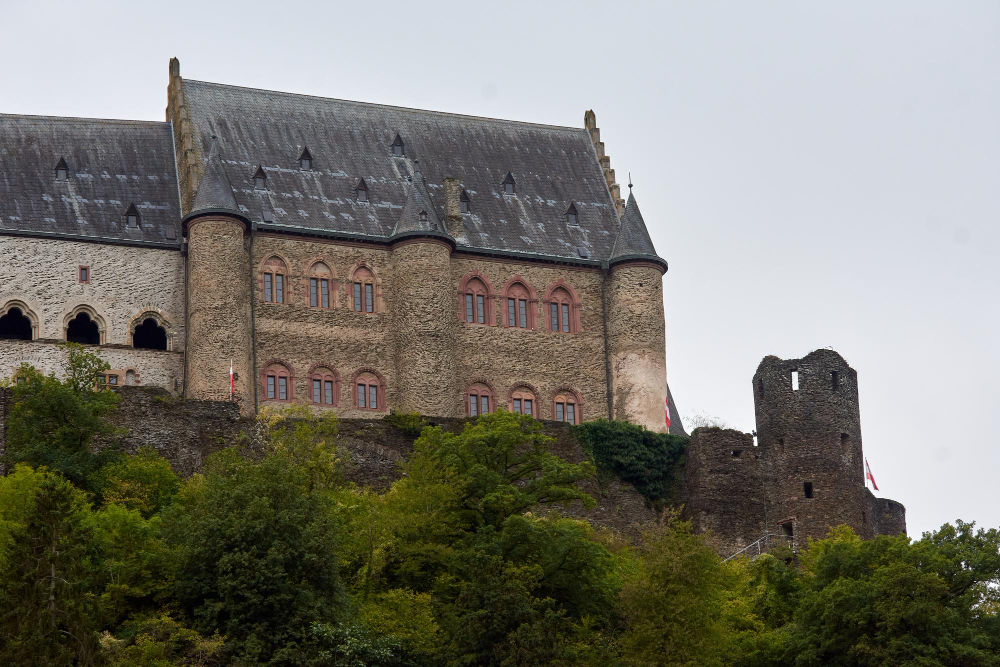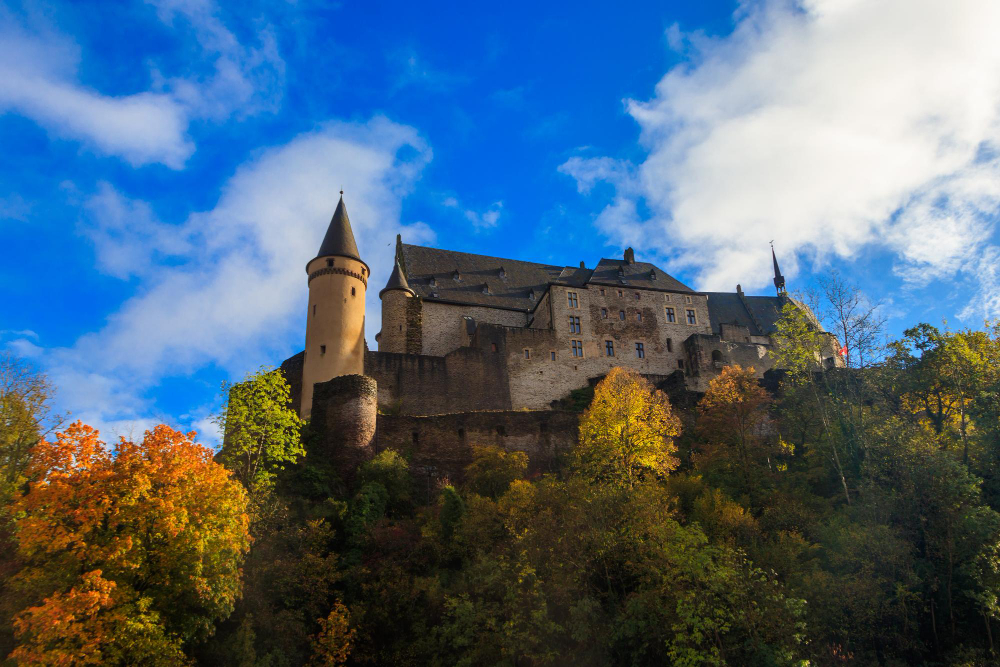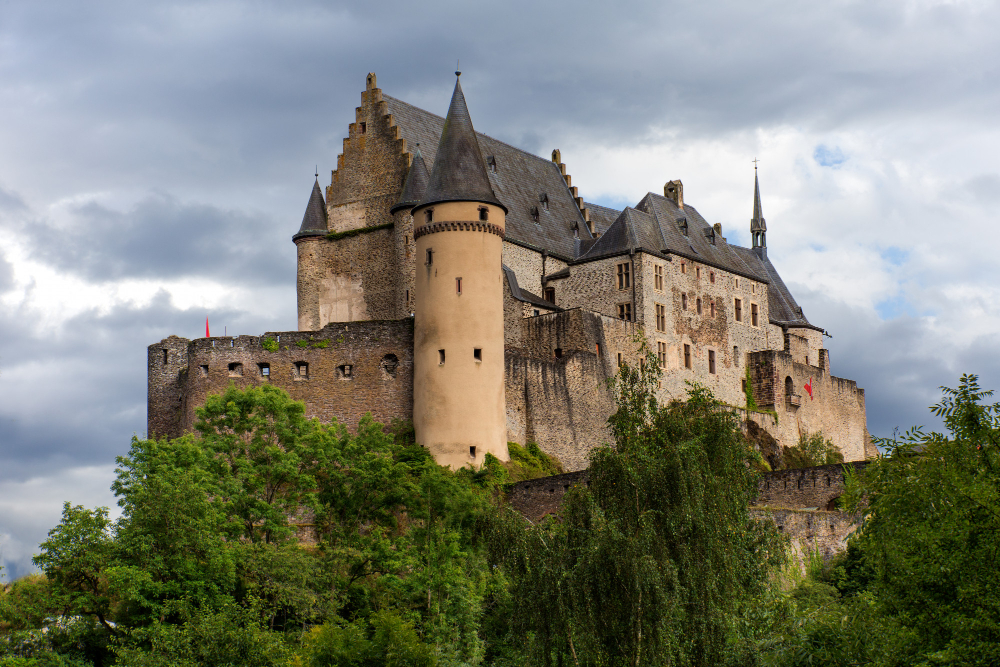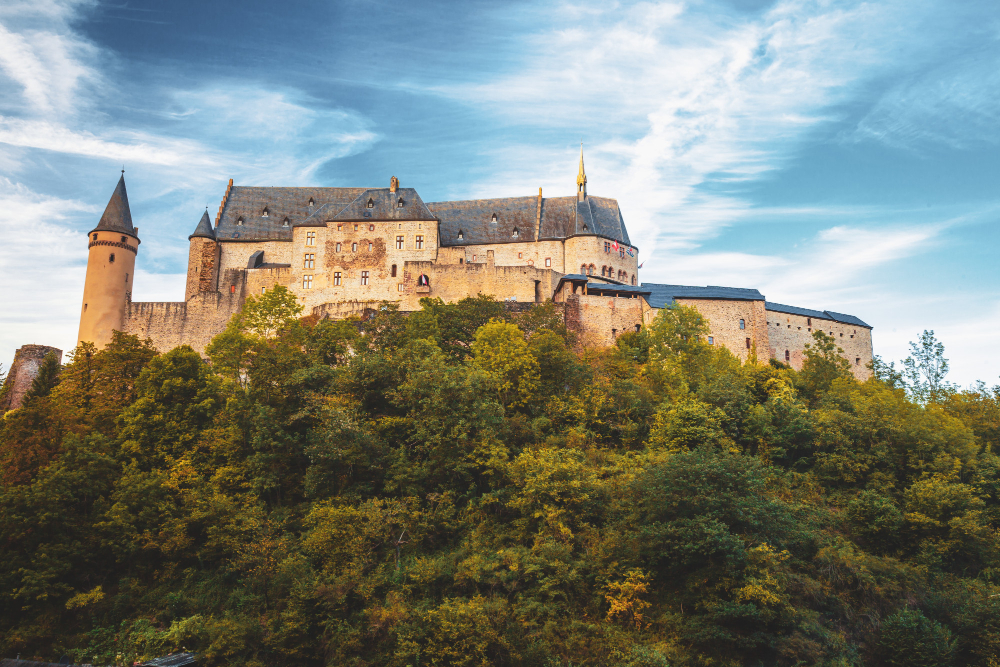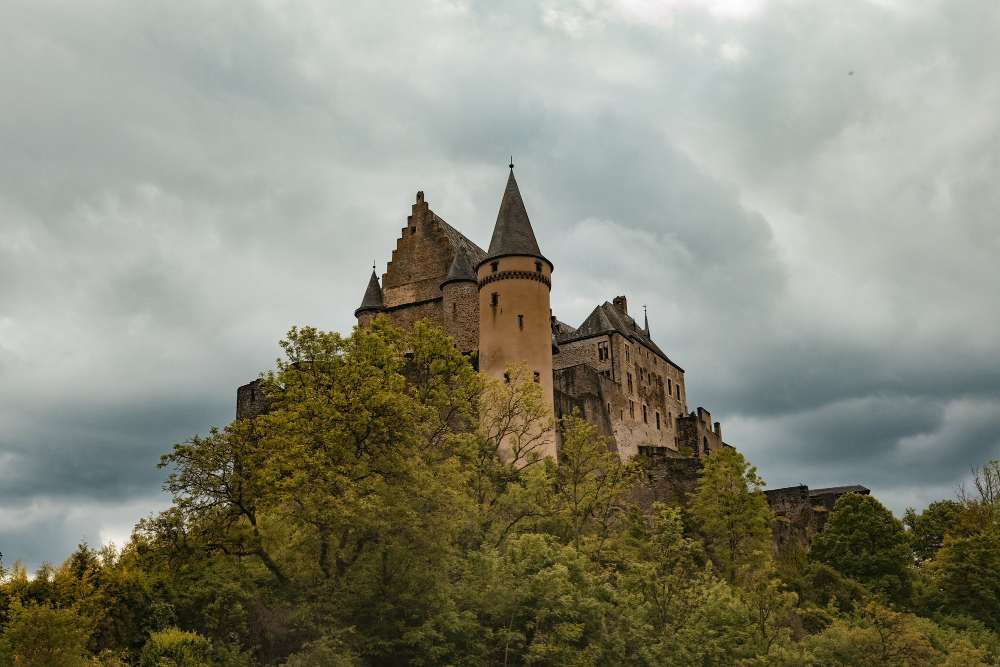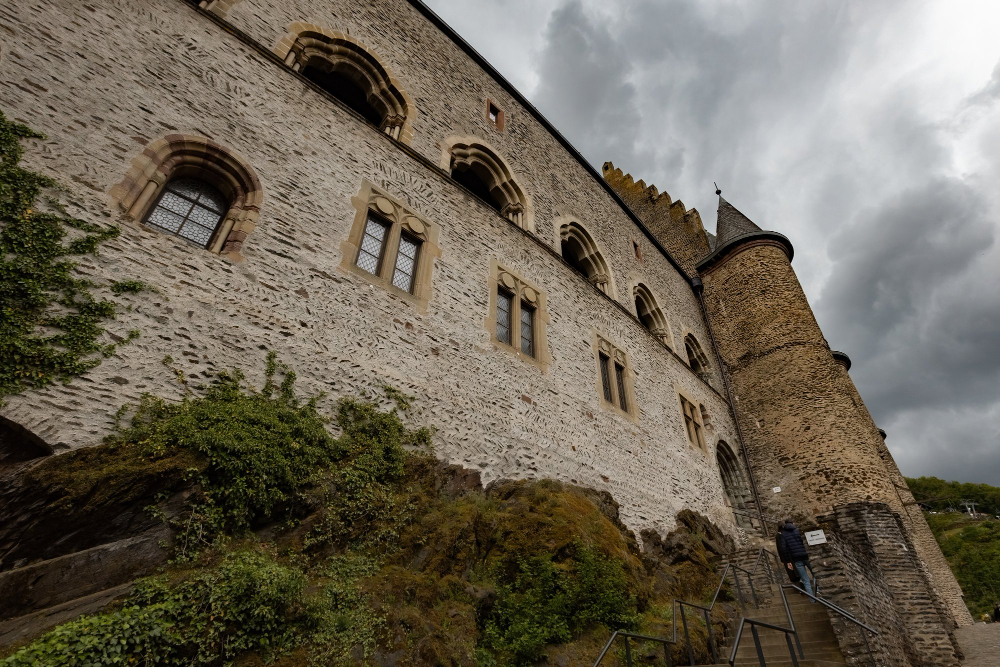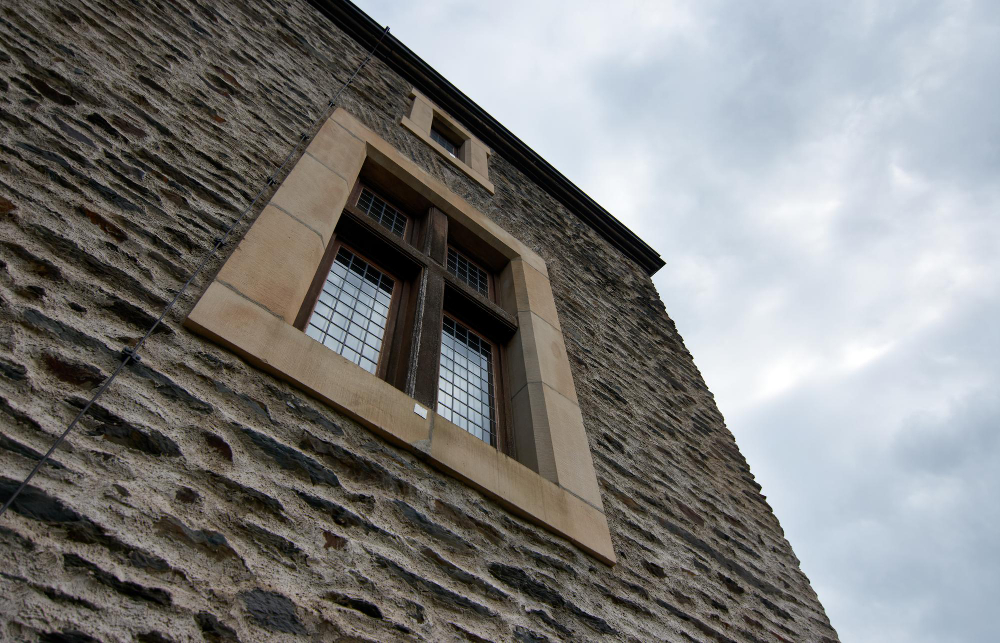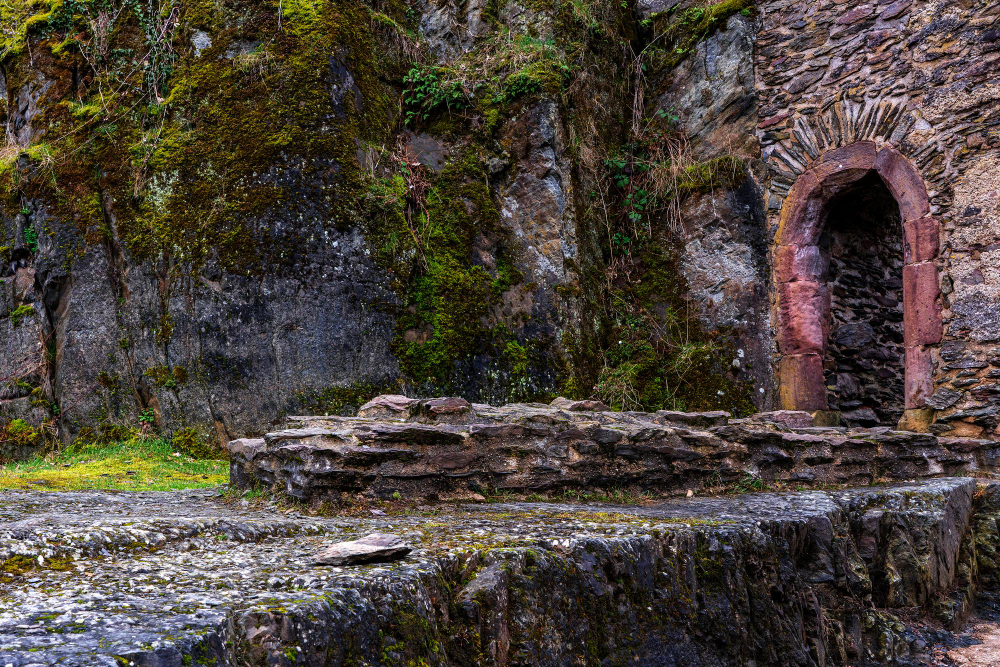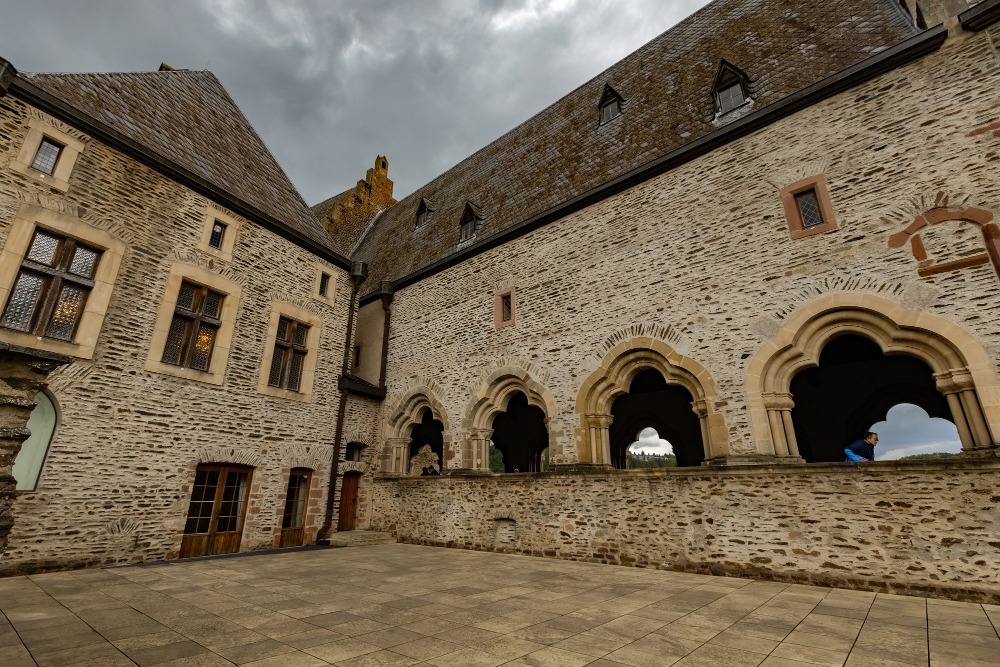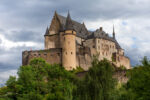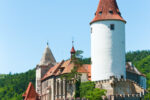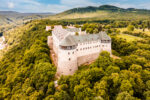

Vianden Castle towers majestically over the town of the same name in northern Luxembourg and is one of the country’s most significant medieval fortifications. Its imposing silhouette, perched on a rocky plateau some 100 metres above the River Our, has captivated visitors for centuries. Yet behind its massive walls lies not only a history of power and splendour, but also of decay, rediscovery and a careful restoration designed to preserve this medieval heritage for future generations.
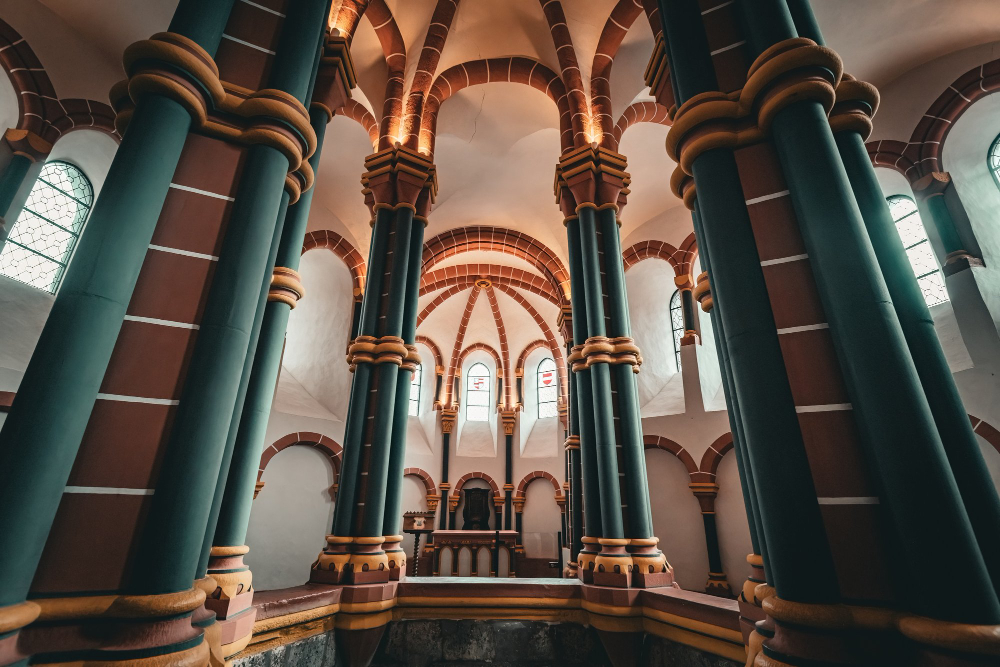
Origins and historical significance – The castle’s roots stretch back to late antiquity: between 360 and 450 AD, a Roman fort was built on this site, which is regarded as the precursor to the later castle. In the 11th century, the complex came into its own when the Lords of Vianden from the Eifel moved to this strategically important location and expanded the fortress. Particularly striking is the construction of a decagonal chapel within the castle, an architectural masterpiece of that era. The Counts of Vianden were among the most influential noble families in the region between the Rhine, Moselle and Meuse. Right up until the 15th century, they played a central role in the region’s political and economic networks. The County of Vianden was a significant domain, closely linked to other European noble families through marital alliances. Thus, in 1346, the castle came into the possession of the Counts of Sponheim through the marriage of the heiress Maria of Vianden to Simon III of Sponheim-Kreuznach. This union lasted until 1417, when Engelbert I of Nassau-Dillenburg, a member of the House of Orange-Nassau, took over the county. From that time until the French Revolution, the castle remained in the possession of the House of Orange. In the 17th century, the castle was extended with the construction of the great hall, a magnificent Renaissance-style building which significantly improved living comfort and emphasised the castle’s status as a residence. During the turbulent times of the French Revolution, the castle was confiscated and lost its political function.
Decline and Reconstruction – The castle’s decline began in the 19th century after it passed into private ownership. In 1820, Wenzeslas Coster, then mayor of the town of Vianden, purchased the complex at auction for 3,200 guilders. However, rather than seeking to preserve it, he sold off valuable building materials such as copper roofing, leaded glass windows, wooden panelling, and doors and windows – a practice that caused profound damage to the castle and left it to fall into ruin. An opportunity to save the castle did not arise until 1890, when Grand Duke Adolph of the Elder House of Nassau acquired the ruins. Although he planned to rebuild the castle, reconstruction did not take place initially, resulting in further damage due to disrepair. Paradoxically, however, this preserved the authentic medieval structure from a historicist reinterpretation, such as that carried out, for example, at the nearby Hohkönigsburg in Alsace. The castle has been state-owned since 1977 and is undergoing ongoing restoration. Extensive restoration work was carried out, particularly around the turn of the millennium, financed mainly by EU grants and supported by the organisation ‘Les Amis du Château de Vianden’ (Friends of Vianden Castle). Scientific supervision ensures that the medieval architecture is restored as faithfully as possible to its original state.
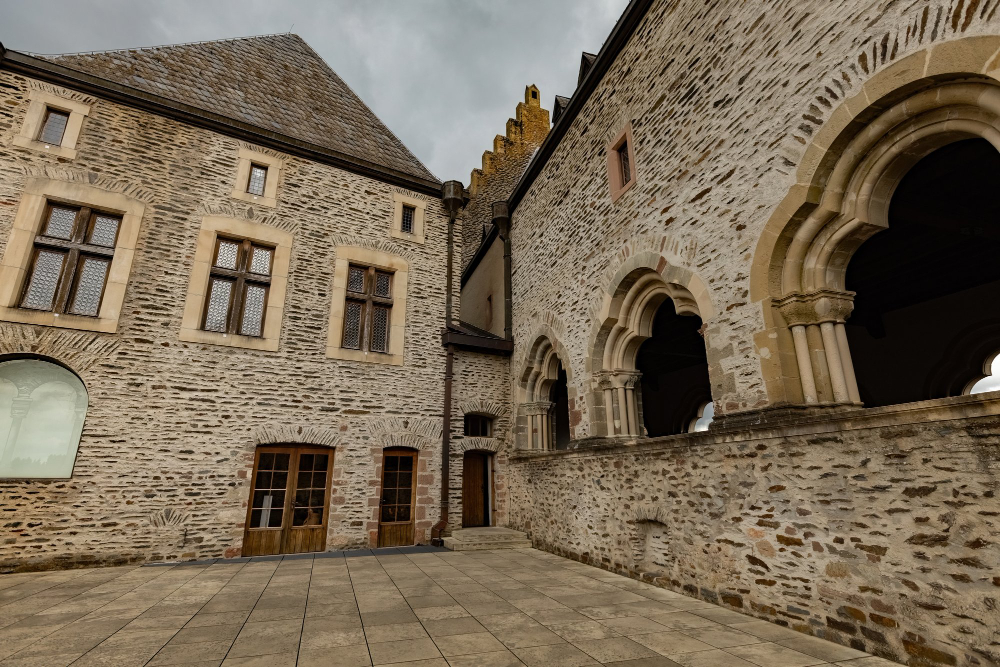
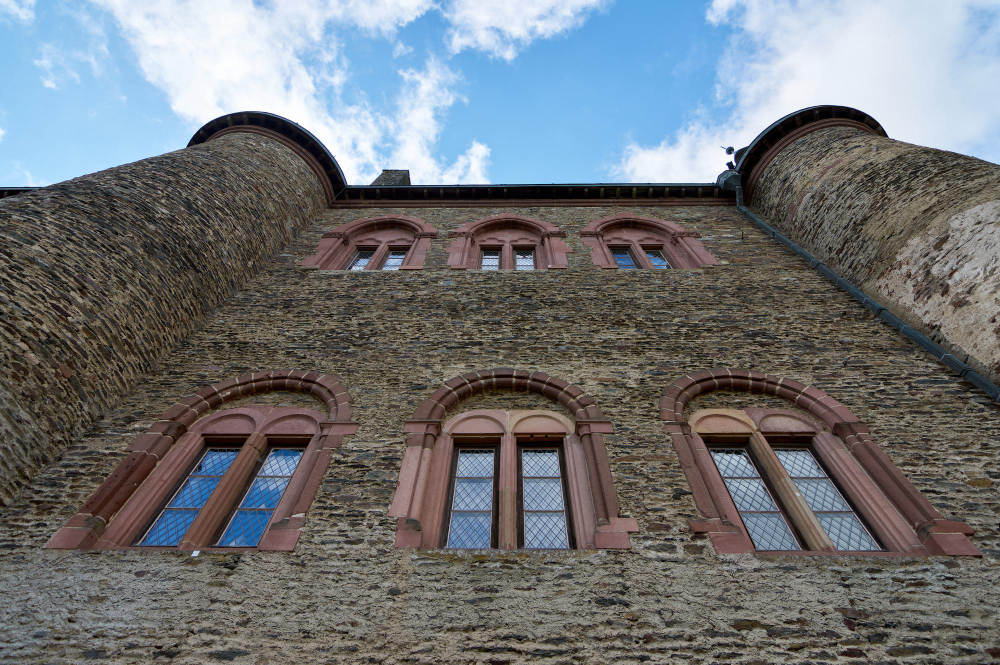
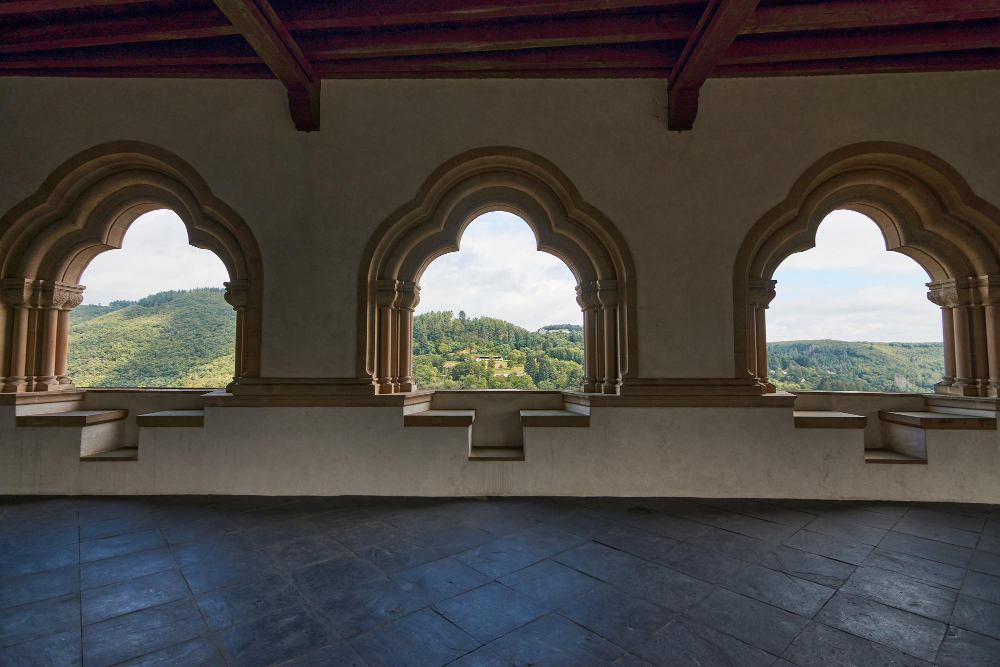
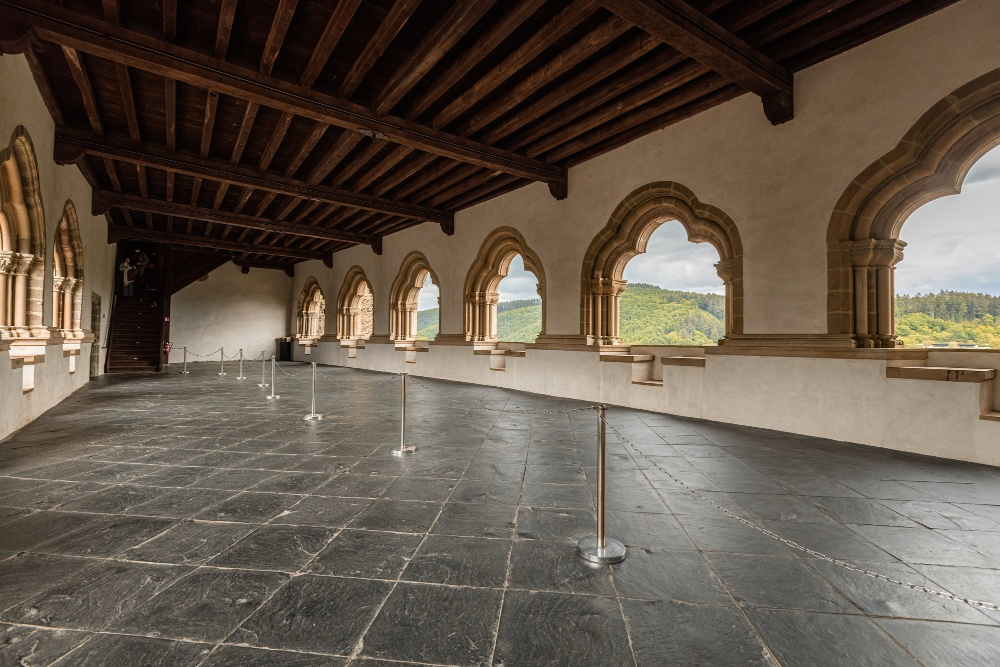
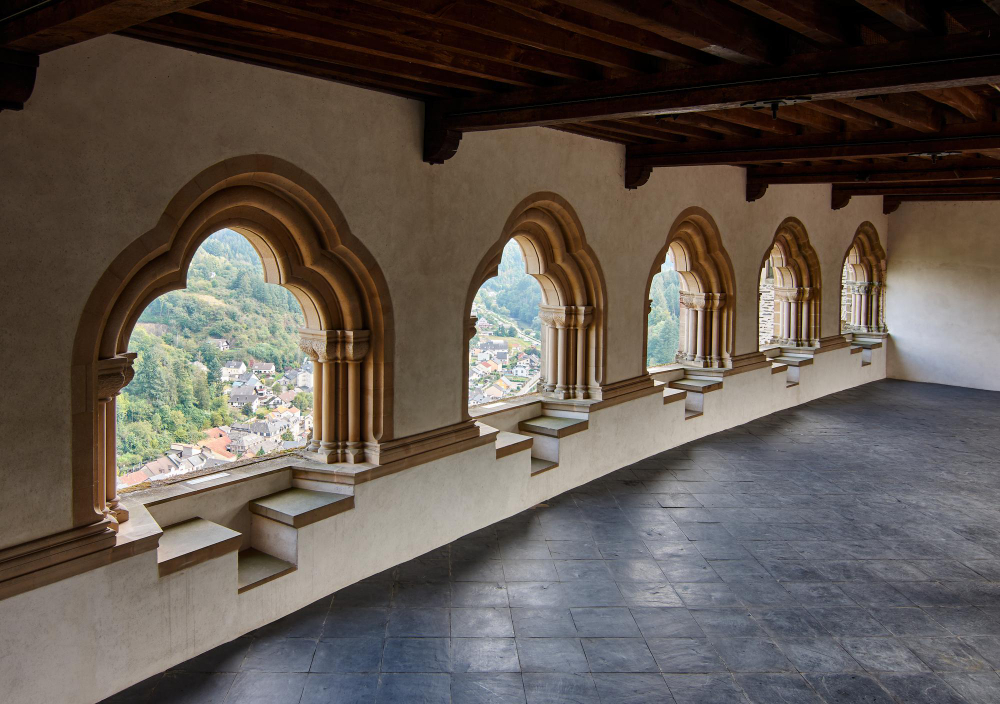
Architecture and Structures – Vianden Castle covers an area of approximately 2,550 square metres, nestled on a rocky outcrop with a magnificent panoramic view over the town and the Our Valley. In total, the complex measures around 85 metres in length and 30 metres in width. It is designed as a hilltop castle and consists of two main defensive rings: the inner wall ring with its characteristic corner towers and the lower outer ring, which provides access to the inner castle via three successive gates. At the heart of the complex lies the inner castle, which houses the residential and state rooms. The castle is divided into four storeys, each serving different functions: on the ground floor are the armoury and an archaeological crypt, as well as kitchens and storerooms. The lower chapel, the Knights’ Hall and the Great Knights’ Hall also dominate this level. With a capacity for up to 500 guests, the Great Knights’ Hall is one of the largest of its kind and was once used for festive banquets and gatherings. On the upper floors are further state rooms such as the upper chapel, the Byzantine Gallery and the banquet hall. Also of historical note are the lord of the castle’s bedroom, several rooms named after notable figures (Vic Abens, J. P. Koltz, Ch. Arendt), a small 12th-century great hall and the family tree room, which documents the genealogical history of the castle’s owners. Another notable part of the complex is the large cellar hewn into the rock, as well as the outer bailey in front of it, whose defences were reinforced in the Middle Ages by the so-called Black Tower – a defensive structure dating back to the Carolingian period and extended around 1250.
Cultural and Historical Significance and World Heritage Nomination – Vianden Castle is not only an architectural monument but also a cultural symbol of Luxembourg. This was reflected in the efforts to have the castle, together with the historic old town, designated as a UNESCO World Heritage Site. As early as 1993, a corresponding application was included on the Tentative List. However, the application was withdrawn in 2013 due to criticism regarding the condition of the surrounding old town and a lack of public involvement. Vacant properties and the poor state of repair of the town’s buildings posed serious obstacles. Although efforts were made to revise the application, and the castle remained a tourist attraction, its World Heritage candidate status was finally withdrawn in 2014. Despite this setback, the castle remains a central cornerstone of Luxembourg’s history and identity. Today, it symbolises the country’s transformation from a small border region into a modern European state.
Sights and visitor facilities – Vianden Castle is now not only a historical monument but also a living museum. Visitors can explore the restored rooms, which are equipped with interactive exhibition elements. In a larger hall, the castle’s history is brought to life through pictures, models and state-of-the-art technology. Of particular note is the use of laser scanning, which was used towards the end of the 20th century to create a detailed three-dimensional model of the castle. This technology offers a unique insight into the complex architecture and the structural changes that have taken place over the centuries. A remarkable anecdote from the recent past is the visit by the French writer Victor Hugo in 1871. Impressed by the ruins, he sketched the castle and aptly described Vianden with the words: ‘Today, set in its magnificent landscape, which one day the whole of Europe will visit, Vianden consists of two things that are equally comforting and magnificent – the sombre sight of a ruin and the cheerful bustle of its people.’ This quote captures the special atmosphere of the place, where history and the present meet. Furthermore, in 2000 the castle served as a film set for the horror film ‘Shadow of the Vampire’, which further boosted its international profile.
Vianden Castle is a fascinating historical monument, looking back on more than 1,500 years of history. From its Roman origins, through flourishing count’s residences and Renaissance palaces, to its near-total ruin and today’s careful restoration, it recounts the eventful history of Europe within the small state of Luxembourg. With its imposing architecture, rich stories and vibrant museum activities, it is far more than just a day-trip destination – it is a symbol of the preservation of cultural heritage and the link between the past and the present. The ongoing restoration work and continuous academic research ensure that Vianden Castle will continue to inspire generations of visitors with its history and beauty for years to come. Anyone visiting Luxembourg should definitely experience this impressive structure – a true treasure in the heart of Europe.