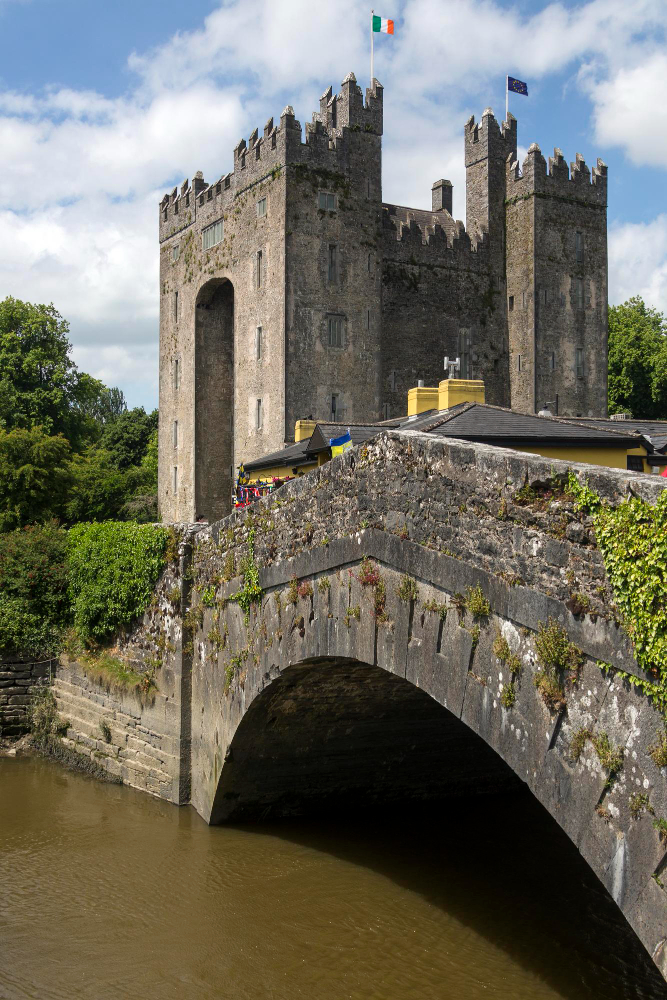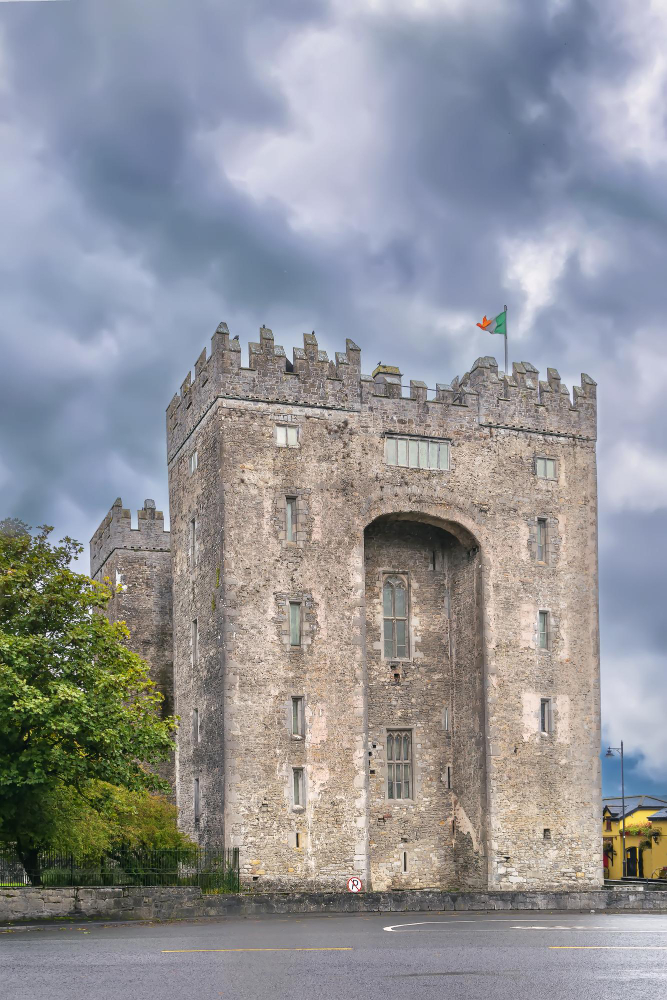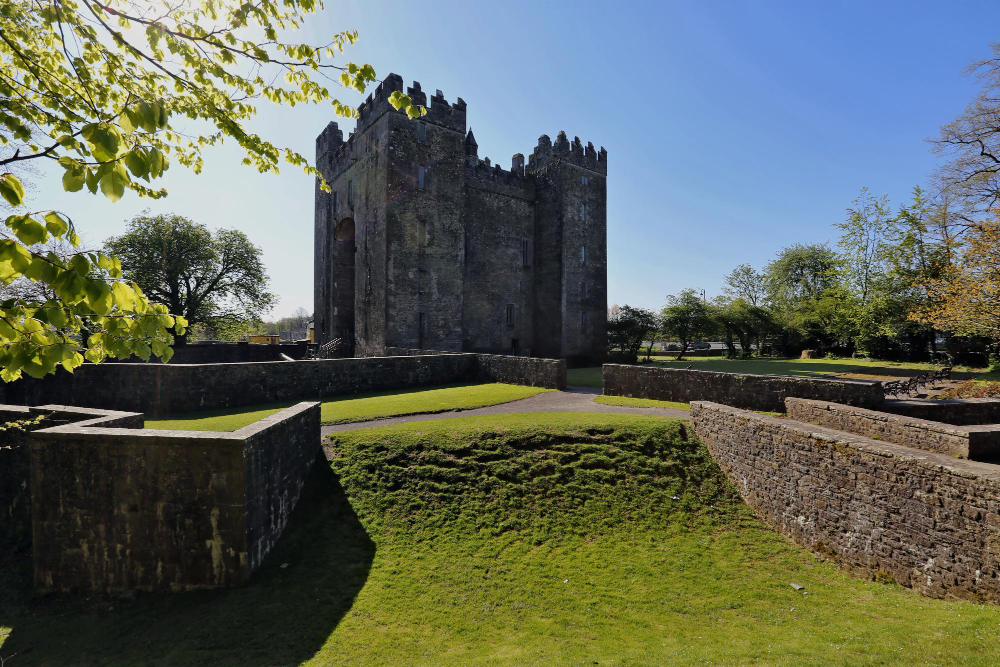

Nestled in the charming village of Bunratty in County Clare, Bunratty Castle stands majestically as one of Ireland’s most significant Norman castles. Situated between the cities of Limerick and Ennis, in the immediate vicinity of Shannon Town, the castle is not merely a historical monument but a living testament to the rich history and succession of rulers that have shaped this region. The name Bunratty derives from the Irish ‘Bun Raite’ and roughly translates as ‘mouth of the River Ratty’ – a reference to its strategic location on a waterway that played a key role in trade and transport for centuries.
Origins and early significance – from Vikings to Normans – Before the imposing stone castle was built, this site was already an important Viking trading centre as early as around the year 970. These seafarers had a lasting influence on Ireland through their raids and trading activities, and laid the foundations for later settlement by Norman forces. The location of today’s Bunratty Castle at the river estuary was ideal for exercising control over the surrounding land and water routes. The first fortification on this site was built around 1250, when Robert de Muscegros, a Norman nobleman, had a wooden fortress constructed. This served as a base for the Normans’ further expansion into Ireland. Two decades later, Thomas de Clare, a powerful member of the de Clare family, began construction of a stone castle on the same site. By that time, Bunratty had already developed into a settlement with around 1,000 inhabitants – a remarkable achievement for that era.
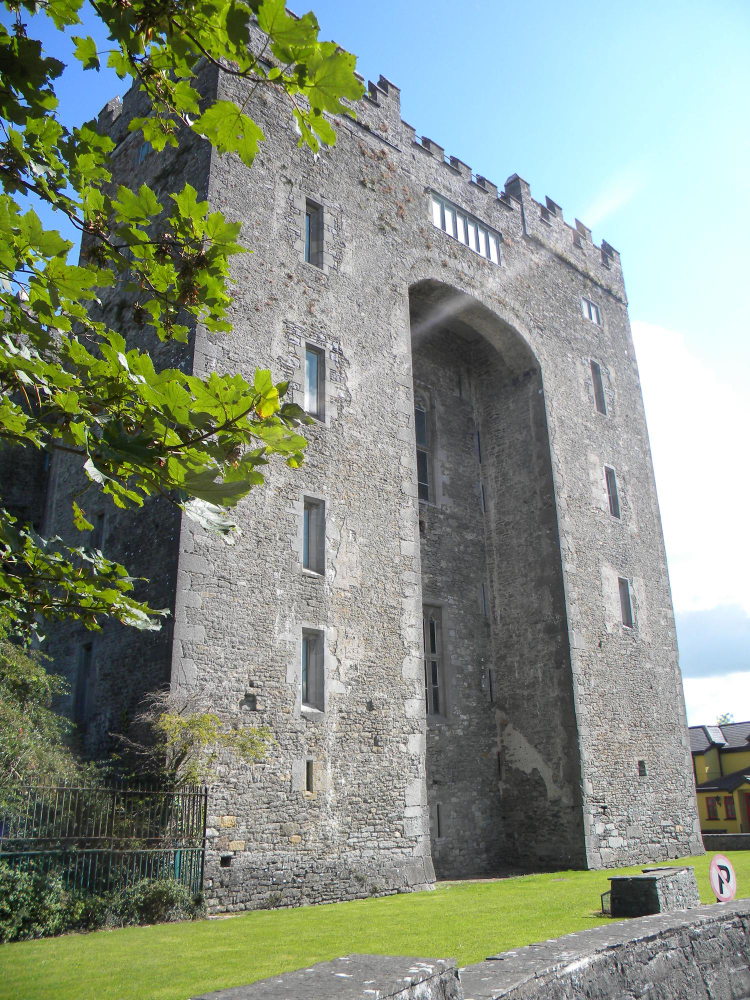
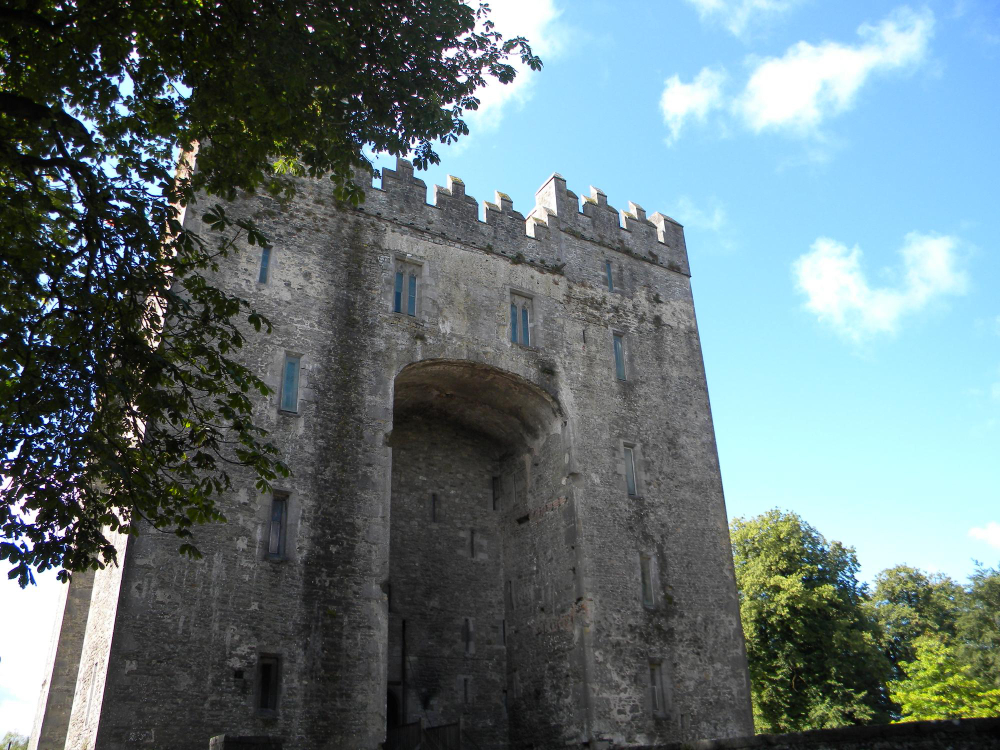
Destruction and Reconstruction – A Flashpoint of Irish-Norman Conflicts – In the early 14th century, the region was shaken by fierce clashes between the indigenous Irish clans and the established Norman conquerors. Under Richard de Clare, Thomas’s son, the castle and the town were completely destroyed in 1318 during violent fighting. However, shortly afterwards, the English king ordered the castle to be rebuilt in order to secure his power base in Ireland. As early as 1332, however, the castle once again fell to the troops of the Irish O’Brien and MacNamara clans, reflecting the unstable political situation in the region. In 1353, Sir Thomas Rokeby erected a new structure on the ruins. Despite the new fortifications, the Irish forces soon managed to regain control of the castle. This period vividly illustrates the growing strength of the Irish clans and the waning influence of the Norman occupiers. Finally, in 1425, the MacNamara clans completed what was by then the fourth structure on this site, which architecturally exemplifies the style of a classic Norman castle with massive walls and a square keep. But even this stronghold did not last long: as early as 1475, the castle passed into the possession of the prominent O’Brien clan from Munster, who rose to become one of Ireland’s most powerful families in the centuries that followed.
Bunratty Castle in times of political upheaval – In the 17th century, during the War of the Three Kingdoms, Bunratty Castle played a strategically important role. Barnaby O’Brien, Earl of Thomond, granted British parliamentary troops the use of the castle as a landing place, which led to a siege by Confederate Irish troops. The castle was eventually captured, but the House of O’Brien was restored to the title of Earls of Thomond by Henry VIII in recognition of their loyalty to the English Crown. This fragile peace was brought to an end in 1646 by the intervention of Oliver Cromwell’s troops, who brought the O’Briens’ rule to an abrupt halt. Subsequently, in 1690, as part of the systematic disenfranchisement and expropriation of the Irish nobility, the castle was transferred to the British Government. In the years that followed, the estate was leased to Protestant settlers from Great Britain – the so-called ‘plantation families’ – who were settled in Catholic Ireland to consolidate English rule.
Rise and Fall – From Manor House to Ruin – In 1604, the Studdert family built a comfortable manor house called Bunratty House in the immediate vicinity, which became their favoured residence during the 18th century. The castle itself gradually lost its importance and became increasingly derelict. Over the course of the 19th century, the once-imposing structure fell further and further into disrepair; the roof collapsed, walls began to crumble, and the fortress was in danger of being consigned to oblivion.
Rescue and Restoration – The Comeback of a Legend – It was not until the mid-20th century that the castle was saved from complete ruin. In 1950, Lord Gort acquired the estate and, with government support, initiated an extensive restoration. The aim was to restore the castle to its original 15th-century style and thereby preserve an important piece of Irish history. The renovation work took almost a decade and incorporated carefully reconstructed medieval furnishings as well as authentic details that vividly recreate the atmosphere of a Norman manor house. Bunratty Castle has been open to the public since 1960 and has become a popular tourist destination.
A living museum – experience tradition and history – In the 1980s, the castle grounds were expanded to include a museum housing an impressive collection of furniture, tapestries and everyday objects from the 15th and 16th centuries. The so-called Great Hall – the former banquet and audience hall – is now an atmospheric venue and can be hired for special occasions. Particularly noteworthy is the adjacent Bunratty Folk Park, an open-air museum that invites visitors on a journey back in time to traditional rural Ireland. Here, original Irish farmhouses and town buildings have been carefully dismantled, partly rebuilt here from other parts of Ireland, and lovingly furnished. This has resulted in entire village streets featuring historic shops, smithies, inns and a school – some of the buildings date back to the 1800s, whilst others were originally situated on the runway at Shannon Airport, for example.The Folk Park not only offers insights into rural life of times gone by, but also showcases traditional crafts, which are vividly presented and demonstrated in practice here. Visitors can thus experience first-hand what everyday life in Ireland was like centuries ago.
Significance for tourism – between myth and modernity – At the start of the 21st century, Bunratty Castle is one of the best-known cultural attractions in County Clare. American tourists in particular are drawn here, as the nearby city of Limerick has gained worldwide fame through Frank McCourt’s autobiography Angels in America. This literary connection boosts interest in the history and culture of the west of Ireland and brings numerous visitors to Bunratty.Nevertheless, in terms of visitor numbers and popularity, Bunratty Castle lags behind other famous Irish castles such as Blarney Castle or Dublin Castle. However, Bunratty stands out for its authentic atmosphere, the combination of a castle tour and an open-air museum, as well as a variety of events that bring medieval life in Ireland to life.
A treasure trove of Irish history you can experience first-hand – Bunratty Castle is far more than just an old castle. It stands as a symbol of Ireland’s eventful history – from the Norse Vikings through Norman conquerors and Irish clans to English colonial rule. The meticulous restoration and the well-designed museum offer visitors the chance to immerse themselves in a world long past, yet still very much alive.The combination of historic architecture, fascinating legends and a richly detailed open-air museum makes Bunratty Castle a unique place where history comes to life. Anyone visiting Ireland should by no means miss this gem of Norman architecture and Irish culture.