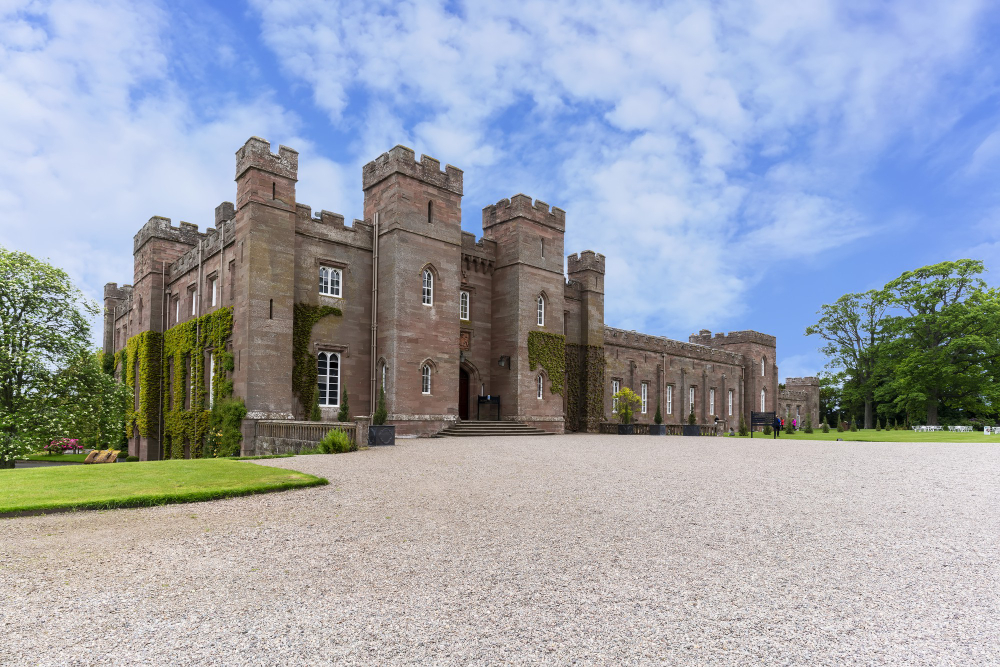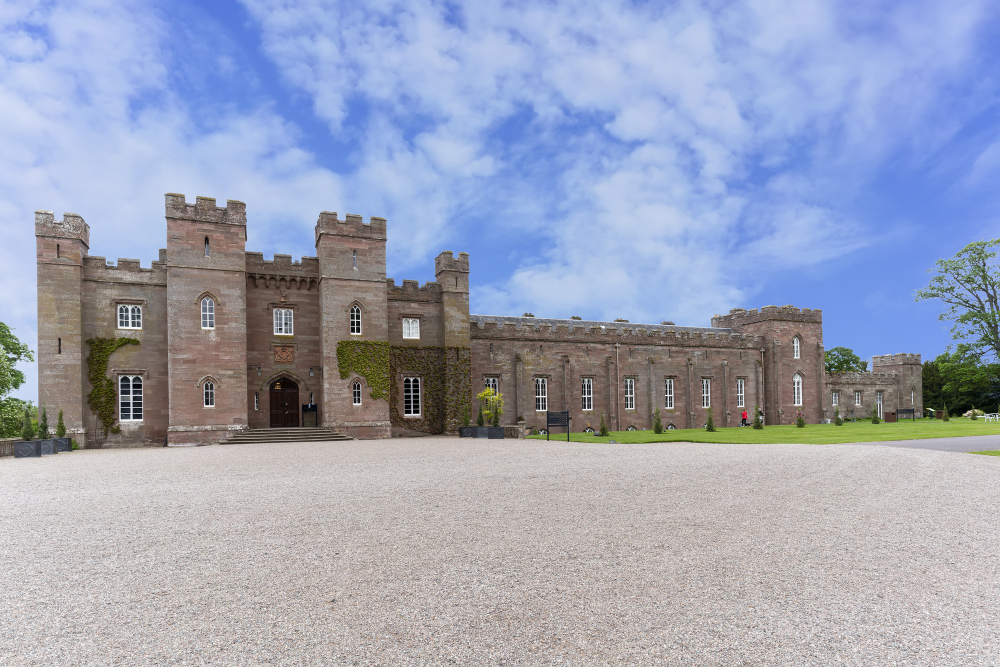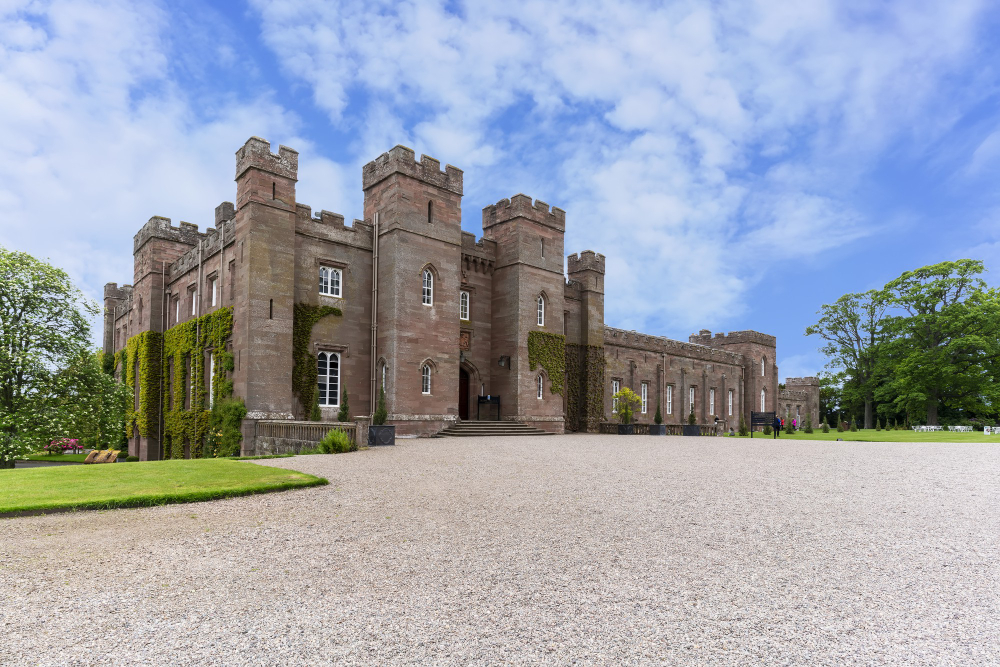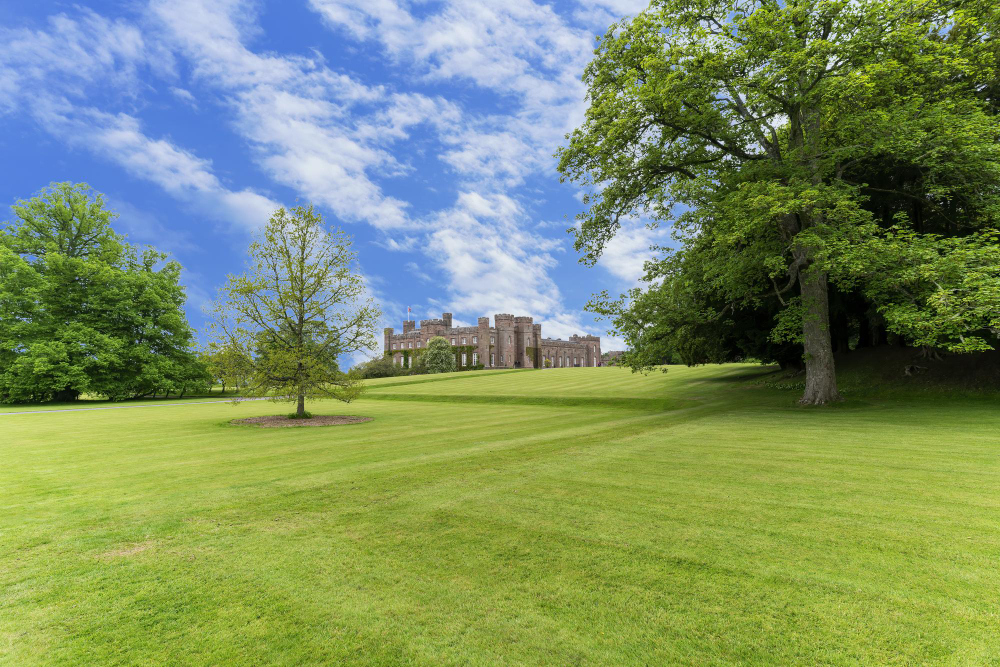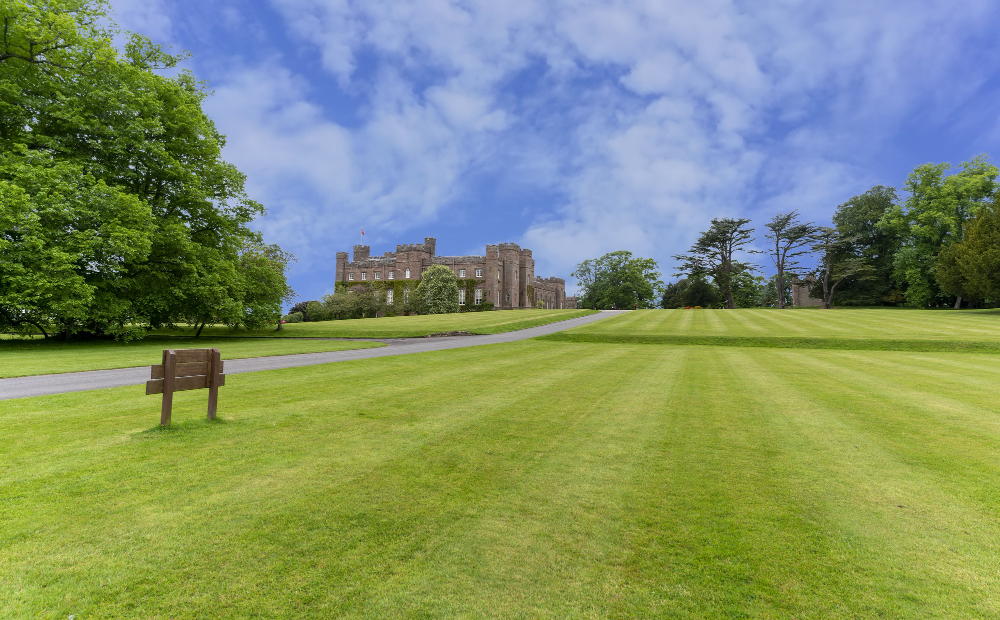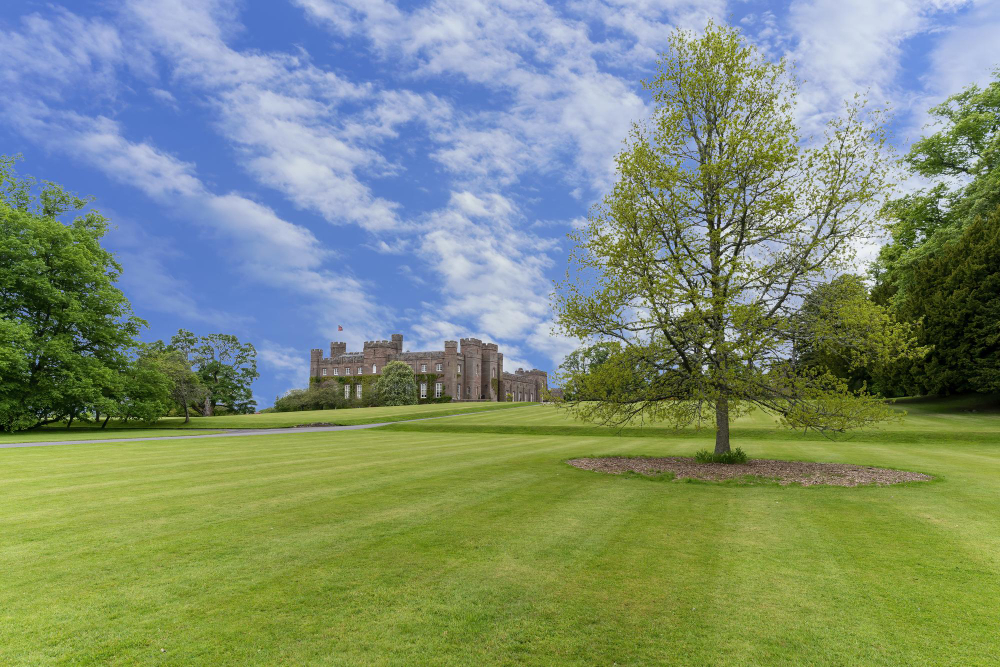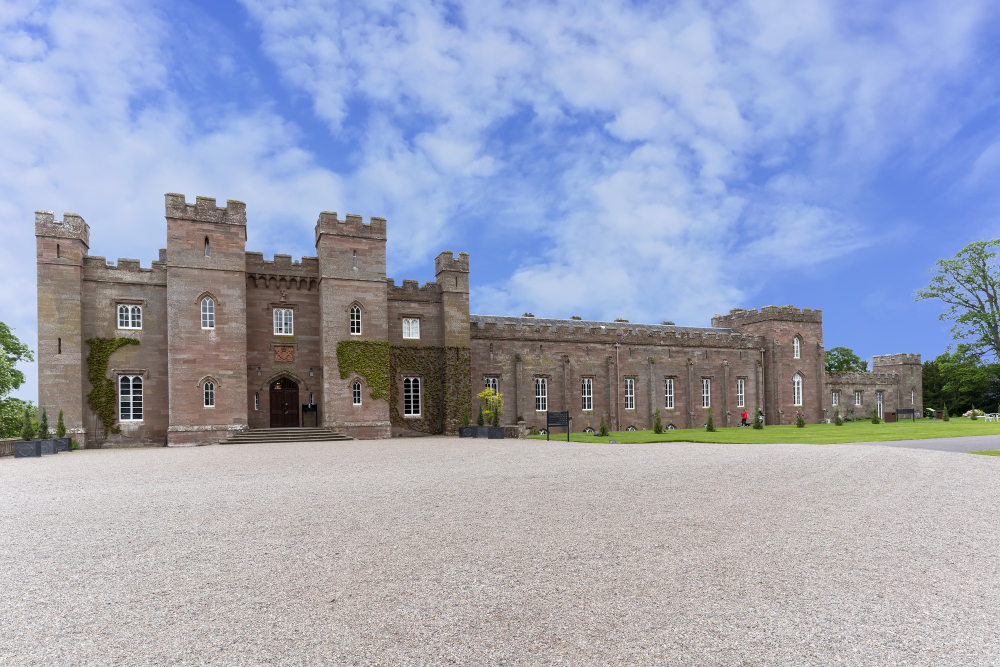

Near the town of Perth in Scotland, nestled in the picturesque countryside of the small village of Scone, Scone Palace stands majestically as one of the country’s most significant historic buildings. This impressive red sandstone mansion, with its distinctive crenellated roof, epitomises the Romantic Gothic style and is now a major cultural attraction. Yet behind its magnificent walls lies a fascinating history dating back to the very beginnings of the Kingdom of Scotland.
Origins and historical significance of Scone – The origins of Scone date back to an early Christian church built on this site. This later developed into an Augustinian monastery, known as Scone Abbey, which held great religious and political significance for centuries. But it was not merely a place of worship – Scone played a central role in Scottish history as the coronation site of Scottish monarchs and the home of the legendary ‘Stone of Scone’, also known as the ‘Stone of Destiny’. The stone, regarded as a symbol of the Scottish monarchy, was originally the centrepiece of coronation ceremonies. It was believed that no king could rule legitimately without having been crowned on the stone. The most famous names in Scottish history gathered at Scone, including Kenneth MacAlpin, Macbeth and Robert the Bruce. The last coronation to take place here was that of Charles II in 1651.
Myths and legends surrounding Scone – The name ‘Scone’ itself, the origin of which remains unclear to this day, contributes to the site’s mystical aura. Over the centuries, it has been recorded in various spellings, including Scoon, Skuyn and Sgàin. One theory suggests that the name derives from the Pictish language, an ancient Insular Celtic language, and means ‘cut’ or ‘incision’. Others, however, suggest an origin in the Gaelic word ‘Sgàin’, which could indicate a fusion of Pictish and Celtic cultures. One of the most fascinating rituals associated with Scone is the tradition of ‘Boot Hill’. The hill, now known as Moot Hill, was the place where nobles gathered to swear allegiance to their king. In doing so, they brought soil from their respective estates in their boots or shoes to symbolically demonstrate their loyalty to the entire kingdom. The hill thus became a place of great significance, literally representing the entire nation. In poetic tradition and popular belief, Scone is often portrayed as a centre of power. Old proverbs such as ‘As the Bell of Scone rang, So mote it be’ – meaning ‘When the bell of Scone rang, the law of the land was enacted’ – underscore the site’s importance for the kingdom’s legislation and political decisions. Such traditions, coupled with poems and songs, give Scone its enduring reputation as the cradle of the Scottish nation.
Change through the Reformation – However, the history of the abbey and the stone underwent significant upheaval during the Scottish Reformation in the 16th century. In 1559, Scone Abbey fell victim to a Reformist mob from Dundee, led by John Knox, which destroyed many religious symbols. This attack marked the beginning of a new era for Scone, in which the site’s spiritual significance was increasingly overshadowed by its role as a political and cultural centre. The abbey’s former lands and buildings were later secularised and divided amongst various noble families, including the Ruthvens and later the Murrays of Tullibardine. Following extensive alterations, they transformed the site into a luxurious residence that later became known as Scone Palace.
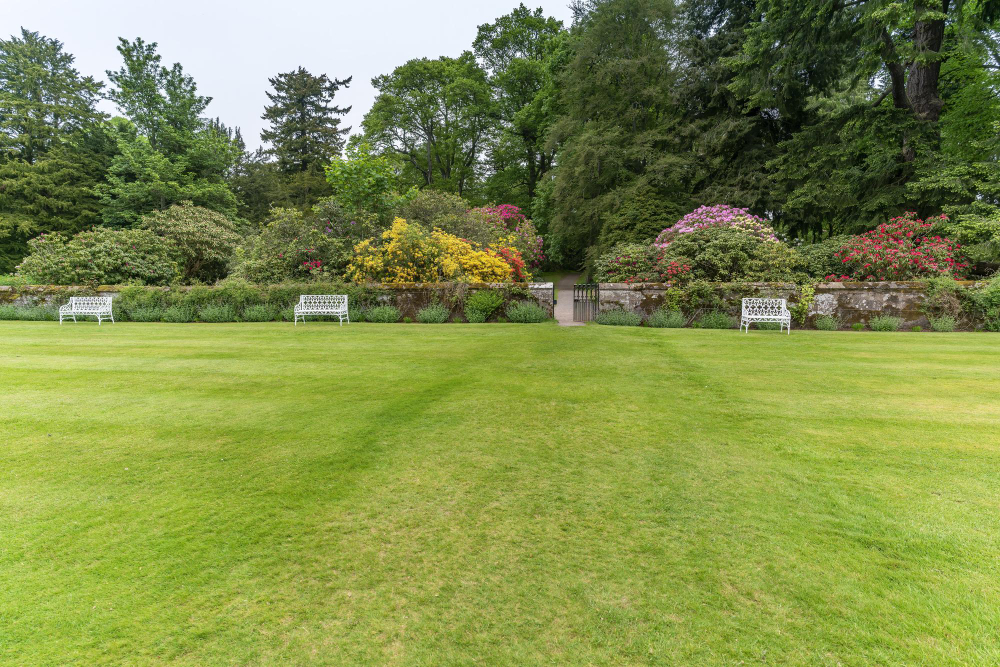
The design of the modern palace – The current appearance of Scone Palace was largely shaped by the architect William Atkinson, who was commissioned to redesign the building in the early 19th century. Under the direction of David William Murray, the third Earl of Mansfield, the palace was built in the magnificent Neo-Gothic style and completed in 1807. Particularly impressive is the Long Gallery, which visitors often describe as the highlight of the building. The palace’s surroundings were also carefully designed. Landscape gardener John Claudius Loudon realised a vision of extensive gardens and woodland areas that have been preserved to this day. Particularly noteworthy is the so-called ‘Murray Star Maze’, a star-shaped labyrinth made of green and copper-coloured beech wood, which reflects the Earl of Mansfield’s family coat of arms.
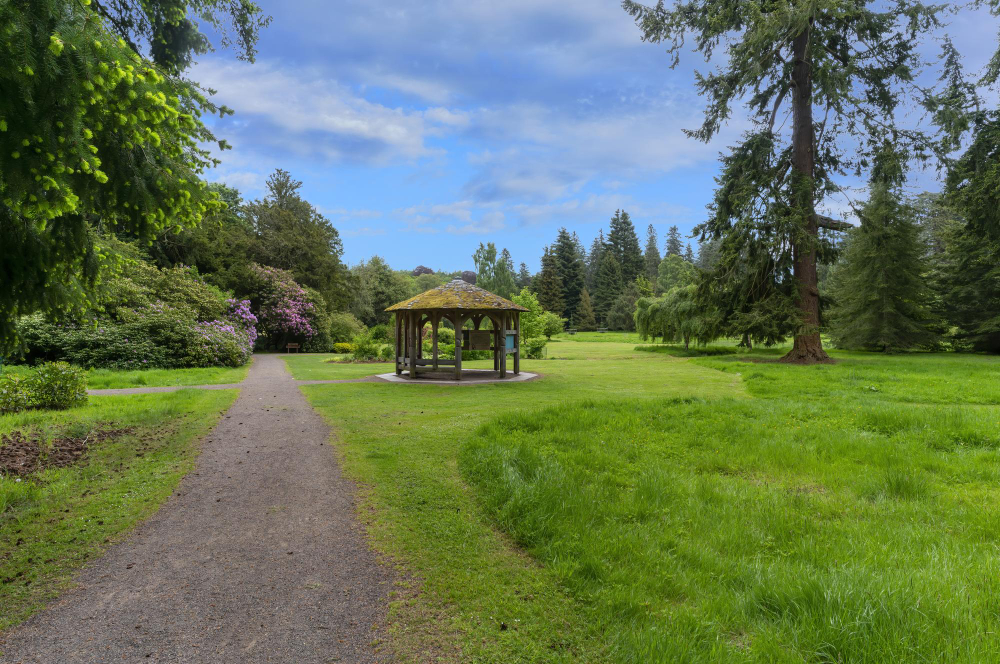
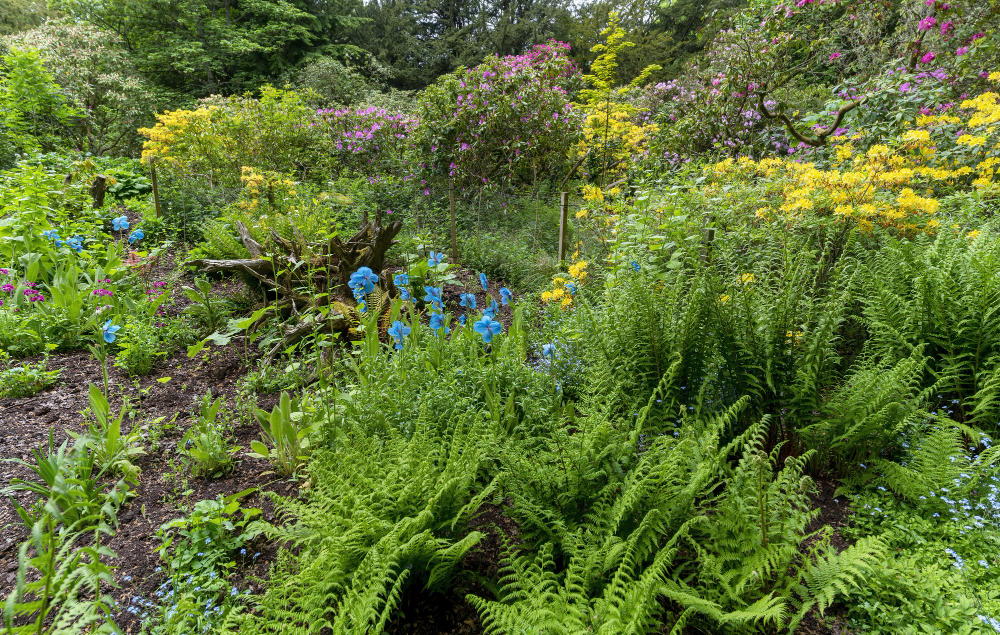
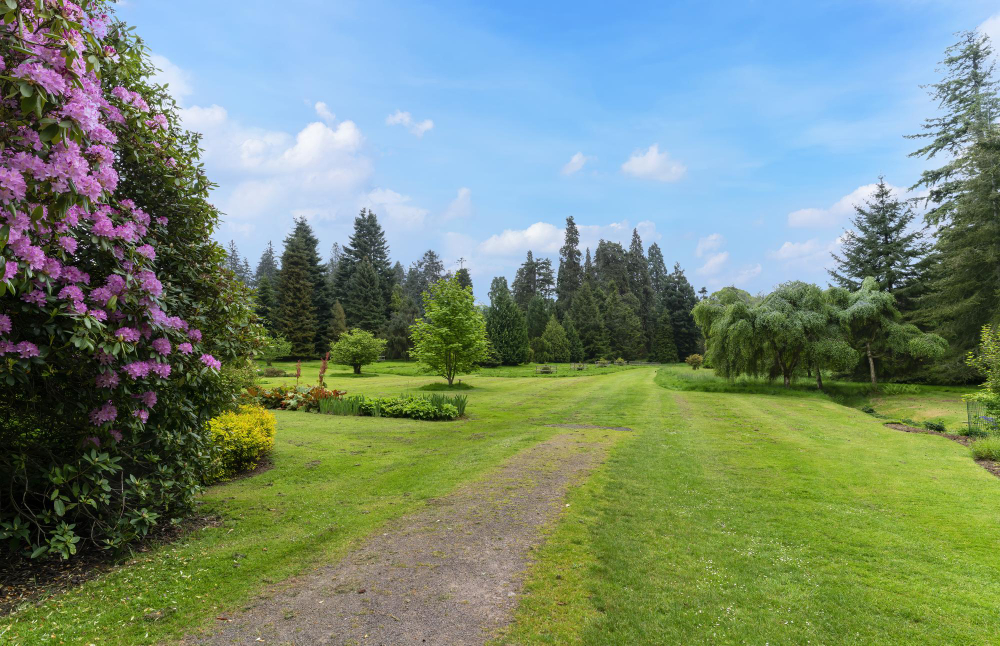
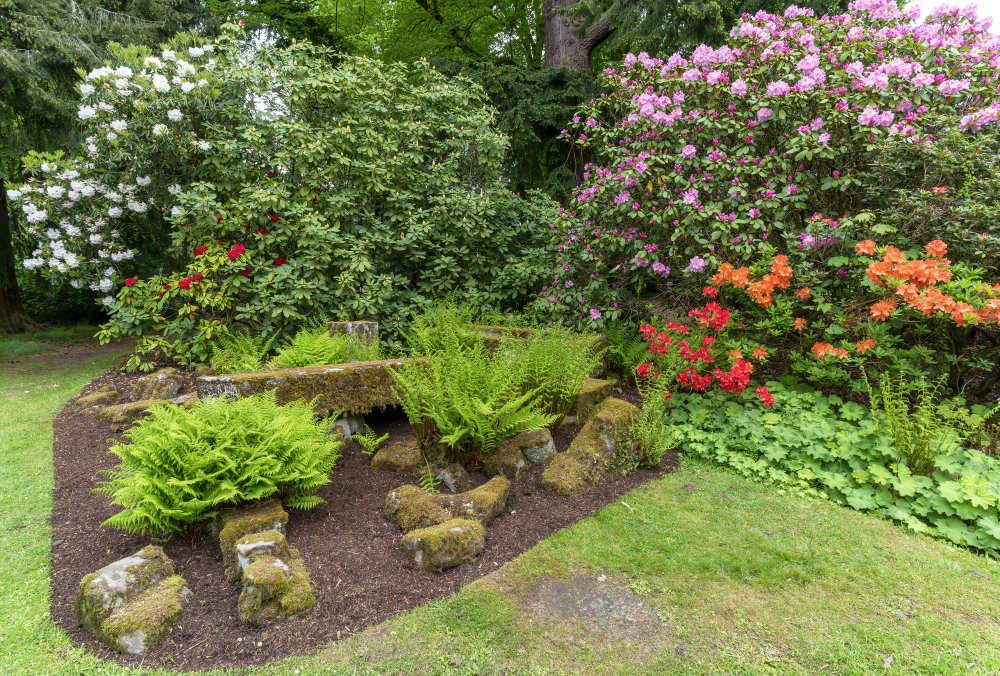
Scone Palace today – Today, Scone Palace is a popular destination that delights visitors with its combination of historic architecture, artistically designed interiors and beautiful gardens. The collections inside the palace include valuable works of art, furniture and porcelain. Among them are works by artists such as Reynolds and Ramsay, as well as pieces with a royal connection, including a four-poster bed that belonged to Mary Stuart, the famous Queen of Scotland. The palace grounds reflect the diversity of the flora cultivated over the centuries. The Douglas fir, first introduced to Britain by the botanist David Douglas, has found a home in the woods of Scone and symbolises the spirit of innovation that permeates this historic site.
A place steeped in history and mystery – Scone Palace is more than just a historic building – it is a living testament to Scottish history, a place steeped in myths and legends. Whether it is the tales surrounding Boot Hill, the poetic epics about the kings, or the magnificent architecture of the modern palace: every corner of this place is full of secrets and invites you to delve deep into the past. With its impressive halls, rich art collection and extensive gardens, Scone Palace remains a place that fascinates historians and curious visitors alike. And perhaps, as you touch the cool stone walls or stroll through the star-shaped maze, you will sense the echoes of those events that have made this place a pivotal point in Scottish history.